
OKLAHOMA CITY – An OKC-based non-profit is helping Oklahomans with disabilities to communicate, move, and play, and even after seven decades in the game, they’re still going strong.
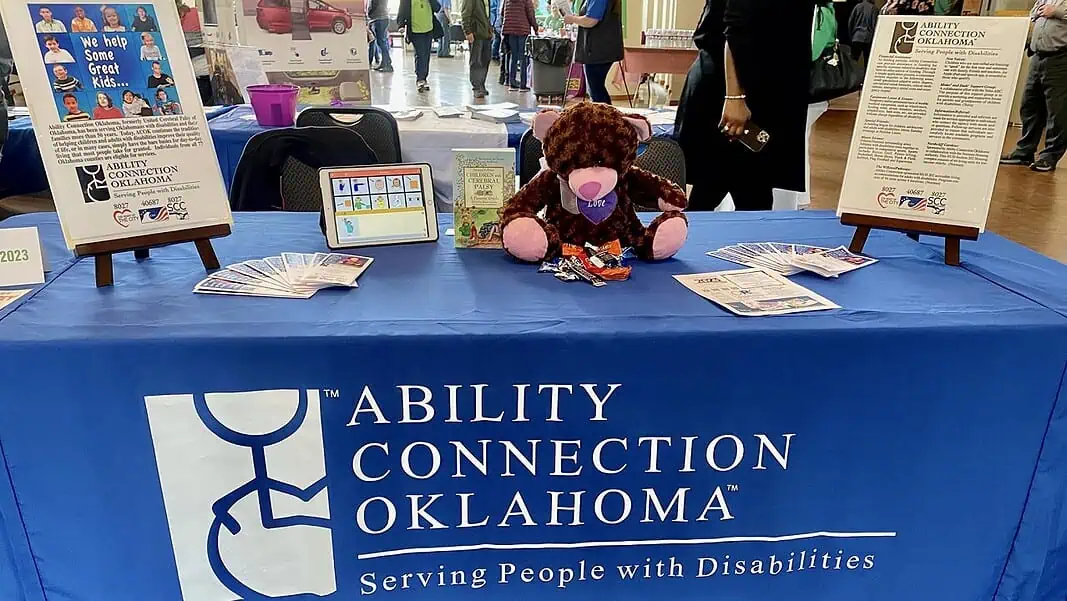
Founded in 1957, OKC-based Ability Connection Oklahoma – or ACOK – is a nonprofit with a mission to support independence and full participation for individuals with disabilities, including those with cerebral palsy.
Nearly 70 years on, the organization continues to serve people of all ages, from early childhood through adulthood, and demand for services has continued to grow. In 2025 alone, ACOK served over 970 individuals with disabilities and their families.
Research on disability consistently shows that societal barriers — not disabilities themselves — limit full participation. When communities actively support individuals with disabilities, they help build a culture rooted in empathy and inclusion.
That kind of active support is the focus of Ability Connection Oklahoma.
“Our mission is to advance the independence, productivity and full citizenship of people with cerebral palsy and other disabilities,” Ability Connection OK president Michelle L. Jackson told Free Press. “ACOK collaborates with many organizations, state agencies and professionals to reach Oklahomans with disabilities, and to create positive change in our communities.”
New Voices
Depending on the nature of the disability or disabilities an individual experiences, verbal communication is not always readily accessible without additional support.
Ability Connection Oklahoma is aiming to provide that support through their grant-funded New Voices program.
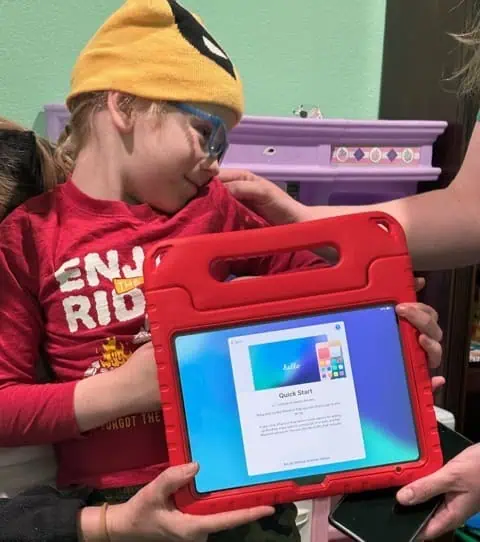
Advances in assistive technology over the past 15 years have created new possibilities for those who are nonverbal, developing tools and devices designed for individuals with disabilities to support communication, learning, daily life, and work.
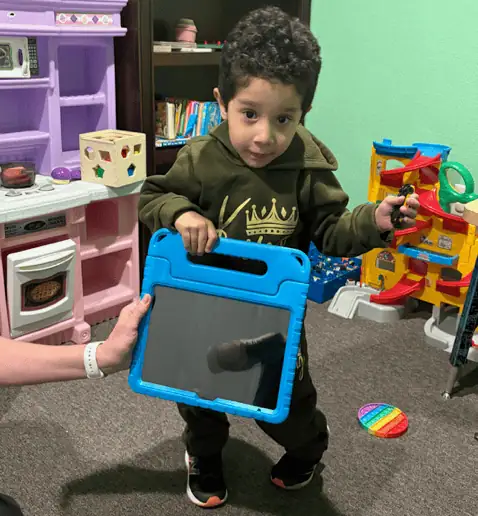
Through New Voices, ACOK provides augmentative and alternative communication (AAC) tools to eligible individuals ages 4 and up. These often include an iPad –– chosen for its ease of use and portability –– paired with a speech-generating app, and sometimes keyguards or mounts for wheelchairs, with ACOK speech pathologists helping to evaluate what each unique individual needs.
Taken together, New Voices and its tools give individuals with disabilities new ways to express themselves –– often for the first time.
“New Voices does more than provide technology, it creates opportunity,” Jackson said. “Communication is the gateway to education, social engagement, community belonging and employment readiness. By expanding access to AAC, ACOK supports measurable gains in expressive communication, participation, and long-term quality of life.”
Sensory & Adaptive Toys
It’s not all just work, though. Play is another powerful and important tool for growth, helping children to build academic, social, and emotional skills, often without even realizing they’re learning.
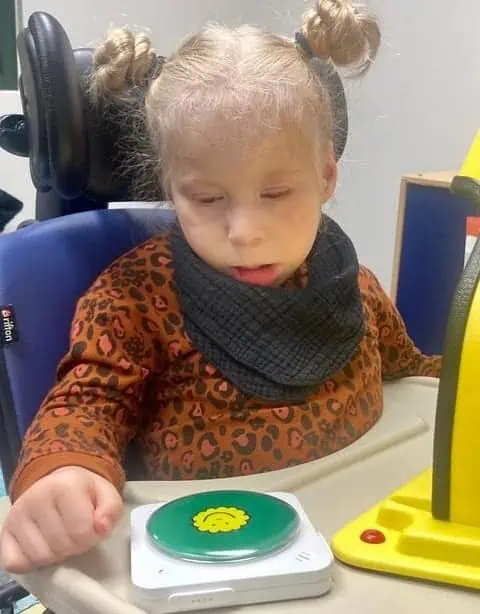
Through a partnership with Developmental Disabilities Services, ACOK’s Sensory & Adaptive Toys program connects children with toys and equipment tailored to their individual lives, ensuring each child receives what best supports their development.
“Sensory regulation is foundational to learning, communication, and emotional stability,” Jackson said. “When children lack appropriate sensory supports, they may struggle with focus, behavioral escalation, or limited engagement in school and home environments. By ensuring timely access to compliant, therapeutic sensory tools, ACOK promotes emotional regulation, improved participation in educational settings, stronger daily functioning, and increased independence.”
Equipment, finances, and even sports
Ability Connection’s work extends far beyond childhood, too.
Their Equipment Grants & Loans program connects people of all ages to essential equipment at no cost, supporting mobility, personal care, and greater independence in daily life.
In 2025, ACOK provided $43,387 of donated durable medical equipment, including walkers, wheelchairs, adaptive strollers, and hygiene supplies.
“We’ve seen substantial growth in the number of persons served through our Equipment Grants & Loans program over the last 3 years,” Jackson said. “That growth is, in part, thanks to grant funding from the Oklahoma City Community Foundation, [which has expanded the] program to serve persons 65+.”
And, when funding allows, ACOK even offers financial assistance for disability-related expenses that directly impact health and stability, things like replacement equipment parts, infant formula, and other items that help individuals maintain their well-being.
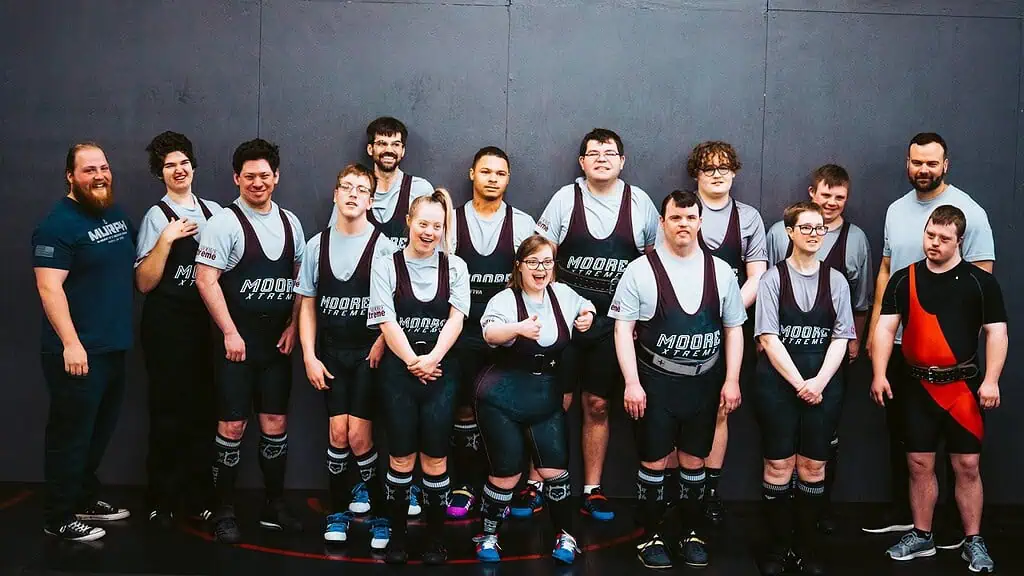
Beyond meeting essential needs, ACOK even supports the Special Olympics team Moore Xtreme, ensuring athletes with disabilities can participate in a wide range of individual and team-based sports including golf, bowling, swimming, softball, basketball, flag football, and more.
These programs offer more than just physical activity. They create space for individuals to build friendships with peers, develop confidence, strengthen both physical and mental endurance, and experience the pride that comes with learning, improving, and competing in favorite activities.
‘A shared outcome’
Of course, those with disabilities are often supported by families and caregivers, and sometimes they need guidance and support, too.
That’s the sentiment behind ACOK’s Information and Referral program, a statewide hub helping families navigate systems that can feel overwhelming, with complex eligibility requirements and extensive waitlists, because when families feel less alone, and when they know they have a trusted network or even a team behind them, the emotional relief can be profound.
Across a lifetime, families caring for a loved one with a disability are continually navigating new challenges, learning complex systems, and adapting in real time, all while providing care and advocating for their family member’s needs. Access to consistent, trusted support can ease that burden and lead to stronger outcomes, not only for individuals with disabilities, but also for caregivers, who are at increased risk of burnout, stress, and isolation.
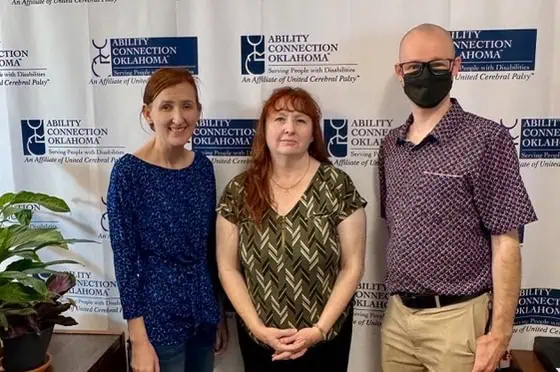
By helping families understand their options and connecting them with trusted resources, ACOK reduces this burden on families. In turn, families are better equipped to access critical therapies, educational supports, assistive technology, and inclusive interactions within their communities.
“Across all programs, ACOK’s work is grounded in a shared outcome: advancing independence and expanding opportunity,” Jackson said. “Essential supports create the stability necessary for enrichment. When individuals have access to communication tools, adaptive equipment, sensory regulation supports, and coordinated services, they are better positioned for a whole host of better outcomes.”
To learn more about Ability Connection Oklahoma, including its full range of programs and eligibility requirements, call 405-759-3562 or 877-827-2289, email info@acok.org, or visit acok.org.

Erin Schalk serves as a professional writer, visual artist, voice narrator, and accessibility-centered educator. She is the recent recipient of multiple Writer’s Digest awards and the Armed Services Arts Partnership’s National Scholarship. She has also received a Best of the Net nomination. Schalk’s work has appeared in Wordgathering, Stirring Lit, Parentheses International Literary Journal, The Petigru Review, and numerous other publications. She also received her MFA from the School of the Art Institute of Chicago.