
OKLAHOMA CITY – After just one month, the City Council of OKC has voted to amend their moratorium on new data centers to accommodate small and mid-sized data center operations across the city after a huge number of tech industry workers crowded the council chambers early Tuesday.
But some on the council are raising concerns about favoritism.

In a 7-2 decision, the council approved an amendment allowing data centers using up to 75 megawatts of electricity to apply for zoning and new constructions in OKC, but also carved out specific new exemptions for two city data center projects in particular.
The amendment comes after some AI and data industry figures raised questions about exemptions and unforeseen consequences of the moratorium at the April 21st City Council meeting, and after employees and representatives for data center operators flooded City Hall Tuesday to advocate for the exemptions.
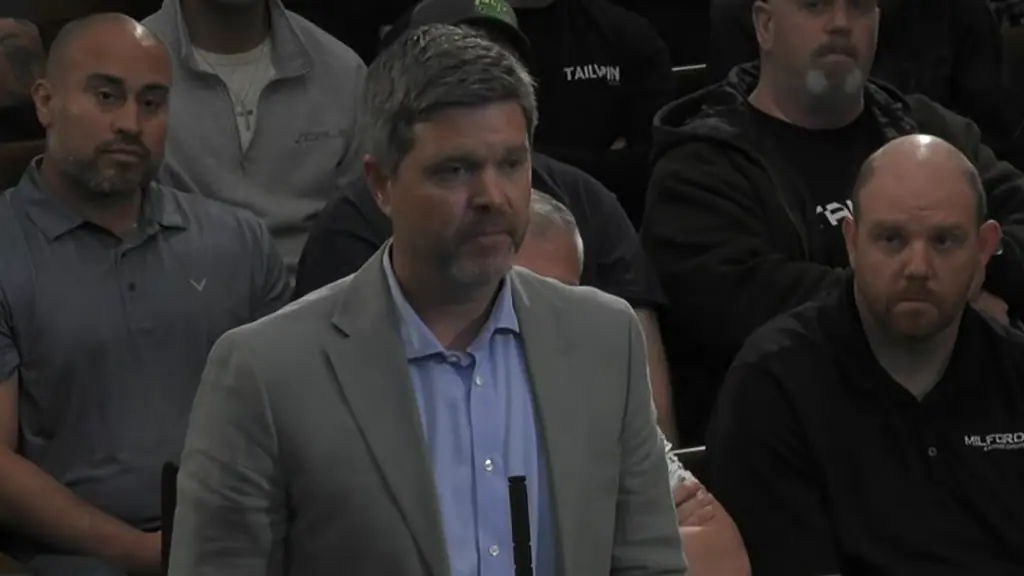
“We have over a few hundred people outside that have created jobs in the last 12 months,” said Trevor Francis, the CEO of Scale Datacenters and the OKC agent for Dallas-based Tailwind Engineering, two of the companies that saw a major turnout of employees at the meeting.
“We have invested $250 million in the city,” Francis told the council, “and this is what you’re seeing here.”
Amendment, not approval
City Manager Craig Freeman was quick to point out Tuesday that amending the city’s data center moratorium for facilities up to 75 megawatts would not amount to automatic approval for construction, but would simply allow those operators to apply for zoning and permitting.
The original moratorium, reported by Free Press, would have prevented all data center facilities, regardless of their size, from even applying:
Under the newly passed amendment, those smaller facilities will still be required to go through the full process of City zoning and planning, a process that does allow for residents to provide comments and input about the projects.
“These are exemptions to the moratorium that we’re creating,” City Manager Craig Freeman explained to the council. “It does not exempt from the permitting or zoning that’s required with this. It’s involving just an exemption to our temporary moratorium that we have in place that’s extended through December 31st of 2026.”
Why 75 megawatts?
The 75 megawatt threshold was chosen, officials said, to allow smaller businesses with smaller, proprietary data centers to continue applying for expansion in the city, while continuing the moratorium on the much larger, much more power-hungry “hyperscale” centers.
Lauren Lembo Kelliher of the OKC Municipal Counselor’s Office explained that 75 megawatts is near the threshold for “hyperscale” size and implied that most of the data centers operating below that threshold are assumed by the City to be much smaller and using a much lower draw of power.
“We were wanting to recognize those businesses that have what we call ‘enterprise data centers,’” Kelliher explained. “So those data centers where they are truly supporting their back-of-house operations. It’s ‘I run a business and I have an asset management system, I have a financial system, I have an HR system.’ So, it’s the blinky lights and the wires and everything that go to support my business.”
What data centers are exempted from the moratorium?
Two data center expansion projects were explicitly singled out in the amendment, carving out dedicated exemptions to their expansion projects as they move through zoning and permitting:
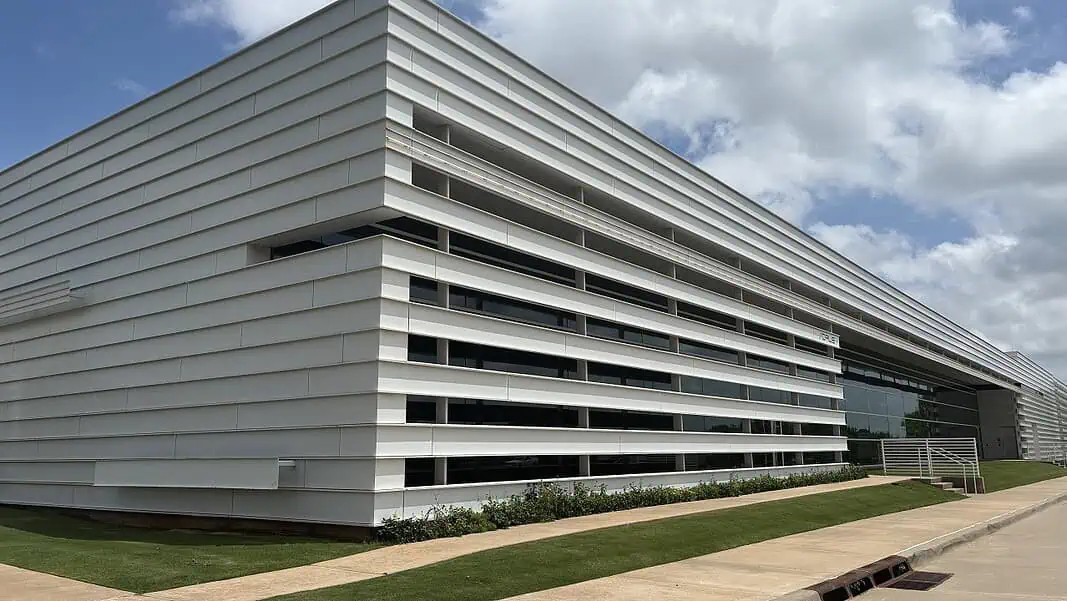
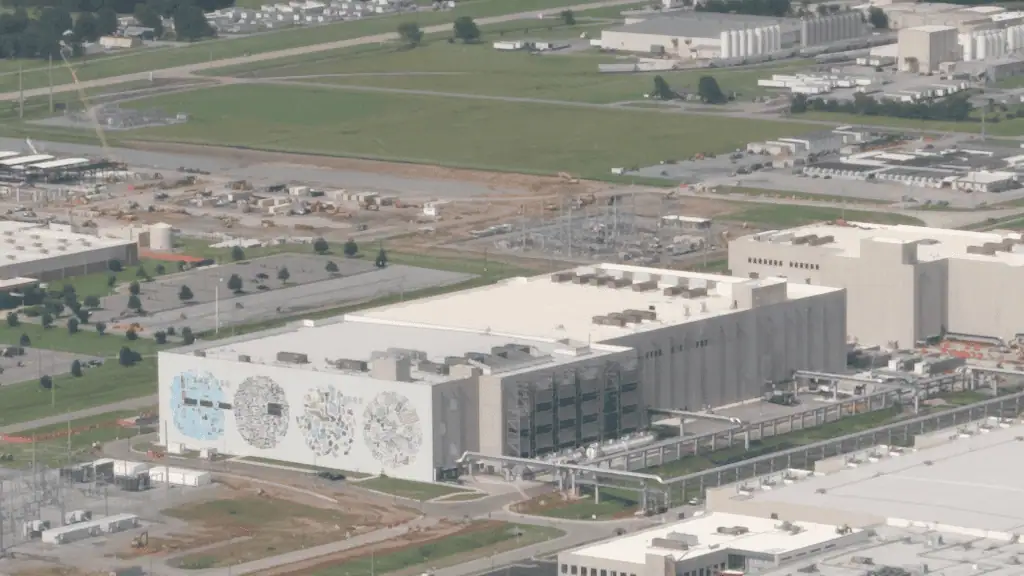
-The Scale Datacenters facility on the Expand Energy (formerly Chesapeake) campus, serving Cerebras AI
-The 7725 Connect development on W. Reno, housing the Rack59 Data Center
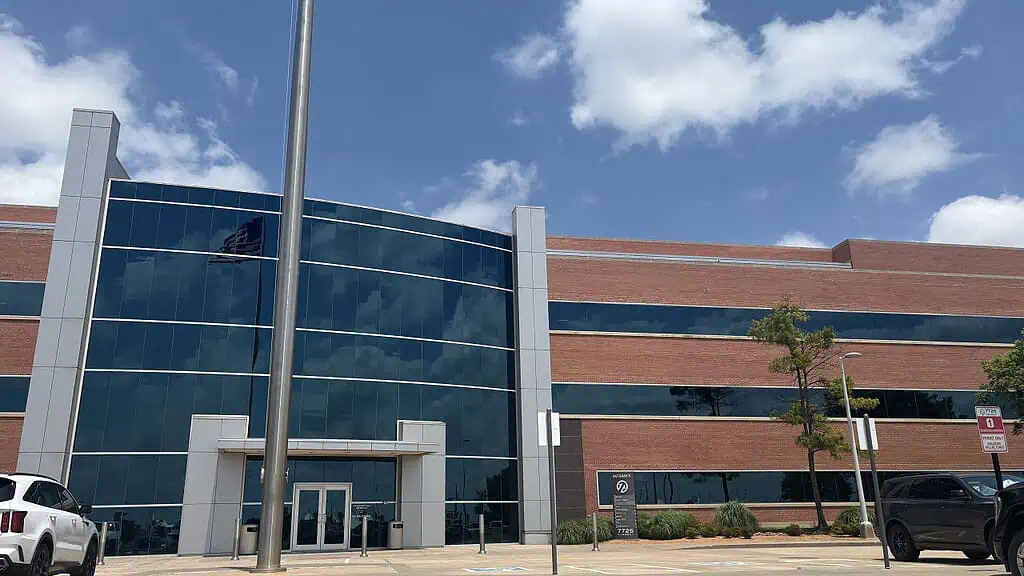
The two facilities join two other data center projects on the far western reaches of OKC that were exempted in the original moratorium because they had already entered the zoning and planning process.
Exemption or favoritism?
The reasons for exempting these specific two data center projects in the amendment were not immediately clear.
Freeman and Kelliher both implied that proposed expansions of city sites would fall below that 75 megawatt threshold, meaning that they would already be exempt from the moratorium under the new amendment.
But far from Kelliher’s “blinky lights and wires” used for back-of-house operations in small business, the facility on the Expand campus has been overseen by Trevor Francis and Scale Datacenters to serve international AI leader Cerebras.
The facility already runs at 10 megawatts, with Francis claiming at the April 21st City Council meeting that all of its power and water usage is “behind the meter,” meaning that it’s not pulled from the public grid or infrastructure.
Similarly, the Rack59 data center at 7725 W. Reno Ave. supplies server capacity to AI and streaming services through a 40 megawatt substation on-site, with recycled power providing up to a 175 megawatt capacity, according to the facility’s website.
Ward 6 City Councilor JoBeth Hamon voiced her opposition to the amendment and her confusion as to why these two data centers needed specific exemptions.
“Where does that stop?” Hamon asked from the dais. “Does someone show up today of next week and say ‘me too, can you add me into that exemption?’”
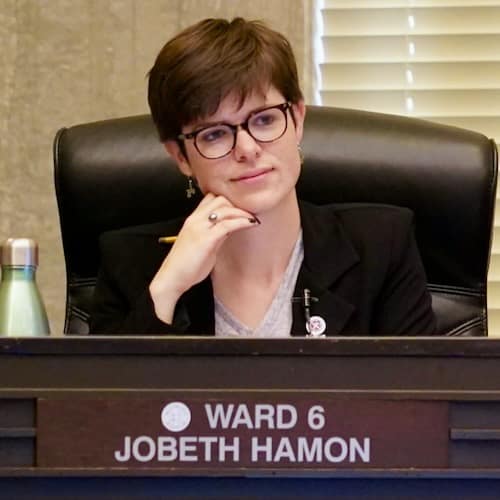
In a now-expired, temporary story post on Instagram, Hamon elaborated further on her concerns.
“The problem IMO with naming two specific properties in an exemption,” the post read, “is partially the look of favoritism and connections allowing you special treatment.”
She then echoed comments she made at Tuesday’s meeting that special allowances and exemptions like those carved out in the amendment should be made officially through the City of OKC’s Board of Adjustment.
“We already have a process for property owners to apply for exemptions,” the post continued. “These properties could have opted to go that route. Instead they used their labor force and personal connections to put pressure on Councilmembers.”
The amended moratorium, creating the exemptions for the Scale Datacenters and 7725 Connect properties and allowing data centers up to 75 megawatts to continue applying for zoning, passed 7-2 with only Hamon and Ward 2 councilor James Cooper opposing.

Brett Fieldcamp is the owner and Editor in Chief of Oklahoma City Free Press. He has been covering arts, entertainment, news, housing, and culture in Oklahoma for nearly two decades and served as Arts & Entertainment Editor before purchasing the company from founder Brett Dickerson in 2026.
He is also a musician and songwriter and holds a certification as Specialist of Spirits from The Society of Wine Educators.