
It is a tale of three cities.
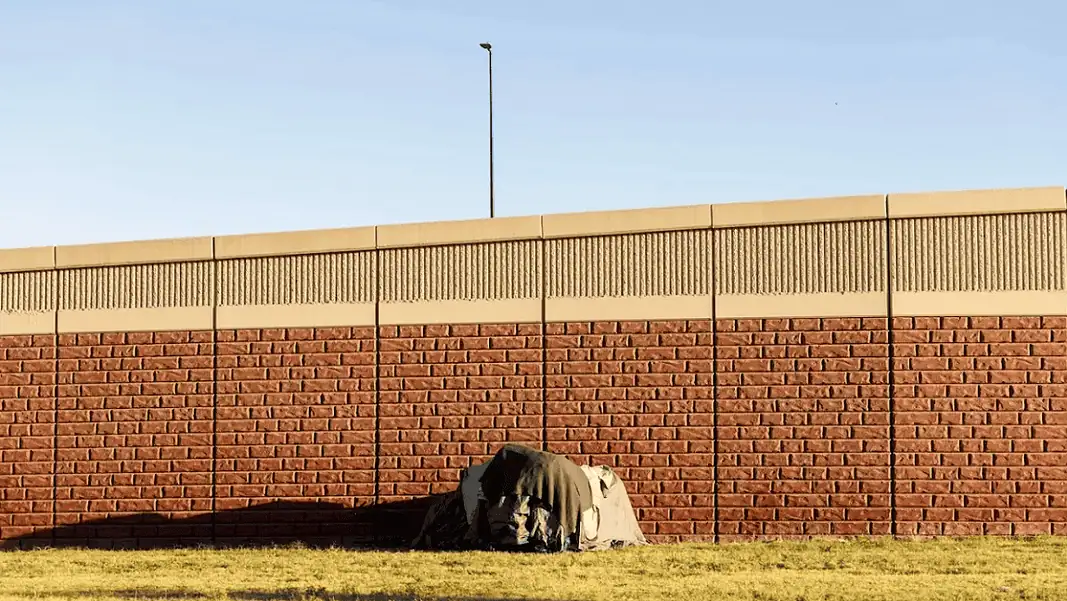
On the morning of May 22, Oklahoma Highway Patrol troopers cleared a homeless encampment on vacant state-owned property in Norman under Gov. Kevin Stitt’s Operation SAFE initiative. Service providers said there was no warning that an encampment sweep would be happening.

The move mirrored how Operation SAFE, or Swift Action For Families Everywhere, played out when it was first introduced in Tulsa in September. The three-week campaign saw a rift between Tulsa city officials and state officials, with Tulsa Mayor Monroe Nichols and Stitt publicly disagreeing over the governor’s handling of the homeless population living on state-owned land in Tulsa.
Ultimately, Operation SAFE would only further displace homeless Tulsans and make it more difficult for service providers to provide resources and get people housed.
Things were different when Operation SAFE came to Oklahoma City in November. Jamie Caves, the strategy implementation manager for Oklahoma City’s collaborative housing initiative, Key to Home, said that after seeing what happened in Tulsa, a member of the Key to Home board approached the state to discuss a collaboration through the encampment rehousing process.
Service providers and outreach teams were involved in the process, and the state agreed to pay up to $800,000 for housing and services for those displaced by Operation SAFE, a shift from Stitt’s prior stance against using tax dollars for homelessness housing, according to reporting by The Frontier.
Service providers said the approach in Oklahoma City was a less damaging way of sweeping encampments and would better serve those experiencing homelessness.
Norman Fallout
“We were given zero heads up that they were coming,” Jess Alvarez, director of operations for Food and Shelter Inc. in Norman, said. “Nobody that was in the field camping was given resources. They were not given answers as to where to go next.”
In a press release, the governor’s office encouraged service providers to connect those affected by the sweeps to the Be A Neighbor program. But Alvarez said service providers can do more when it’s a collaborative effort.
“When we’re included, then we’re able to let people know they can gather important documents, they can gather their very little belongings that they do have,” Alvarez said. “Resources were wasted that day. Money was wasted that day. And, people were inhumanely displaced that day.”
Alvarez said the encampment sweeps were just a whack-a-camp and that, without resources in place, all it did was strip vulnerable members of society of their few belongings and their dignity.
“That’s what Operation SAFE did in Norman, they came in and kicked someone that was already down,” Alvarez said.
Rachel Freeman, president and CEO of City Care, an Oklahoma City shelter, said that encampment sweeps are dehumanizing and disruptive when life-saving medications, documents and identification are lost.
“It is delaying their path back to self-sufficiency,” Freeman said. “It’s not a cost-effective way to deal with encampments. It’s just not effective at all. It’s morally bankrupt and it’s not effective.”
Housing First
Freeman said it wasn’t just the collaboration between Oklahoma City and the state that made Operation SAFE less damaging; it was also the state’s funding.
“More than just being collaborative, all of those displaced were offered housing on the back end and shelters were used as a staging ground,” Freeman said.
One service offered by the low-barrier shelter City Care is supportive housing, which follows a housing-first model similar to Key to Home.
Housing-first projects prioritize permanent housing for people experiencing homelessness to improve their quality of life through shelter and resources like case management, healthcare and food.
Continued resources after housing are an important aspect, Freeman said.
“Housing first does not mean housing only,” Freeman said. “We absolutely need to be connecting people to the services that they need in order to remain stably housed.”
Criminalization and Dehumanization
During Operation SAFE, Stitt has repeatedly said that allowing people to sleep under bridges and in tents is not compassionate.
The governor’s office did not respond to voicemail messages left on June 1 and June 4 seeking information for this story.
Freeman said that not providing resources and criminalizing homelessness is more dehumanizing.
“Your mere existence is illegal,” Freeman said. “For case managers and street outreach workers who may be in process with this person and getting them reconnected to housing, you have now disrupted that and now we no longer know where that person is.”
With a growing trend of anti-homeless legislation, Freeman said that Oklahoma is focused on the wrong part: the aesthetics.
“This is why people are engaged with this issue for the most part,” Freeman said. “We don’t want to look at it, so now we’re going to criminalize basic survival in this place. What we need to be thinking about is that folks do not have an affordable place to live.”

Republished in partnership with Oklahoma Watch under a Creative Commons license. Free Press publishes this report as a collaborative effort to provide the best coverage of state issues that affect our readers.

Jake Ramsey covers evictions, housing and homelessness. Contact him at (405) 370-3798 or jramsey@oklahomawatch.org.