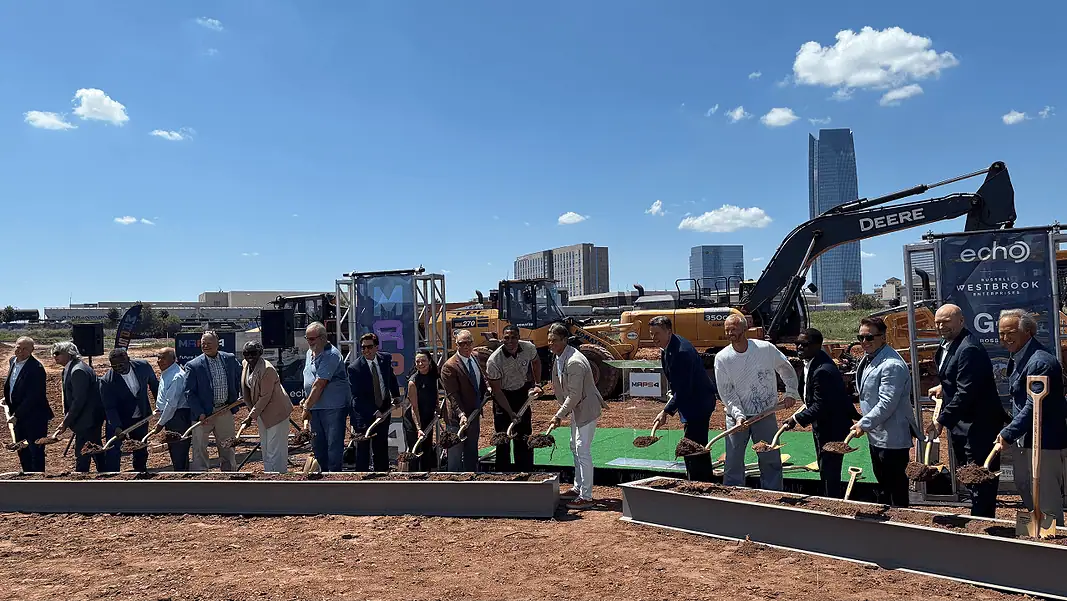

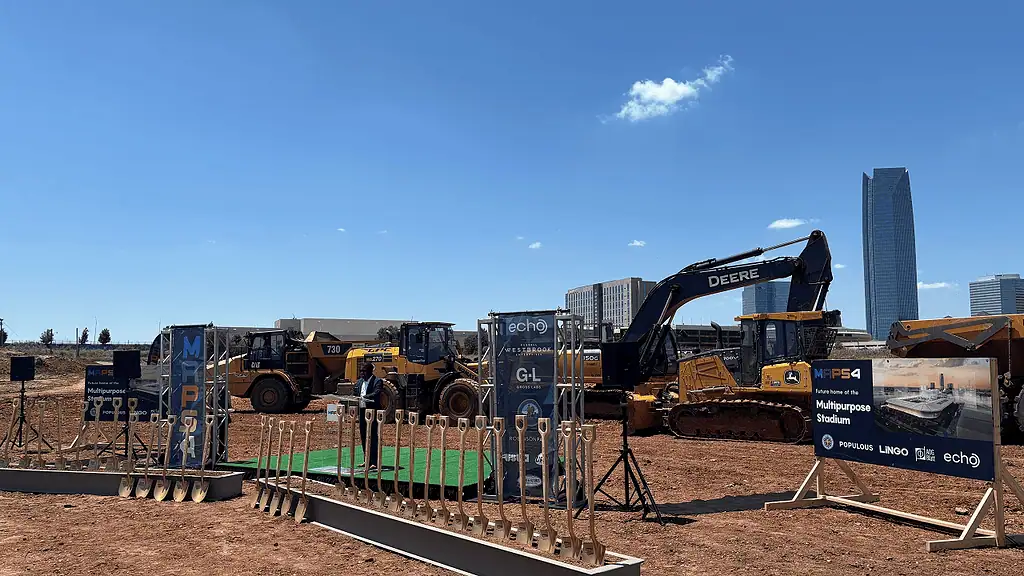
OKLAHOMA CITY – After years of planning, design, land donations, and significant funding bumps, City officials were joined by sports leaders and superstars Monday afternoon to finally break ground on the long-awaited MAPS 4 Multipurpose Stadium.
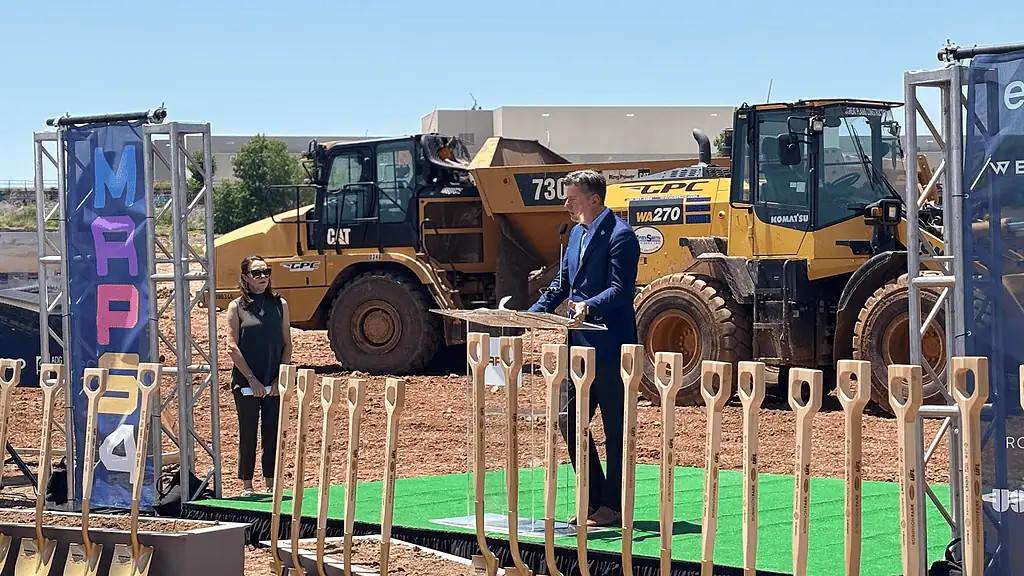
Gathering in the nearly 100-degree heat at the future stadium’s site just south of Bricktown, between Oklahoma City Blvd and I-40, Mayor David Holt and members of the City Council and MAPS Advisory Board joined leaders of the United Soccer League, United Football League, and major investment firms for the ceremony.

The groundbreaking kicks off an expected two years of construction, with the stadium eyed to be operational by the 2028 soccer season, when play will finally resume for the still yet-to-be-named USL team replacing the former OKC Energy.
“We appear to be the only Top 50 city without a multipurpose stadium of some kind,” Holt said in his remarks championing the new opportunities he says the stadium will bring. “The lack of that facility was, and is, a glaring hole in our quality-of-life portfolio as a community, and it was threatening our long-term relationship with soccer, the world’s most popular sport, and denying us opportunities for some concerts and for many leagues and events that need this type of facility.”
Long road to groundbreaking
Originally approved by voters as part of the MAPS 4 package all the way back in 2019, the stadium plans have seen numerous complications and recalibrations on the road to Monday’s groundbreaking.
Early plans called for the ownership of the then-named OKC Energy FC to purchase a parcel of land for the stadium and donate it to the City. But that process repeatedly hit legal, logistical, or financial snags before control of the team was bought by Echo Investment Capital, who finally made good on that land donation deal in late-2024.
By that time, the projected budget for the stadium project was $71 million, up 30 million from the original $41 million price tag approved by the MAPS 4 vote.
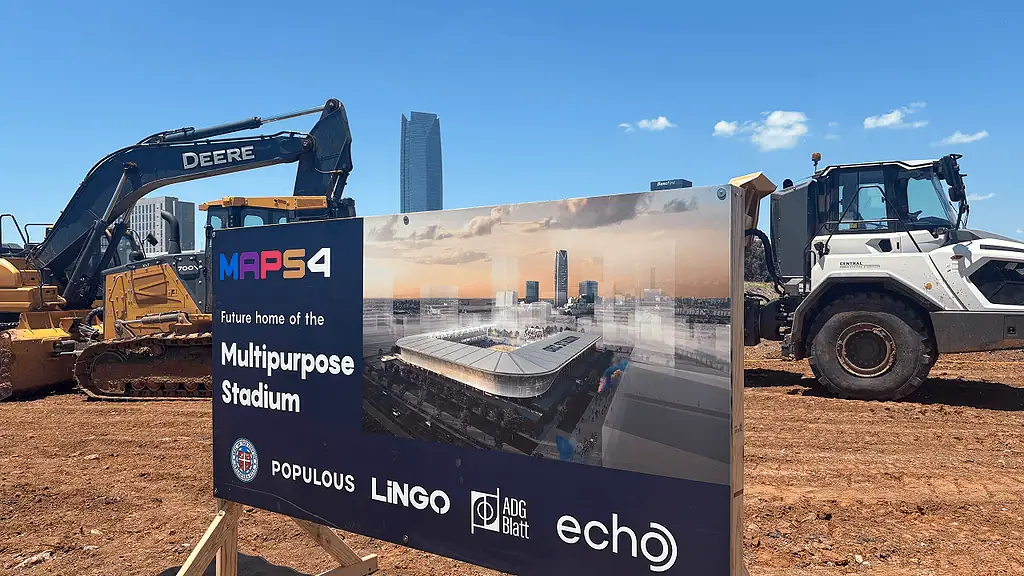
Official renderings and designs for the stadium still wouldn’t appear until more than a year later, finally seeing release in December of last year after some rapidly expanding sports district plans and growing interest from other sports leagues and high-profile investors like former OKC Thunder superstar Russell Westbrook.
Alongside those renderings came a new projected cost for the project of $121 million, having picked up another 50 million in City funds as part of October’s GO Bond vote.
“Echo, along with [real estate developer] Robinson Park, has ambitious plans to develop the area surrounding the stadium into a sport-centered entertainment district, creating a world-class environment that will enhance downtown’s vibrancy in the next two years,” Ward 7 City Councilman Camal Pennington told the crowd Monday.”This underutilized land in the heart of Oklahoma City will completely transform into a bustling economic driver, attracting residents and visitors for years to come.”
Community impact
As the project’s primary private investor, Echo CEO Christian Kanady took time to carefully thank the many supporters, partners, and officials that made the groundbreaking possible after all this time, as well as touting a growing vision for what OKC’s sports and entertainment industry can become.
“Great cities don’t just happen,” he said. “They’re built by bold people who see what a place can become and have the courage to make it real.”
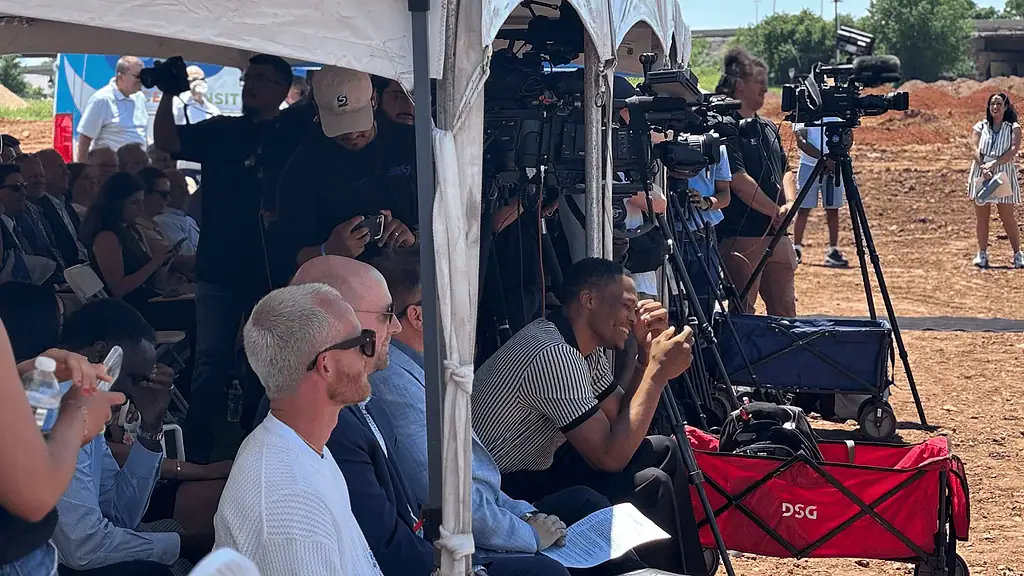
But even Kanady acknowledged that many in the crowd were anxiously awaiting the day’s biggest star, former Thunder guard and NBA record-holder Russell Westbrook, who has made OKC his home even though he’s no longer on the city’s NBA team. Westbrook has turned much of his attention recently to broader investments, including becoming a significant partner in OKC’s upcoming new soccer team.
“Any opportunity I can to give back to the city, to the community, to the people, I will continue to do that,” Westbrook said.
The stadium is intended to “give back” to the city and community through its anticipated partnership with Oklahoma City Public Schools, offering schools across the district a large-scale venue for school sports and graduation ceremonies.
OKCPS Superintendent Dr. Jaime Polk spoke Monday about the pride and ambition that she hopes the venue will instill in students.
“This multipurpose stadium will give students and families a place to gather, celebrate, compete, perform, and make lasting memories,” Dr. Polk said. “It is also an investment in our youth and our future talent pipeline for our students.”
‘The next phase’
Though the stadium is now set to be the home of school sports, large-scale outdoor concerts, and a newly announced United Football League franchise, the primary occupant is still expected to be OKC’s United Soccer League team, capitalizing on the sports fandom of the city’s Hispanic communities and the growing local interest in the world’s biggest sport.
Jeremy Alumbaugh, President of USL Championship spoke to Free Press following the ceremony Monday and said that he fully expects that the new stadium will dramatically increase interest in OKC soccer compared to the days of the Energy playing in the much smaller Taft Stadium.
He believes there’s still a lot of untapped potential for the sport in Oklahoma City.
“Venues are everything in sports,” Alumbaugh told Free Press. “OKC is a booming market. It’s an emerging market. It was strong when we had the club here before, and now we’re just going to build into that next phase.”

Brett Fieldcamp is the owner and Editor in Chief of Oklahoma City Free Press. He has been covering arts, entertainment, news, housing, and culture in Oklahoma for nearly two decades and served as Arts & Entertainment Editor before purchasing the company from founder Brett Dickerson in 2026.
He is also a musician and songwriter and holds a certification as Specialist of Spirits from The Society of Wine Educators.