OKLAHOMA CITY – OKC is once again “treading water” in the City budget for the 2027 fiscal year, reporting lower-than-hoped tax revenue and notably little input from city residents.
But officials are still hopeful that some major upcoming projects will finally turn that shortfall around in coming years.
When the City Council votes on June 2nd to approve the Oklahoma City budget for Fiscal Year 2027 (FY27), it’ll be set at around $2.1 billion, only about a 3% increase over FY26, with some minimal reductions across City departments and no significant new funding boosts to speak of.
We’re really trying to just tread water and maintain as much service as possible.– City of OKC Budget Manager Christian York
That’s because the City’s primary revenue stream, sales tax, once again missed out on the substantial increase that officials have been hoping to see.
“This year, we’re basically trying to just live within our means and keep what we’ve got,” OKC Budget Manager Christian York told Free Press in a call Friday. “We’re really trying to just tread water and maintain as much service as possible.”
Sales tax revenue still down; costs still rising
Oklahoma City’s single largest source of income and revenue is sales tax, generated by a percentage of any sale made in OKC.
But as the economy has slowed and inflation has reduced the spending and shopping power of the average American, OKC’s sales tax revenue has refused to rise at the rates hoped by City officials.
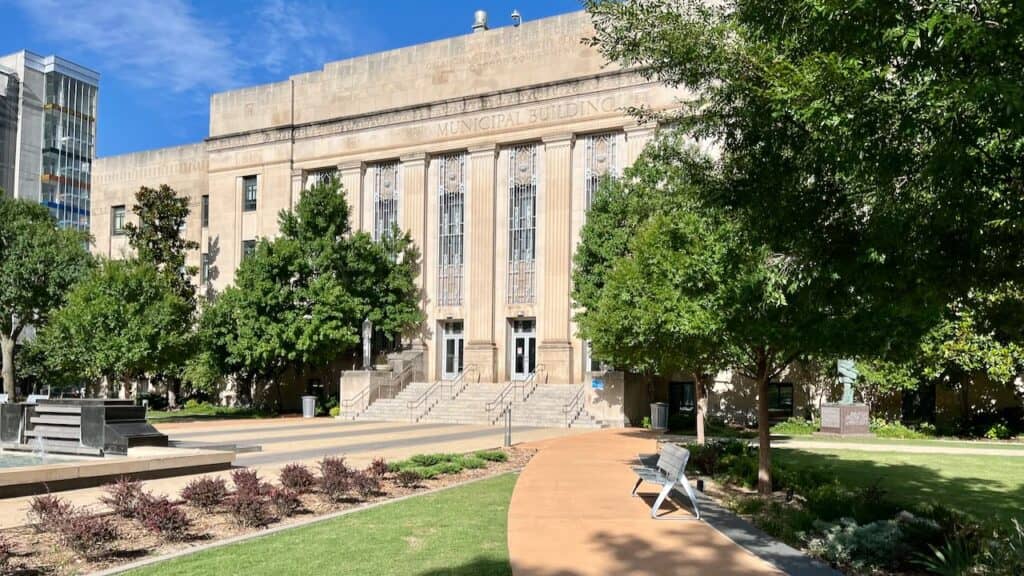
That means a continuation of a multi-year trend of cuts and reductions made to keep the City budget at roughly the same level year-over-year.
“Historically, we like to see about a 3% growth rate, because 3% growth tends to keep up with inflation,” York explained. “What we’ve been seeing the last couple of years, and including the forecasted year, is that we’re just not hitting 3%. We’re hitting close to the mid-2% growth rate.”
But the City is still contending with the nationwide trend of rising costs and inflating expenses as well, perhaps most dramatically, the recently skyrocketing cost of health insurance following the cancelation of some significant federal subsidies.
“Just our normal cost of goods and cost of doing business has gone up with inflation,” York said. “But our number one cost-driver is our personnel cost. Health insurance alone went up about 8.3%.”
Small cuts to police and fire; bigger cuts everywhere else
Maintaining City services, then, means carrying over all of the costs and expenses from last year, adjusting for inflation, and then calling for government-wide cuts to bring the total budget back down to a level that can be covered by the stagnating sales tax revenue.
That means cuts at every level and no new policies or expenditures unless they can be covered by redirected funds.
“It was only cuts this year,” York said.
Even the public safety departments, police and fire, traditionally the most costly departments by far, were asked to make cuts, albeit much smaller ones compared to other departments.
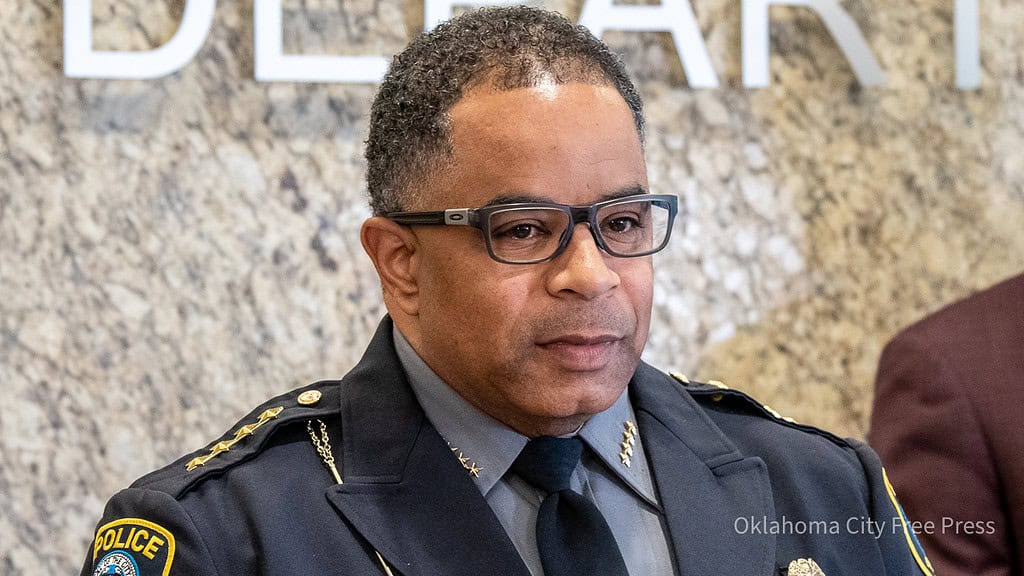
Police and Fire were asked to reduce budgets by just 1.4%, accomplished by Police keeping at least 20 positions frozen (vacant positions allowed to exist with no one filling them) and Fire cutting some high-rank positions in order to fund a new fire wellness program.
York said those cuts can be made safely because of improvements in the City’s first responder policies achieved through mental health and crisis response teams like the Mobile Integrated Health units.
“There’s been significant offset from responding with the correct type of medical response, for example, for folks in some type of crisis, rather than sending a police officer out there,” he said. “We’re evolving in our understanding around fire and police, and there’s some cost benefit. These programs are paying dividends and are really freeing up those resources.”
Free Press reported on the launch of OKC Fire’s Mobile Integrated Health unit just one year ago:
Most other departments were asked for 2.4% in cuts, with Parks & Recreation, Code Enforcement, and General Works all eliminating some positions and EMBARK reducing their bus service hours on weekends.
Minimal input from residents
While the City of OKC does welcome resident input on the annual budget through in-person appearances at City Council, a dedicated email account, and a feedback form on the City’s vision.okc.gov website, York said that resident input has been notably slim this year.
“Our engagement with residents this year has been much less than prior years,” he said. “Last year, we had north of 70 comments made, in addition to the people that showed up the council and so on. This year, it’s been relatively quiet. We’ve had a fraction of that show up at Council and thus far, I’ve only seen one email comment come in about a concern about the reduction in firefighters.”
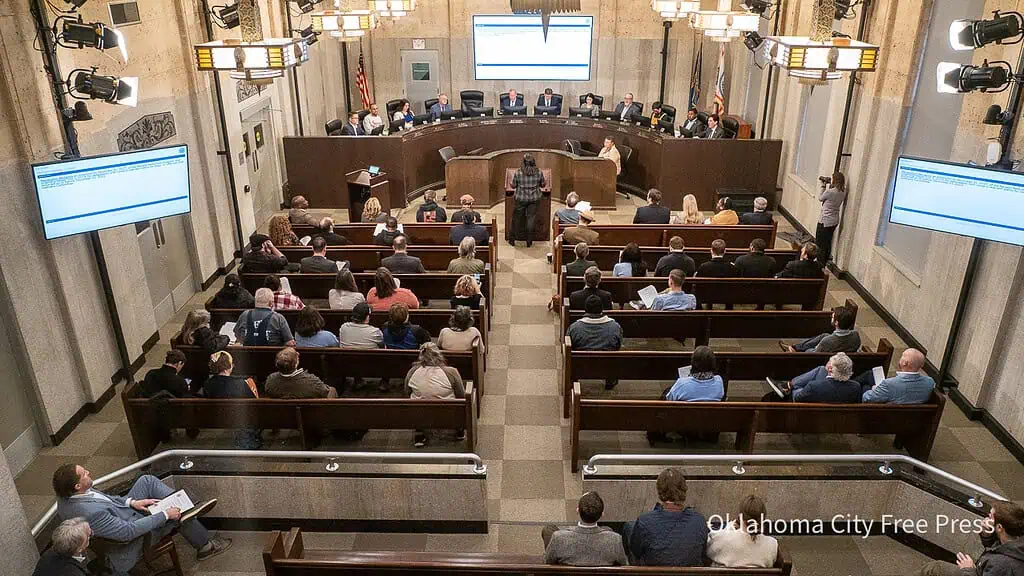
The April 28th City Council meeting on the budget saw just a handful of in-person attendees offering their opinions of the budget proposals, primarily regarding the police budget, with most voicing support for police funding and just one person, activist Tevin McDaniel, speaking in opposition, citing police violence and brutality reports.
Aurelius Francisco, McDaniel’s fellow community activist with the Foundation for Liberating Minds, also spoke on behalf of a “participatory budget” model that would allow OKC residents to directly vote on funding and allocations for City departments, including police, rather than City Council alone approving budgets.
“When we talk about the budget specifically,” Francisco told the council, “there’s so much opportunity to fund things that actually support community safety beyond police and fire.”
Oklahoma City residents can still provide input and feedback on the FY27 budget through May 19th HERE.
Big projects coming soon
As the FY27 budget heads for City Council approval on June 2nd, a number of major projects are still looming large on the horizon, and officials are hopeful that they’ll provide that anticipated boost to tax revenue once completed.
“In the near future, we’re really hoping for a strong return of our revenue, because we’ve got a lot of big stuff coming,” York said. “We’ve got the Olympics in 2028, we’ve got an expansion to our Bus Rapid Transit lines, and of course, we’ve got the new Continental Coliseum, all over just the next few years.”
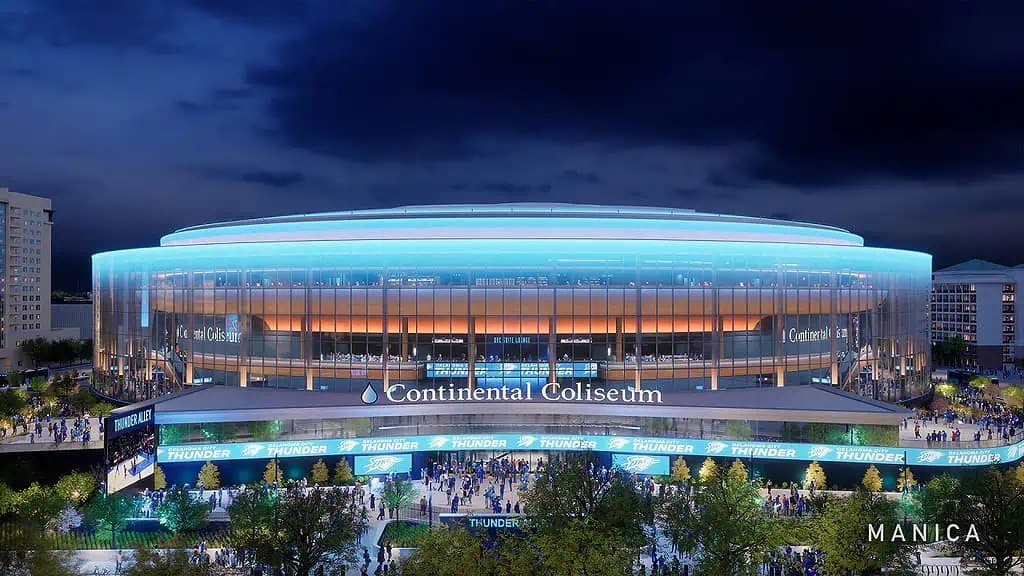
Ideally, the City would already be allocating funds to help kickstart those projects and get an early jump on planning and organization for some of the largest constructions and highest-profile events in city history.
But with the stubbornly static rate of tax revenue, that’s just not happening.
“We need to start stair-stepping our way up towards those future costs,” York said, “and I’ll just be honest with you, we weren’t able to do that this year.”
You can view budget breakdowns, overviews, and the entire FY7 budget book, as well as provide feedback on City budget proposals through Tuesday, May 19th at vision.okc.gov/citybudget.

Brett Fieldcamp is the owner and Editor in Chief of Oklahoma City Free Press. He has been covering arts, entertainment, news, housing, and culture in Oklahoma for nearly two decades and served as Arts & Entertainment Editor before purchasing the company from founder Brett Dickerson in 2026.
He is also a musician and songwriter and holds a certification as Specialist of Spirits from The Society of Wine Educators.