
OKLAHOMA CITY – We can all think of those places in our lives or in our memories that seem to spark some truly mysterious or unexplainable feelings, the kinds of places that could be filled with quiet mystery or dripping with some unseen unease.
They’ve come to be known (especially in the postmodern parlance of Gen Z internet discourse) as “liminal spaces,” those places that feel pregnant with possibility and passing presence, often transitional spaces like hallways, corridors, and public grounds.
It’s no surprise, of course, that these spaces, and the mysterious powers that they hold, have become persistent sources of inspiration for filmmakers for generations, attempting to harness that liminal feeling on screen and to unpack the mystery that comes with it.
In these last weeks of May, as the seasons themselves transition through their own strange, liminal time, OKC audiences will be treated to a trio of films exploring the power of these odd, charged places.
That includes a new cinematic dive into one of the internet’s favorite horrors, a recent international standout considering one of these meditative places on an international scale across a century, and a pivotal film from a century ago embracing the madness and discomfort that can be barely contained within a place’s walls.
‘Silent Friend’ – Oklahoma City Museum of Art – May 29th through May 31st
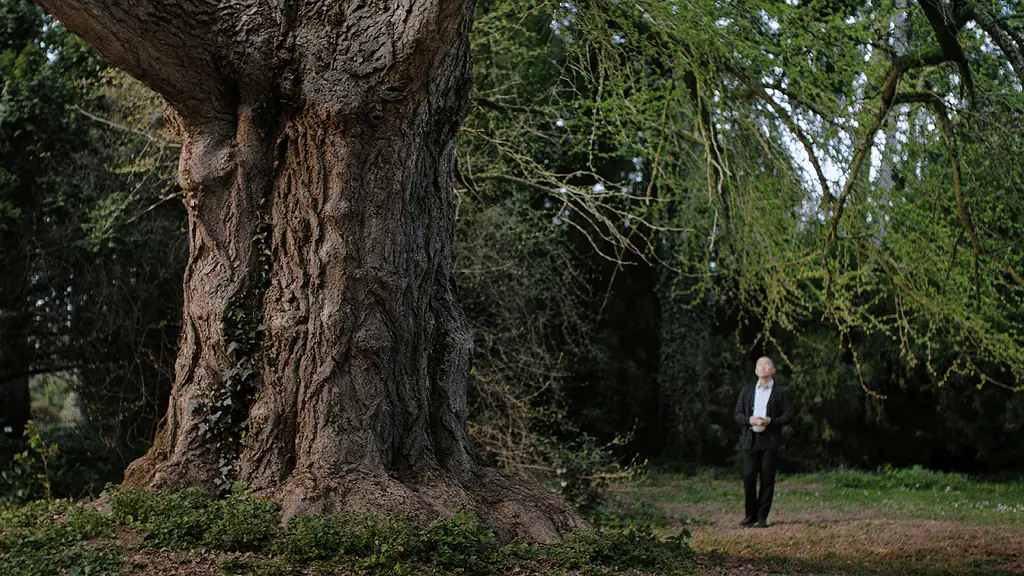
A single, towering gingko tree in a German college courtyard serves as both the central location and central character of Hungarian director Ildikó Enyedi’s newest meditation on time, consciousness, and the roots that connect humanity to nature.
Spanning more than 100 years, “Silent Friend” tells three stories separated by generations, each centering on a character attempting to further man’s understanding of the natural world, and each returning again and again to the same tree as it watches over the blinks and whims of a century.
In 1908, there’s a young woman seeking to be the university’s first female student and experimenting with photography and community around the tree and the garden in which it grows.
In 1972, a lonely student spends his time reading quietly in the campus garden near the tree and attempting to woo a classmate through philosophical discussions of botany.
And in 2020, a neuroscientist (played by Hong Kong legend Tony Leung) attempts to map the potential neurology of the tree as the Covid pandemic complicates human interaction and research.
It all forms a gorgeously filmed, deeply considered examination of the places and spaces that might also be examining us.
‘A Page of Madness’ w/ live score by Count Galvorn – Oklahoma Film Exchange – May 31st
What could be better than watching a 100-year-old Japanese horror film in a theater that may be even older than the movie?
Well, watching it with a live performance of an original, dark, dreary, ambient score that digs at the heart of those worrying, fearsome feelings, that’s what.
One of the earliest cinematic entries in the field of Japanese psychological horror, director Teinosuke Kinugasa’s “A Page of Madness” is a silent show of unraveling reality and rapidly descending sanity as an elderly man takes up work as a janitor in an asylum to keep watch over his wife, who has gone insane.
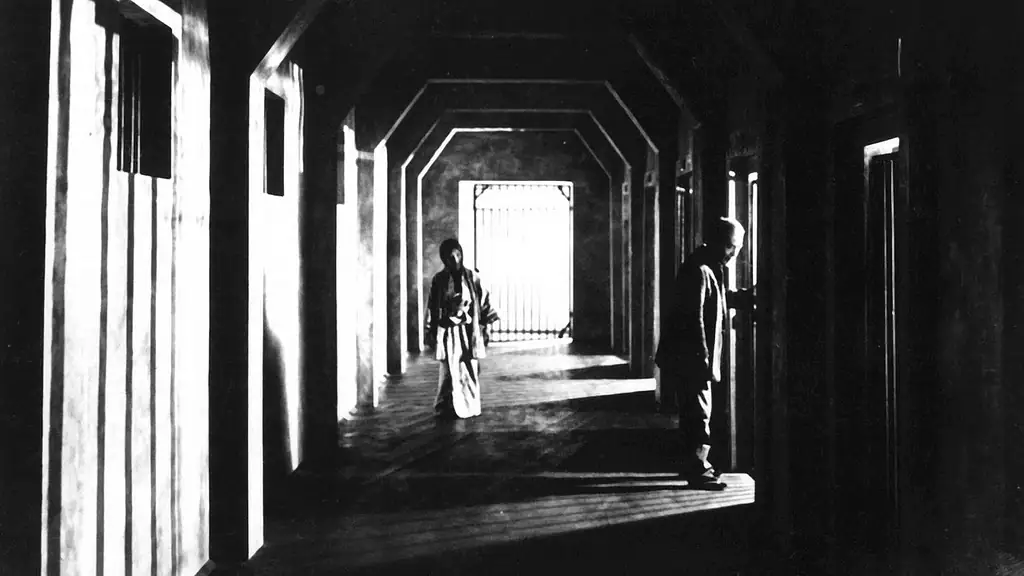
The man’s own mind begins to crumble as his daughter chastises him for causing her mother’s madness and as the oppressive architecture of the asylum and the seething inmates within begin to break down his mental defenses and drive him to the same despair.
Kinugasa’s camera returns again and again (and again) to the asylum’s liminal spaces, especially the high-contrast hallways, all bars and shadows, as the bodies and figures shuffle through, reminding the old man that his willing decision to wind up in such a dark and unsettling place doesn’t make him any less of a prisoner there.
‘Backrooms’ – Opens wide May 29th
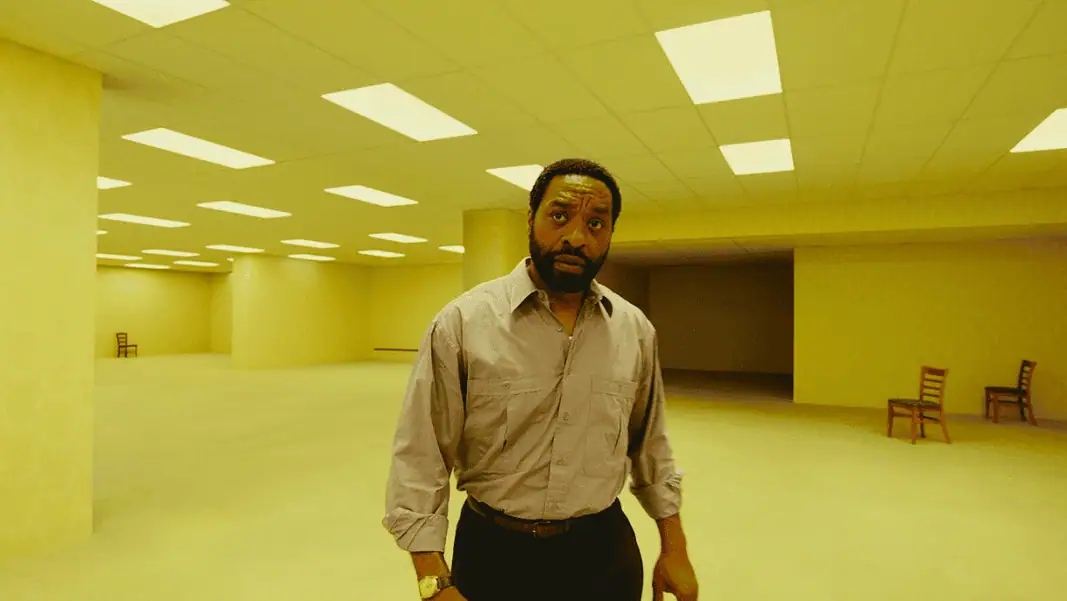
The ultimate “liminal space” horror, director Kane Parsons adapts his own confounding webseries, which was, in turn, adapting a long-running internet “creepypasta,” kind of a shared dark online mythology, like a neverending game of “telephone,” but every new entry is just expanding on the weirdo psych-horror of the original conceit.
In this case, that conceit is an endless, interconnected maze of liminal spaces, disregarding all laws of physics and spatial reality, and all resembling the bland, “empty department store” character of consumed, corporate Middle America, like stumbling into a dead shopping mall left to rot, but somehow frozen in time.
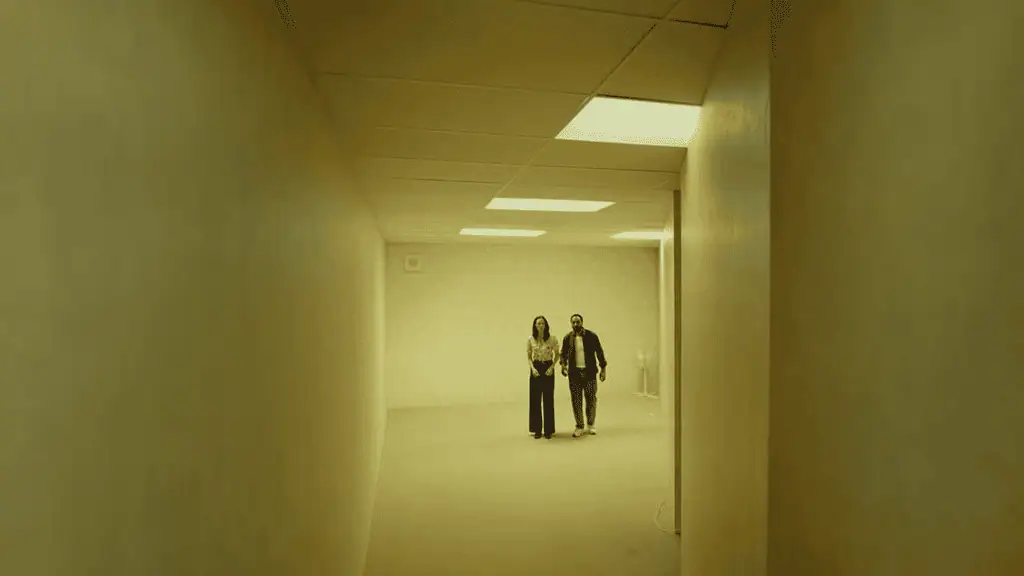
In Parsons’ film, it’s the backrooms of a furniture store, discovered by accident when a salesman (the infinitely watchable and immediately intriguing Chiwetel Ejiofor) phases through a wall and finds himself faced with the beige-yellow nightmare of innumerable rooms and incalculable mysterious horrors.
Attempting to develop a whole film and narrative around something as deeply “internet” as a backrooms creepypasta feels like an impossible task, but Parsons’ spot-on, uncomfortably bland, corporate aesthetic, and the mere presence of Oscar-nominated talent like Ejiofor and “Sentimental Value” standout Renate Reinsve make this movie automatically compelling.
Guess we’ll have to wait and see.
Catch Brett Fieldcamp’s film column weekly for information and insights into the world of film in the Oklahoma City metro and Oklahoma. | Brought to you by the Oklahoma City Museum of Art.

Brett Fieldcamp is the owner and Editor in Chief of Oklahoma City Free Press. He has been covering arts, entertainment, news, housing, and culture in Oklahoma for nearly two decades and served as Arts & Entertainment Editor before purchasing the company from founder Brett Dickerson in 2026.
He is also a musician and songwriter and holds a certification as Specialist of Spirits from The Society of Wine Educators.