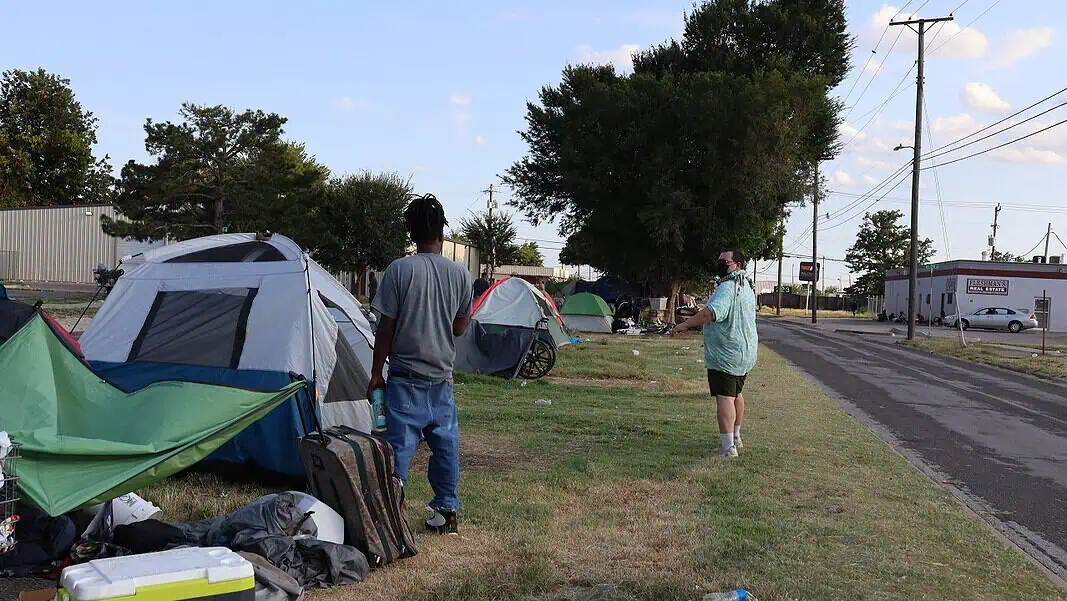

OKLAHOMA CITY – The City of OKC has closed a significant homeless encampment outside the Homeless Alliance headquarters at NW 3rd St. and Virginia Ave., with roughly three-quarters of the campers moved directly into housing.
55 people were housed who were living on the median, the largest project yet for the City of OKC’s Key to Home Initiative, a collaboration of city efforts and nonprofits.
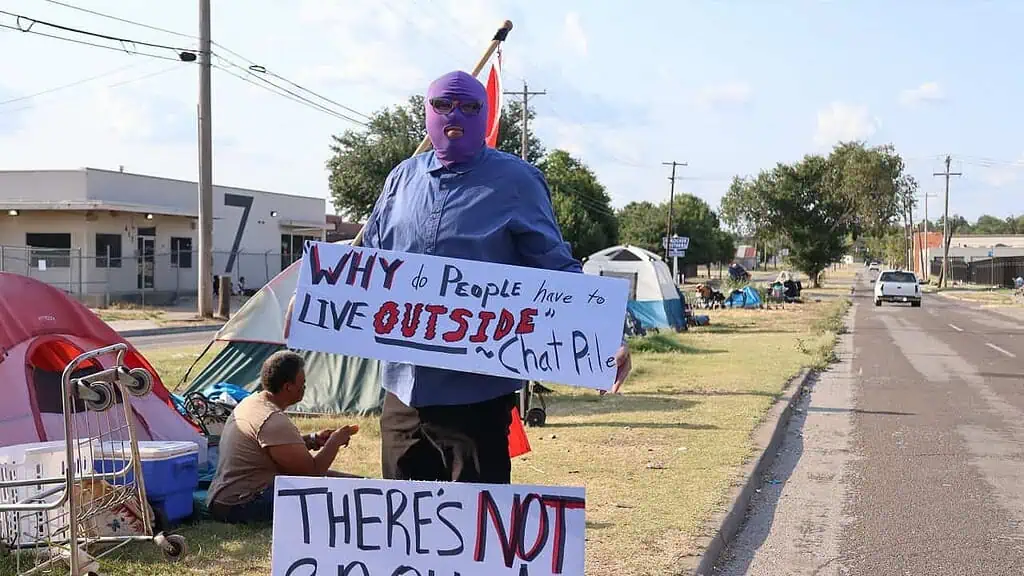
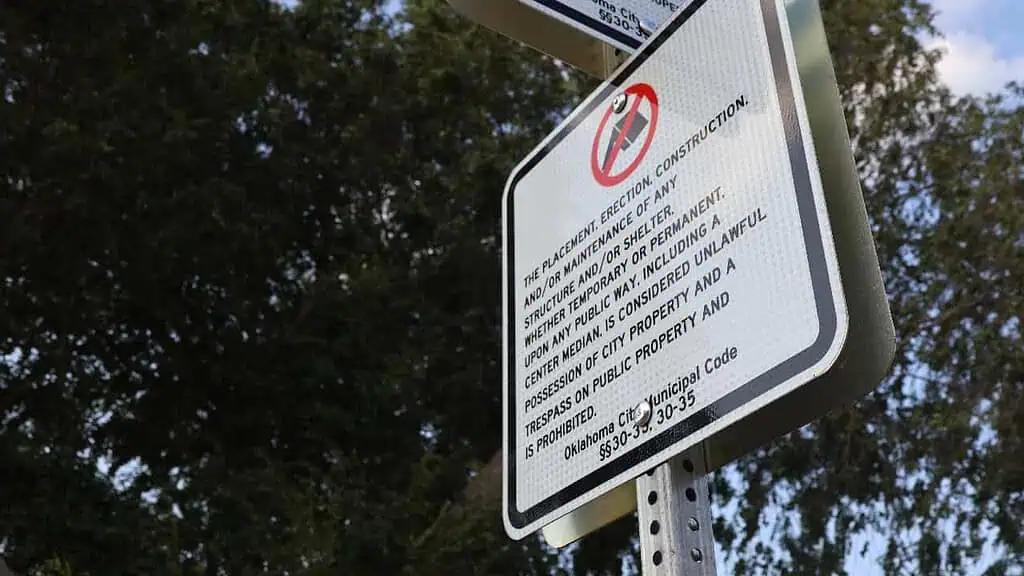
In the days leading up to August 10th, word circulated on social media that there would be a police presence at the Virginia Avenue encampment and that people camping there would have to leave. When a handful of activists and volunteers arrived that morning, the median had not been fully cleared, though there were fewer tents than before, and new signs had been posted throughout the median warning that structures could not be erected or maintained there.
The encampment sits directly across from Homeless Alliance’s WestTown Campus, which provides meals, hydration, showers and other hygiene services, storage, medical and mental health services, housing navigation and case management.
Activists Amy and Blue, who regularly visit the area, said they immediately noticed a difference in the number of people and tents.
“We’re down here regularly; this is the first time this has been cleared up, and this is the first time those signs have come up,” they said. “It’s the first time the city has really been pushing.”
‘Let them be here until they get housed’
Police say the signs are intended to enforce restrictions on structures in the median, while the broader rehousing effort focuses on connecting people with available housing, services and other resources.
“Our officers are able to assist Key to Home and those experiencing homelessness compassionately,” OKCPD Public Information Officer Dillon Quirk told Free Press. “We are offering education and assistance while promoting the compliance for the removal of structures in those hundred blocks per the signs that were established.”
Police officials were clear that they were not intending to make arrests at the location and that their efforts were wholly separate from recent State police actions fueled by Governor Kevin Stitt’s Operation SAFE, regarding encampments on State-owned properties.
An OKCPD police officer on Aug. 10 offered a similar explanation.
“Let them be here until they get housed,” the officer said. “But they can’t have structures in the median. We’re just trying to get them out of here and into housing and help them the best we can do.”
By Aug. 20, the remainder of the median was cleared of any structures such as tents.
Housing first, cleanup second
The closure itself was part of a larger city effort and Oklahoma City’s Encampment Rehousing Initiative, connecting people living in encampments with housing through the Key to Home Partnership.
The initiative was created to change how Oklahoma City responds to chronic, unsheltered homelessness. Instead of clearing an encampment first and addressing housing afterward, outreach workers begin working with people living there before the closure.
The process, which Key to Home describes as “housing first, cleanup second” generally takes four to six weeks and is followed by up to 12 months of case management.
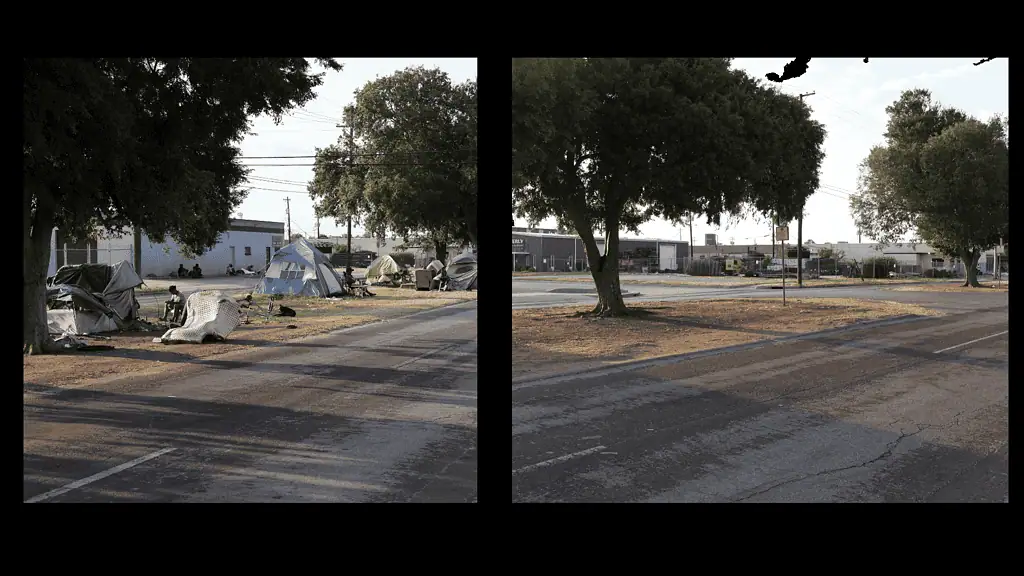
This particular area was a priority for Key to Home to connect people with services and help them transition indoors.
“After extensive research and planning, we prioritized this site given its size, safety concerns, and proximity to active traffic,” Jamie Caves, strategy implementation manager for Key to Home, said in a press statement. “We were committed to developing a thoughtful plan that offered real solutions for the neighborhood, as well as a dignified response for those living in the encampment.”
One of the clearest themes to emerge from conversations with activists, unhoused residents and service providers is that, while housing placement is an important step, it’s often the first step of many.
Someone living in an encampment may first be connected with an outreach worker through Key to Home, and a housing option may then be identified. But the available unit still has to work for that person’s transportation, medical, and additional needs.
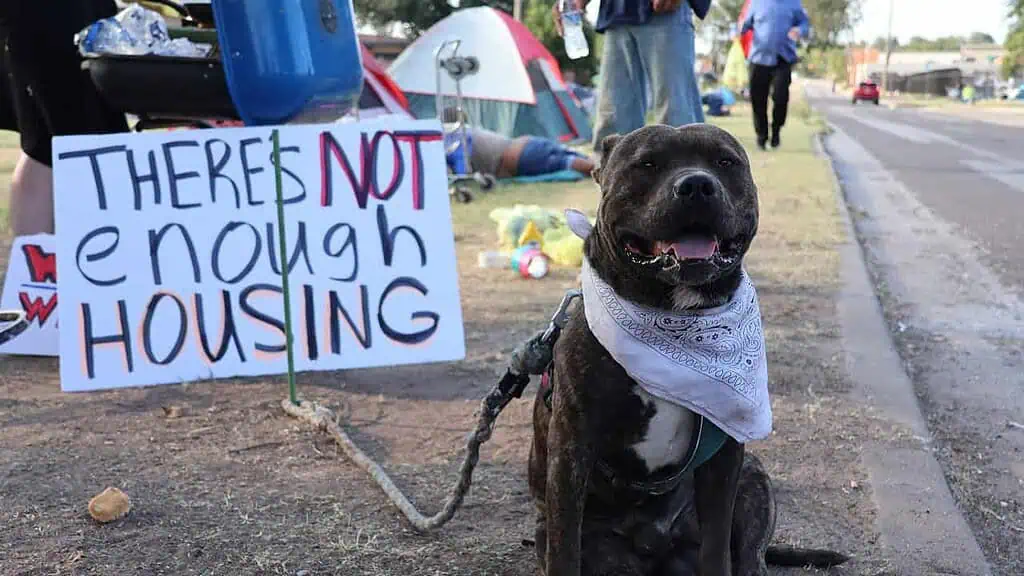
Some people need housing that accommodates animals, others are trying to keep loved ones together, and some people lack identification or other documentation.
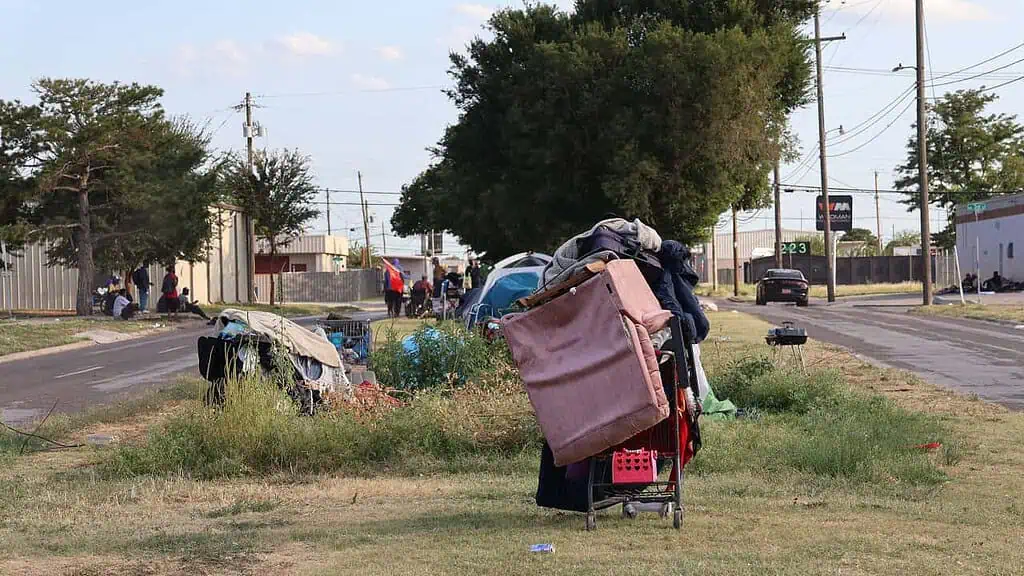
Taylor Ausmus, who is currently living out of his car in downtown Oklahoma City, told Free Press he has seen people struggle with barriers like these that are often invisible to the public. But his partner summarized the housing struggle with just three words: “It’s too expensive.”
According to Meghan Mueller, president and CEO of the Homeless Alliance, however, those situations represent a minority of cases.
“The overwhelming majority of clients who are offered housing through this program accept the housing,” Mueller told Free Press.
She said the program has resources to help people with pets, but finding enough housing that meets individual needs can be difficult when people are being rehoused from a large encampment.
“When we are housing dozens of people simultaneously from a very large site and are needing many units that are move-in ready at once, it can be harder to meet individual needs,” Mueller said.
People with felony convictions can also face additional barriers. Mueller said the Homeless Alliance works with partners, including City Rescue Mission to identify housing options for people with those barriers.
“At the end of the day, even effective models are subject to market conditions,” Mueller said.
Available resources
By Aug. 20, the remaining portions of the Virginia Avenue encampment had been cleared, and the 75 people living there were put on the path to permanent housing. 55 accepted available housing opportunities, while others are working with case managers to find an option or receive shelter or additional resources.
Mueller said significant coordination took place before the closure to identify people living in the median and connect them with services. She said the Homeless Alliance’s goal is to “make sure that everyone is safe and connected to services.” The Homeless Alliance will continue reaching out to people around the median, encouraging them to use the nearby Day Shelter and its other services to work “toward an option that meets their individual needs.”
“We certainly hope that anyone in the area who is still in need of services will utilize our Day Shelter,” Mueller said. “The Day Shelter has always been a place where people can meet their basic needs such as meals and showers. However, I think not everyone is aware that we also offer onsite case management services and can help get people connected to housing and resource opportunities across our Continuum of Care.”
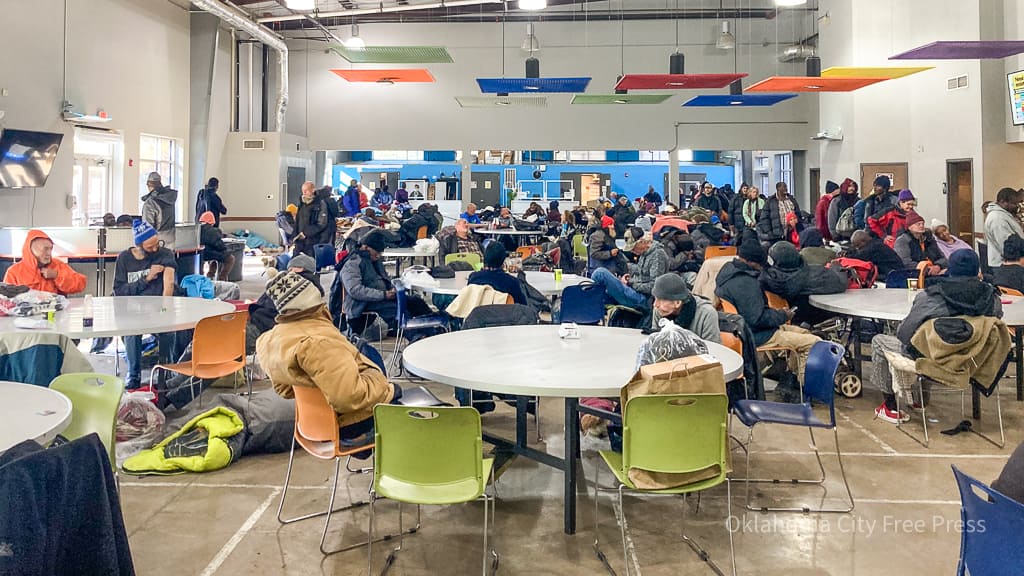
Mueller said long-term support is an important part of rehousing and that one of the most misunderstood aspects of homelessness services is that housing placement is only the beginning.
Key to Home’s Encampment Rehousing Initiative also provides up to 12 months of case management following placement.
“Moving from homelessness to housing is a big step that involves a lot of change and disruption to normal routines,” Mueller said. “This process can be intimidating and overwhelming.”
She said many people experiencing chronic homelessness have spent years feeling like systems have failed them, making trust-building a critical part of long-term success.
Once someone moves into housing, case managers work with them to address issues that may have contributed to their homelessness, including employment, physical and mental health care, and reconnecting with family or other support networks.
“Trust building and long-term stabilization are almost always possible, but it can take time,” Mueller said.
A network of organizations
Key to Home works with more than 50 organizations providing outreach, shelter, housing support, rental assistance, furniture and case management in Oklahoma City,
Those groups include the Mental Health Association, City Rescue Mission, City Care, Diversion Hub and Community Enhancement Corporation.
“We’re grateful for the vital partnership of the service providers whose hard work makes this kind of success possible,” Key to Home’s Caves said. “We’re not shuffling people from site to site, we’re providing solutions that result in long-term stability and transformation in people’s lives.”
One form of rental assistance available through the broader housing system is the federal Housing Choice Voucher Program, commonly known as Section 8. It helps eligible low-income households rent privately owned housing, with a public housing agency paying part of the rent and tenants generally contributing a portion based on income.
The Homeless Alliance provides outreach and case management through Key to Home’s Encampment Rehousing Initiative.
“The Encampment Rehousing Initiative is a major project of the Key to Home partnership,” Mueller said. “Along with our two-member street outreach team, we have a team of five case managers that focus on housing and supporting people through the Encampment Rehousing Initiative.”
Recently, Oklahoma City’s overall homelessness numbers have declined. The city’s 2026 Point-in-Time Count identified 1,867 people experiencing homelessness, a 1% decrease from the previous year and the first annual decline since 2022.
And just part of that is due to the work from the Key to Home initiative and the organizations that have a part in it, for efforts just like this Virginia and 3rd Avenue clearing. To date, the Encampment Rehousing Initiative has housed nearly 700 people and families experiencing homelessness.

Zoe Elrod covers events and happenings around Oklahoma City for Free Press bringing her skill as a reporter and photographer. Zoe has spent her career covering local musicians, artists, politicians, and everyday folks.