
OKLAHOMA CITY – When you stroll into an art museum for a comprehensive new exhibition that details and explores a full international art movement from over a century ago, it’s reasonable to expect paintings, drawings, and sculpture.
It’s safe to say that you probably don’t expect to see cabinets, candlesticks, and a rocking chair.
Well, strap in, because the Oklahoma City Museum of Art is rolling out “The Triumph of Nature: Art Nouveau from the Chrysler Museum of Art,” showcasing not only the unique and wildly expressive forms of the late 19th century’s Art Nouveau movement, but the surprisingly functional and practical ways they were applied.
The luxurious and highly decorative style and approach that would come to be known as Art Nouveau was actually not an especially painterly movement, rather it was a way of incorporating artistic beauty into previously ordinary items.
“There are really no Art Nouveau painters,” said exhibit curator, Dr. Lloyd DeWitt, during a media preview event. “The real impact of Art Nouveau is in decorative arts: furniture, interiors, architecture, glassware, tableware, stuff for your desk. It was trying to beautify your entire life.”
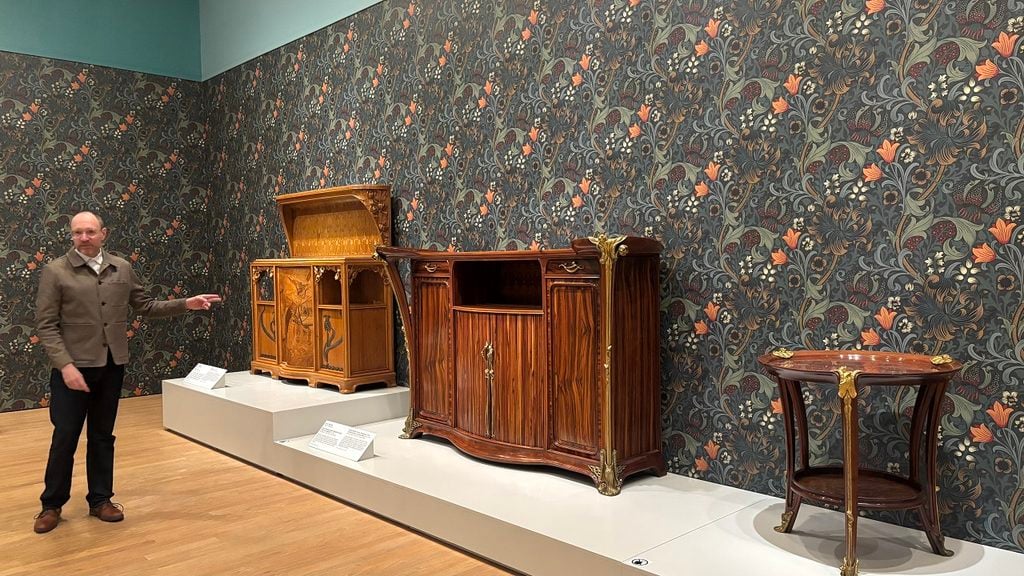
DeWitt is intimately acquainted with both the Art Nouveau style and the wider artistic culture of late 19th century works. He’s served as both curator of European & American Art Pre-1930 at Portland Art Museum and senior curator at the Chrysler Museum of Art, where he oversaw the collection of Walter Chrysler Jr., heir to the Chrysler fortune and among the world’s foremost collectors of Art Nouveau pieces.
“Happily, there’s a great depth to the Chrysler collection,” DeWitt said. “You see the variety. You’ve got teapots, you’ve got plant holders, clocks, vases. Some of the most treasured pieces were the bud vases with the long skinny stems.”
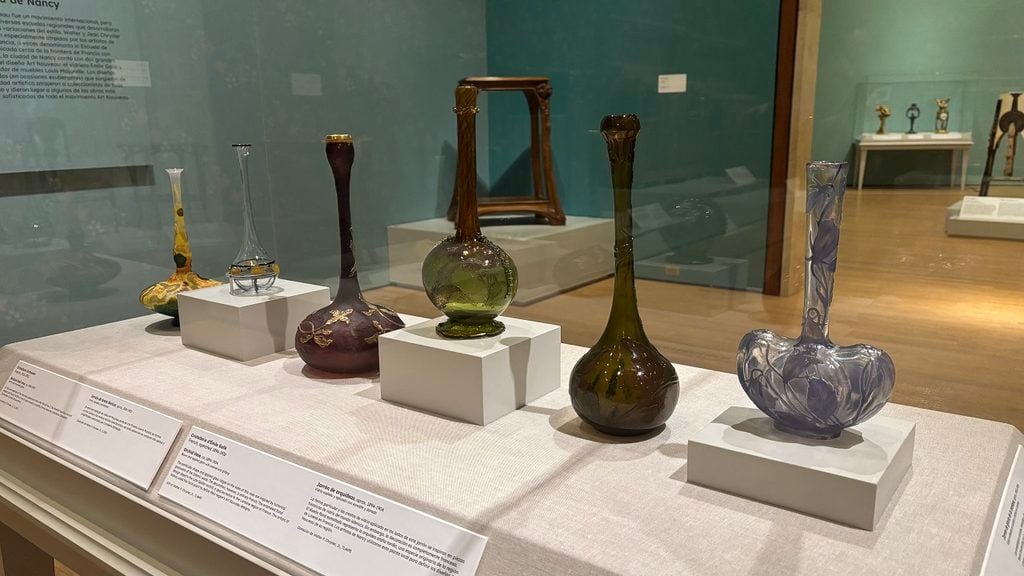
Glassware was a significant component of the Art Nouveau movement, spearheaded by the legendary Louis Comfort Tiffany, whose glass works helped to solidify the style and place it front and center in public spaces.
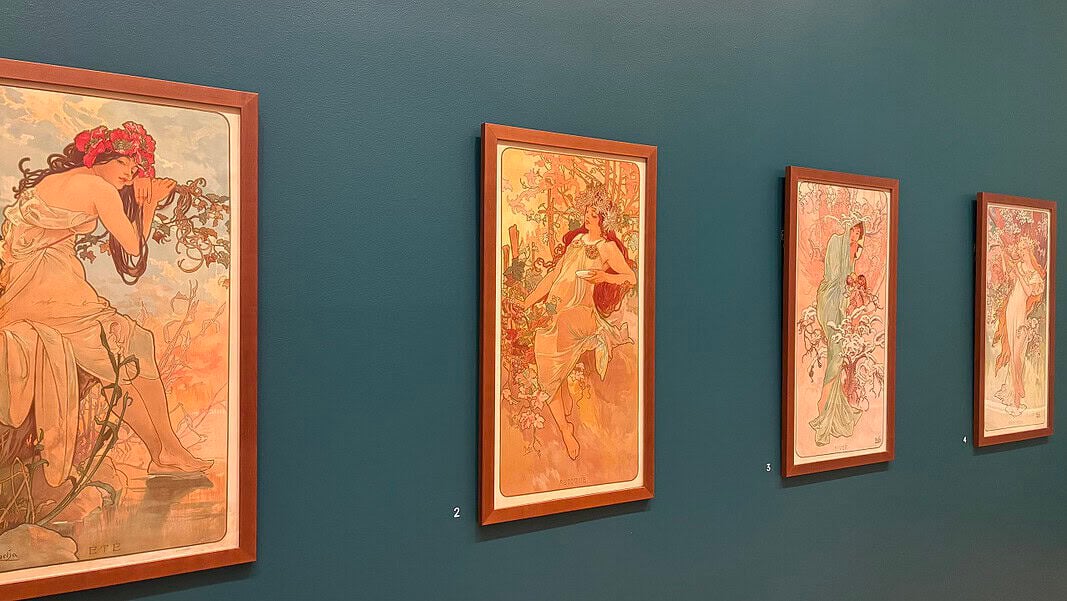
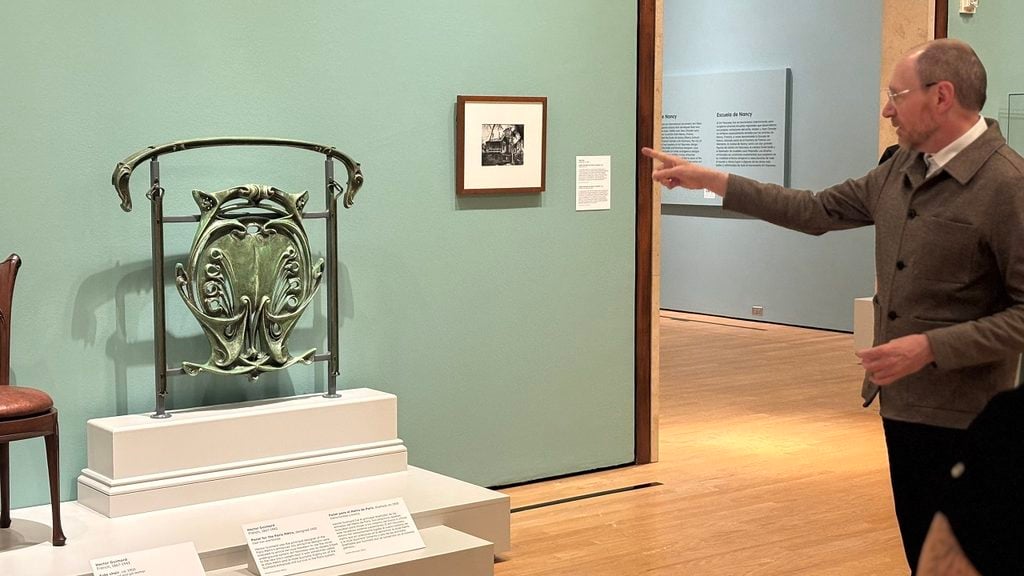
Art Nouveau would come to dominate public design for a handful of years, transforming everything from live theatre posters – thanks to printmaking masters like Alphonse Mucha – to the entrances of the Paris Metro, a real panel of which can be seen in “The Triumph of Nature.”
“Art Nouveau is partly the art of living,” DeWitt said. “It’s very refreshing to go back to our own core of living in nature and really appreciating natural beauty. And it’s just everywhere here.”
But “The Triumph of Nature” is also telling the broader story of Art Nouveau and of the vibrant slice of time that it occupied beginning with one of the most promising developments of geopolitics and ending with one of the most devastating.
The style was heavily inspired by the far eastern artworks and sensibilities flooding into the West after the opening of Japan to global trade in the 1850s, following centuries of isolation.
American and European artists, designers, and collectors were all enraptured by the expressive forms, swooping curves, and adherence to the splendor of nature and the natural world.
A selection of Japanese works from the period opens “The Triumph of Nature,” and it sets the scene for visitors to recognize the same curvatures and fixations on the luxurious forms of nature in everything from the glass vases and silverware to the ornate bars and cabinets and swooping chair designs, made possible by the era’s groundbreaking wood-bending techniques.
“Something that binds almost all of Art Nouveau is this love of nature, and it’s the nature of vines. It’s sensuous. It’s luxurious. It’s obsessed with a kind of cult of beauty,” DeWitt said. “Some people thought of it, over time, as being escapist and self-indulgent, but whatever. I mean, it’s just gorgeous.”
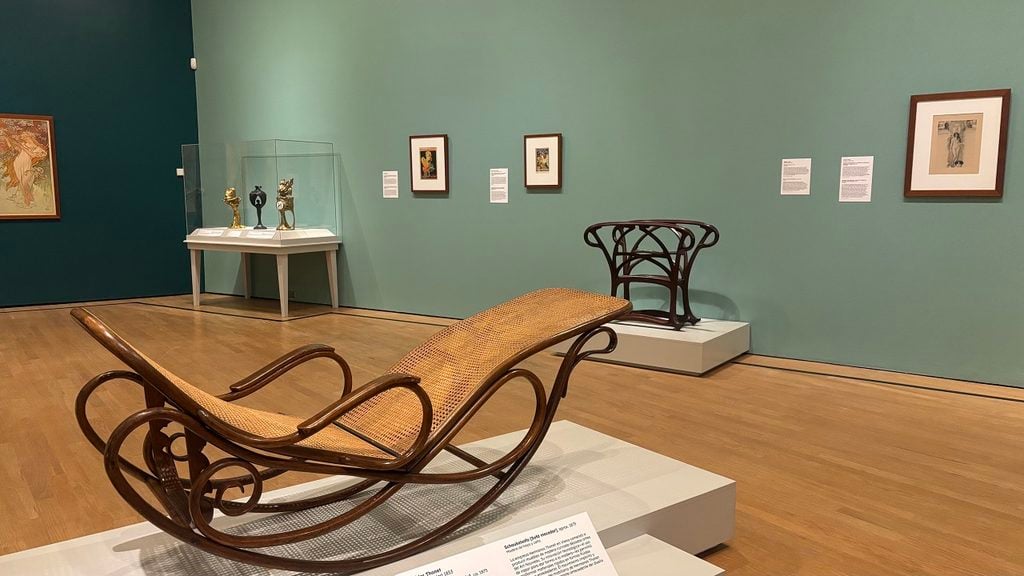
But that indulgence would eventually crash headlong into global war and tragedy, rendering materials much more scarce, but also dramatically changing the tone and appeal of art and design from bold expressionism to stark industrialization, giving birth to the Art Deco movement of the 20s and 30s.
“Art Nouveau was a costly art, and I think it hit a brick wall with the First World War,” DeWitt explained, “where people, I think, were so devastated and shattered that all this kind of escape-as-art seemed a little bit irrelevant at the time, and people embraced the more industrial style of art in the world.”
The exhibition ends similarly, with a small display showcasing the impending Art Deco world that would succeed Art Nouveau, with furniture, designers, and even Tiffany himself embracing harder lines and firmer geometry.
But the works of Art Nouveau have survived, and have come to tell a tale of a uniquely optimistic, boldly adventurous, and wonderfully imaginative time in the world’s history, one in which even the most ordinary items could be handcrafted artistic expressions of their own.
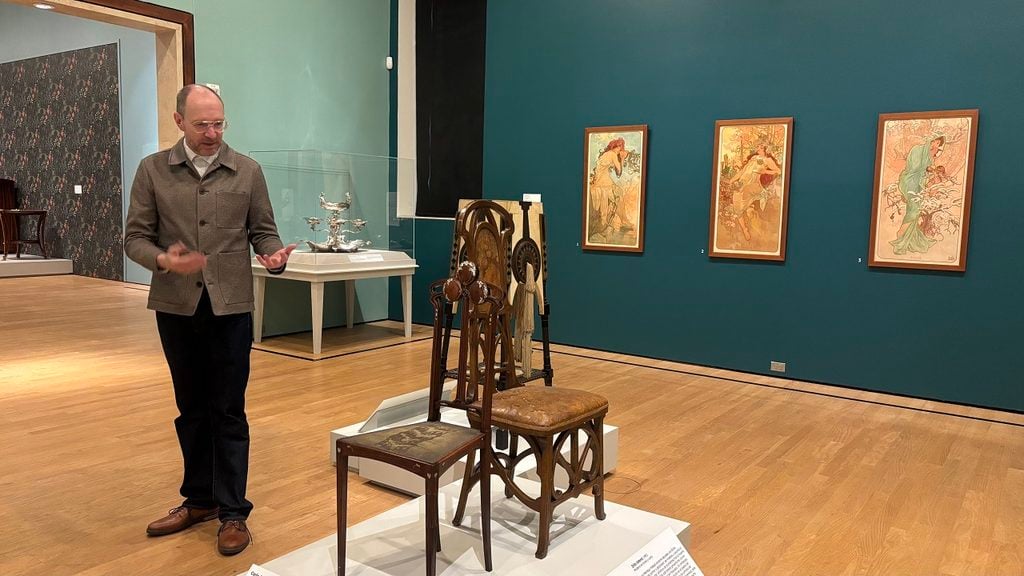
That’s the world that “The Triumph of Nature” invites visitors into, offering a respite from the aggressively sleek, graphically minimalist, and hyper-digital world of today, and instead presenting a vision of life filled with ornate, expressive forms inspired by nature and crafted by true innovators.
“When we look back on it now,” said DeWitt, “we see something very restorative about it, something that’s very refreshing to go back to.”
“The Triumph of Nature: Art Nouveau from the Chrysler Museum of Art” is on display at the Oklahoma City Museum of Art now through January 24th, 2027.
For more, visit okcmoa.com.

Brett Fieldcamp is the owner and Editor in Chief of Oklahoma City Free Press. He has been covering arts, entertainment, news, housing, and culture in Oklahoma for nearly two decades and served as Arts & Entertainment Editor before purchasing the company from founder Brett Dickerson in 2026.
He is also a musician and songwriter and holds a certification as Specialist of Spirits from The Society of Wine Educators.