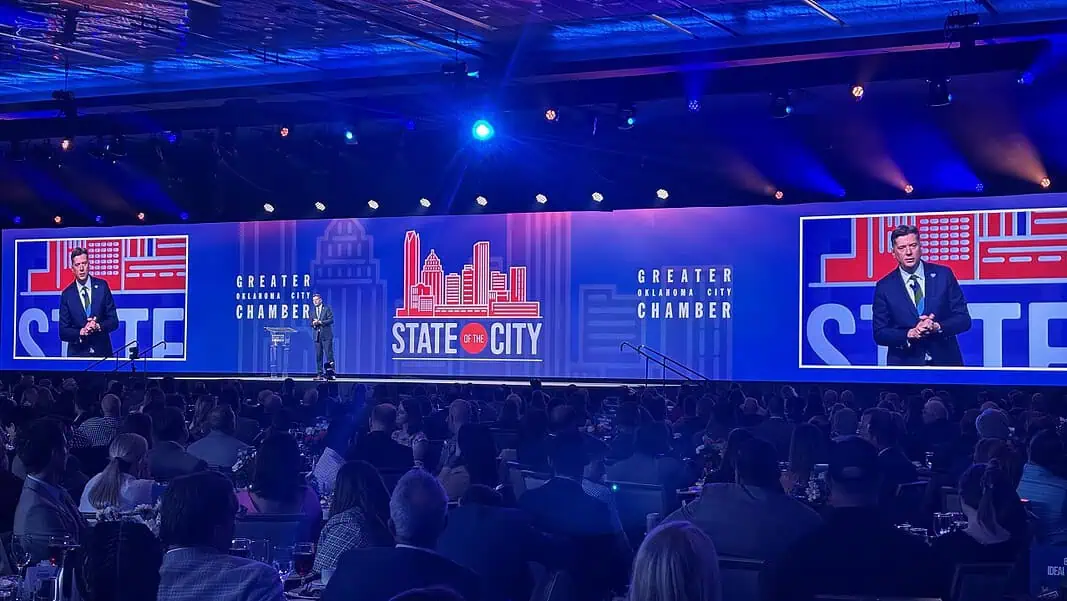
OKLAHOMA CITY – Mayor David Holt delivered his annual State of the City address Wednesday in a sold-out, high-tech gala event inside the Oklahoma City Convention Center downtown.
Presented by the Greater Oklahoma City Chamber, the yearly address is an opportunity for the mayor to tout the economic victories and cultural milestones of the city over the past year. But it’s also a chance to lay out new plans and policy initiatives for coming years directly to the community and commerce leaders that will help to drive them, and in many cases, fund them.
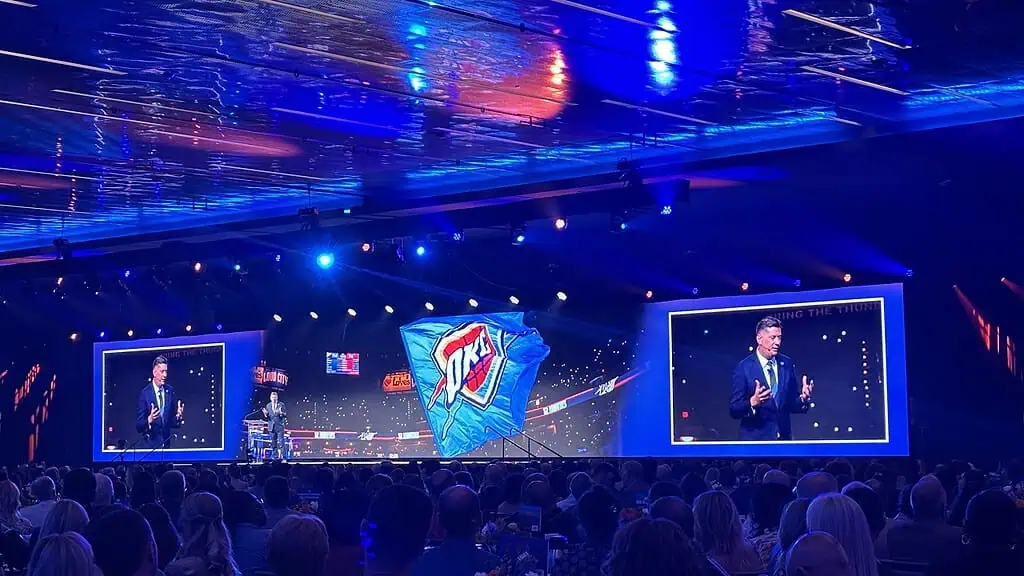
But while Holt had plenty to celebrate from the 2025-26 period, including another landmark season for the Thunder, new milestones in population, MAPS development, and homelessness reduction, and even the first announcement of the name and logo for the new OKC United soccer team, he focused first and foremost on a single issue:
Public transit.
Before pivoting to talk of the 2028 Olympic events that OKC will host and the accomplishments of the city’s Key to Home Partnership in tackling homelessness, Holt made clear that his top priority in coming years will be spearheading a broad new public transportation network across the city that can meet the future demands of an already rapidly growing population.
“Population will continue to grow, and by 2055, we’ll almost surely be a city of 1 million people,” Holt told the audience. “The first place we will feel that pressure is in our transportation system, which we already are.”
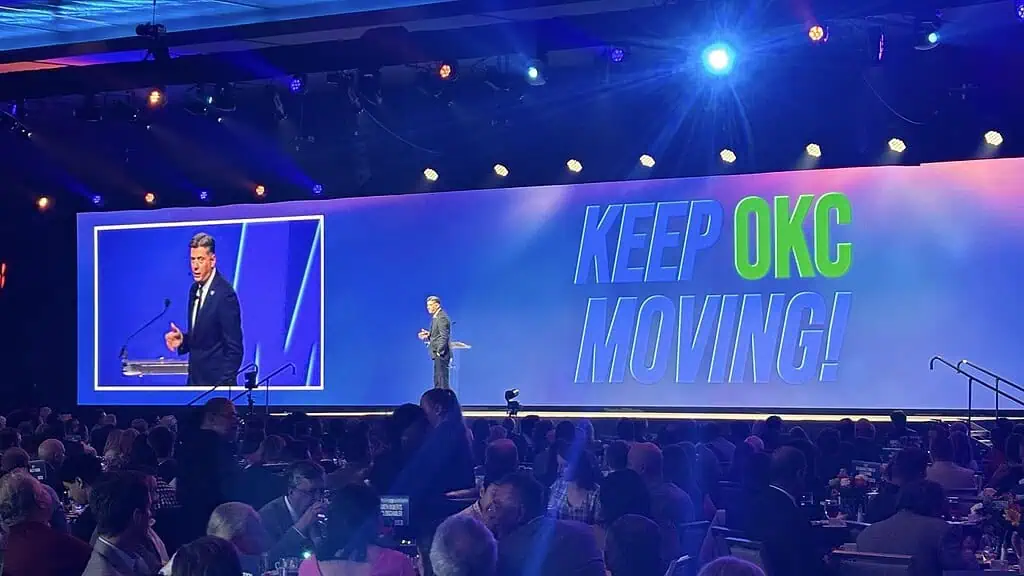
He compared the growth and exploding interest around Oklahoma City in recent years to the spiraling growth experienced by cities like Nashville, Tennessee and Austin, Texas, but he said that he hopes OKC can learn from the hardships of those cities and the notorious traffic congestion that plagues them.
“It is time for a sense of urgency,” Holt said. “Funding and planning and implementation of major improvements in our transportation system will still take many years, no matter how fast we move from this point forward,” but, he said, “if you have horrendous traffic and it’s already here, and that’s when you decide to do something about it, like they did in Austin and Nashville, you are way too late.”
Holt’s solution to this concern is substantial early investment in the newly coined ONE Transit plan.
Formerly the Regional Transportation Authority of Central Oklahoma, the recently rebranded ONE Transit would connect Oklahoma City to Edmond and Norman via an ambitious multi-mode system of public transit options, including a vastly expanded Bus Rapid Transit system and potential expansions of light rail service throughout the OKC Metro.
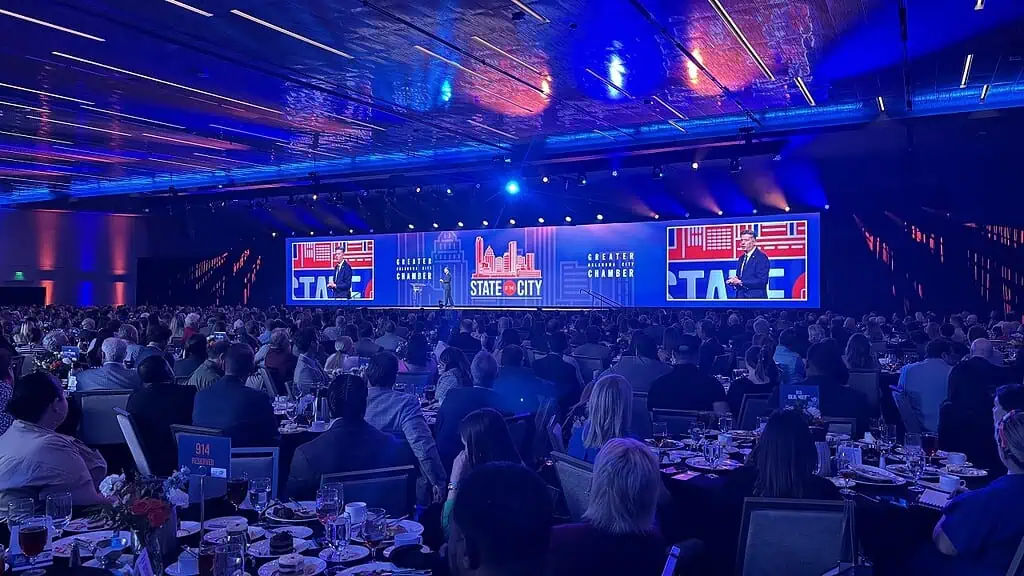
With hundreds of high-level business and financial leaders in the audience, Holt’s presentation felt like an investment pitch hoping to build for ONE Transit the same kind of public-private partnership that’s bolstered Key to Home and numerous large-scale development projects like the forthcoming MAPS 4 Stadium and the Continental Coliseum.
“The time to make a commitment is now,” Holt said. “That commitment must give us the resources we need to strengthen our existing system of city streets for those who remain in cars, and it must provide public transit alternatives to take some cars off the road and, at the very least, give each of us a choice.”
Those are strong words in a city so often renowned for its car culture and its commitment to making public roads primarily accessible for car traffic.
So how can the City plan to change the car-centric identity of OKC and the driving culture mentality of residents that have never engaged with the city’s public transportation?
In Holt’s estimation, it will be about making it easier, more visible, and more practical than public transit in OKC has ever been.
“It’s not that they’re completely opposed to the idea, it’s that it has never really been practical,” he told Free Press following his address Wednesday. “When we do put in something that’s easily accessible and frequent and goes to the places you want to go – and I think the Northwest BRT is a perfect example of that – we get ridership.”
But he also foresees a future for Oklahoma City where the density, cost, and time of car travel will make public transit not only seem intriguing, but integral for the average commuter.
“Traffic’s going to get worse,” Holt said. “And so at that point, if you’re offering a convenient alternative, people, I think, will use it. I don’t think you’ll need a slick marketing campaign.”

Brett Fieldcamp is the owner and Editor in Chief of Oklahoma City Free Press. He has been covering arts, entertainment, news, housing, and culture in Oklahoma for nearly two decades and served as Arts & Entertainment Editor before purchasing the company from founder Brett Dickerson in 2026.
He is also a musician and songwriter and holds a certification as Specialist of Spirits from The Society of Wine Educators.