
OKLAHOMA CITY – Well, it’s finally here.
After months of relentless buildup, insurmountable expectations, and seemingly nonstop, wholly inane discourse from all of the worst people you can imagine, megastar director Christopher Nolan has finally delivered his take on “The Odyssey,” the adventure epic to both begin and end all adventure epics.
And frankly, it’s not what you think.
It was easy for everyone – myself included – to believe that the world’s biggest blockbuster filmmaker was taking his recent Oscar win and leveraging the funding and power that trophy provides to tackle the largest, grandest, epic-est story he could imagine, just for pure audacity and challenge.
We believed that he was attempting something timeless, something technically masterful and cinematically groundbreaking, and that he was using one of the Earth’s oldest and best-known stories for its foundation as a way of saying “see, I don’t need surprises and twists and trickery to make something so proficient.”
And we were all wrong, because what he made instead is something messy, something willfully imperfect and jagged and uncomfortable and something that subverts every expectation of self-conscious “timelessness” to instead comment openly, blatantly, and passionately on our modern world, and maybe specifically on our modern country.
It’s strange to say, given that his previous outing was about the societal and psychological ramifications of the US military dropping the atomic bomb in wartime, but “The Odyssey” is actually Nolan’s most political film.
That shouldn’t really come as a surprise to anyone that’s been paying attention to his output over the last decade-plus, of course.
While “Oppenheimer” was impossible to separate from its political questions and problematic central figure, people tend to forget that “Interstellar” was about the consequences of global climate collapse, “Dunkirk” was about a population’s innate willingness to stand up to fascism, and even “The Dark Knight Rises” was about wealth inequality and the performative manipulation of the working class.
But “The Odyssey” isn’t using its politics for backdrop or its consequences as a lingering, final question. In fact, the full three-hour runtime is a single rumination on those consequences and what effect they’ve had on society, just as much as on the psyche of our protagonist.
If you’ve been living under a rock for the last two-and-a-half thousand years, Homer’s “Odyssey” follows Odysseus – king of Ithaca in Ancient Greece and a masterfully tactical wartime general – in his twenty-year travels to return home after the Trojan War.
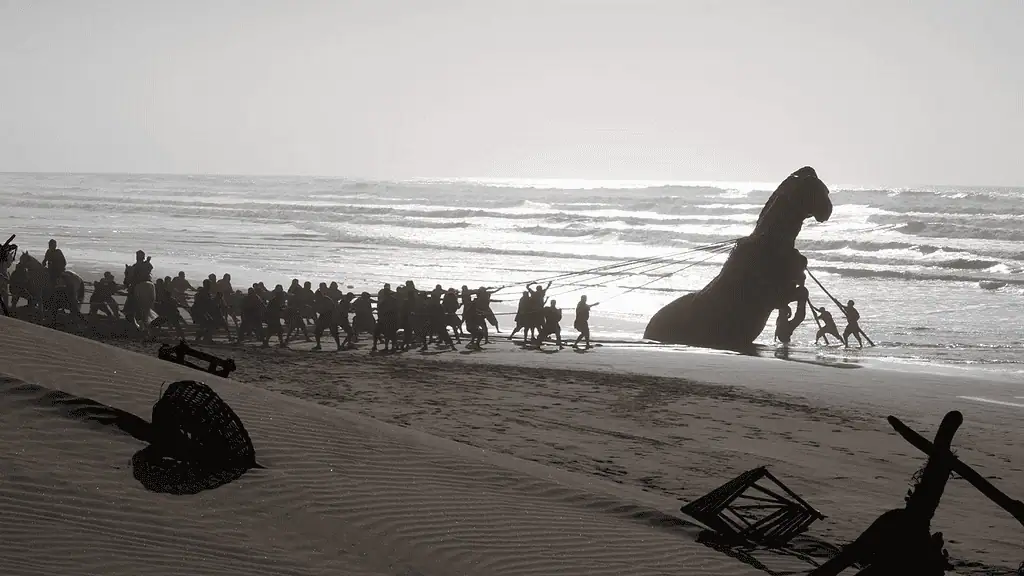
You see, Odysseus arguably single-handedly won the war for Greece with his plan to feign surrender and leave the Trojans a peace offering in the form of a giant, wooden horse. Of course, Odysseus and a small battalion of Greeks hid inside the gift and, once the offering had been accepted and believed as a peaceful exchange inside the walls of Troy, he and his allies emerged, threw the gates wide, and slaughtered the city’s inhabitants.
It’s a tale very nearly as old as recorded time, a song of cunning victory and a warning against letting down your guard.
And that’s where Homer’s “Odyssey” begins, with Odysseus claiming victory for Greece and setting sail for home, but finding that his own ego and hubris have offended the gods enough for them to sabotage his travels with a near-endless string of angry monsters, witches, storms, mistakes, and deaths, blood always on Odysseus’s hands.
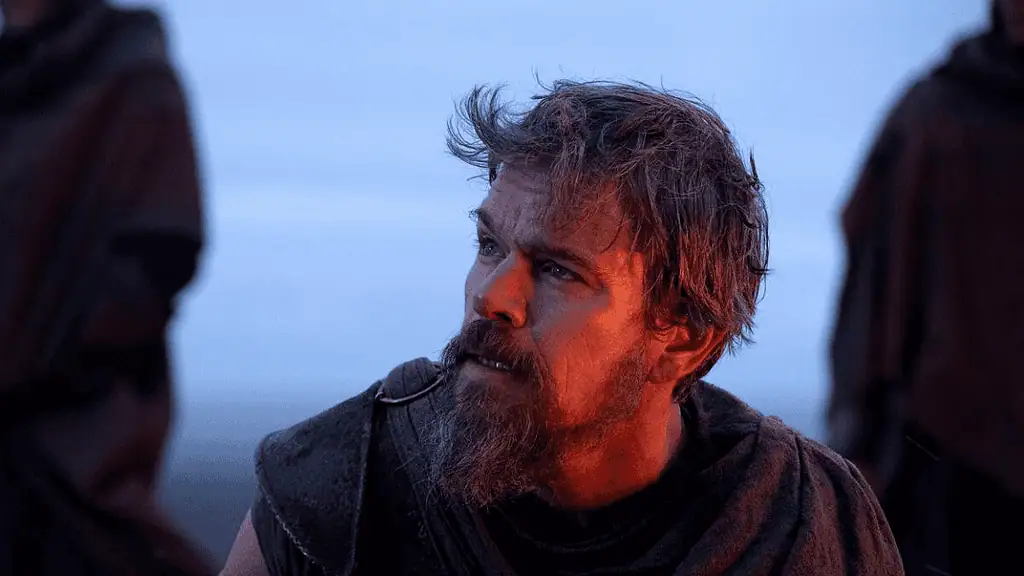
But Nolan’s story isn’t about the victory of trickery or the importance of cunning tactics and clever strategy. It’s just about the hubris.
It asks the question – and forces Odysseus to confront the question – of what his victory and the ruse that wrought it may have opened for the world. He’s weaponized generosity. He’s made every offering of peace now suspect, every respectful surrender now an ambush waiting to happen. He’s taught the world that the only sensible way to be is ruthless.
And he knows it.
From the film’s first frames, Nolan’s Odysseus is Oppenheimer at the end of his life, despairing over his own short-sighted ambitions and trying to reverse the consequences that he was only too happy to create.
It’s easy to tell a story about the guilt of war, but Nolan’s characters aren’t just wrestling with the guilt of their actions, but the shame. Their meaningless, trumped-up, murderous war on Troy (sold as a righteous rescue of the beautiful Helen, but really about something as asinine as trade routes) didn’t scar and damage their souls, it just laid them bare.
And what it showed was something shameful, prideful, and dangerously selfish.
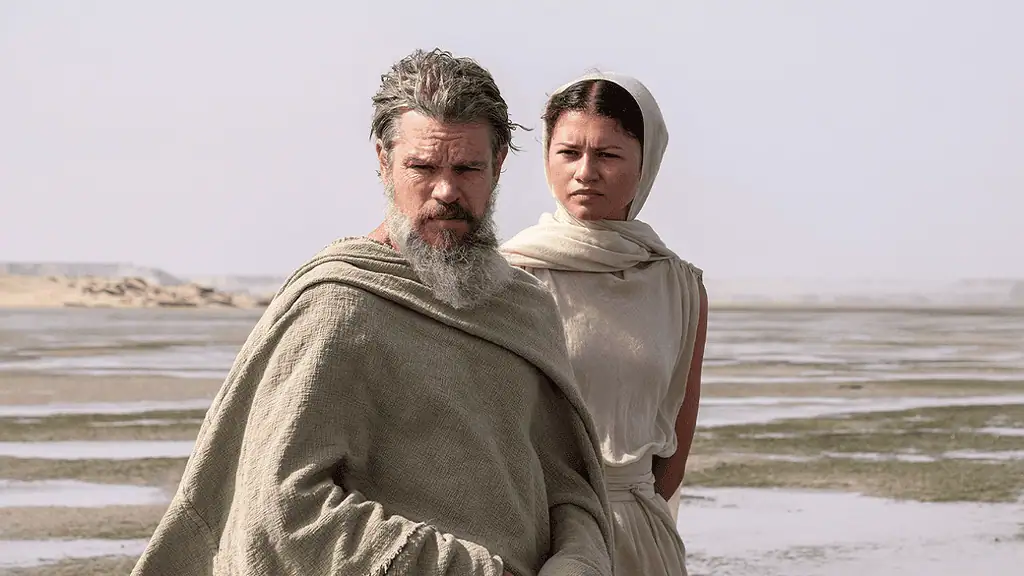
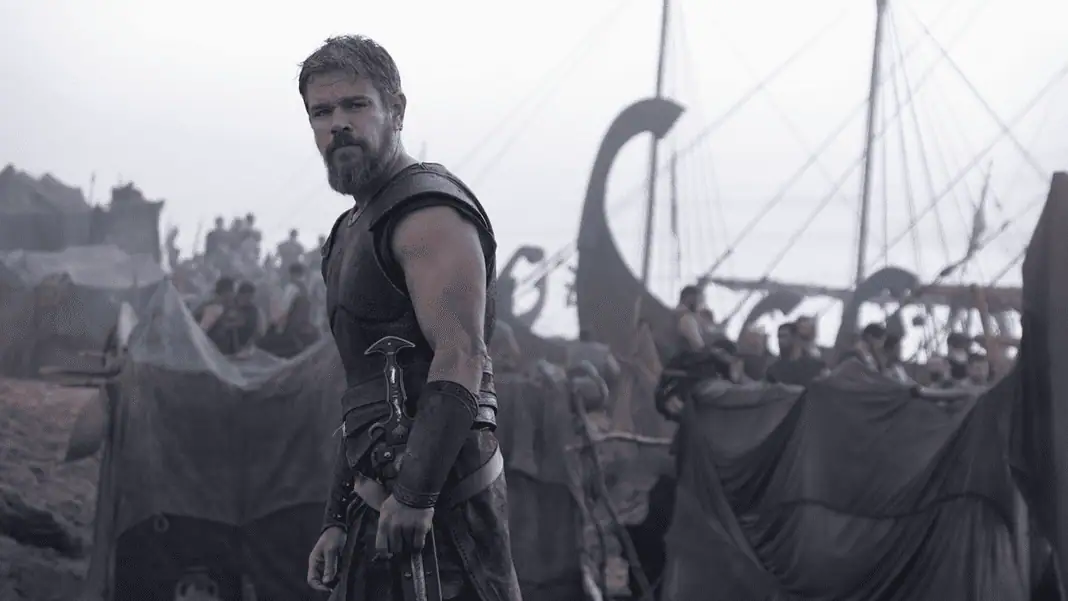
To pull that off requires a lead that can carry that weight and shame and ego in equal measure, and for that, Nolan was right to trust Matt Damon with the role of Odysseus. It would probably be impossible to call it anything less than the best performance of his career, but it’s also clearly the most challenging and rich that he’s ever been offered. The sirens scene alone may be the best screen acting Damon’s ever done, and you can expect to see that moment and its following monologue repeatedly come awards season.
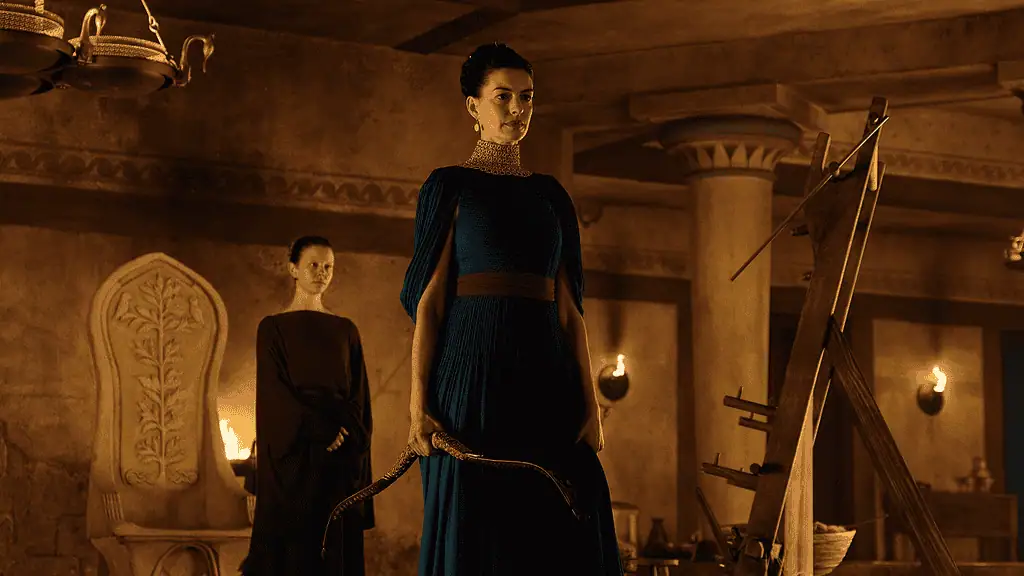
But while the rest of the cast shines throughout (special mentions for Anne Hathaway, Eliot Page, Samantha Morton, and the great John Leguizamo, who feels the most likely to compete for Supporting awards later,) many of their scenes can feel a bit rushed or a bit wanting of space and time for lines and moments to land.
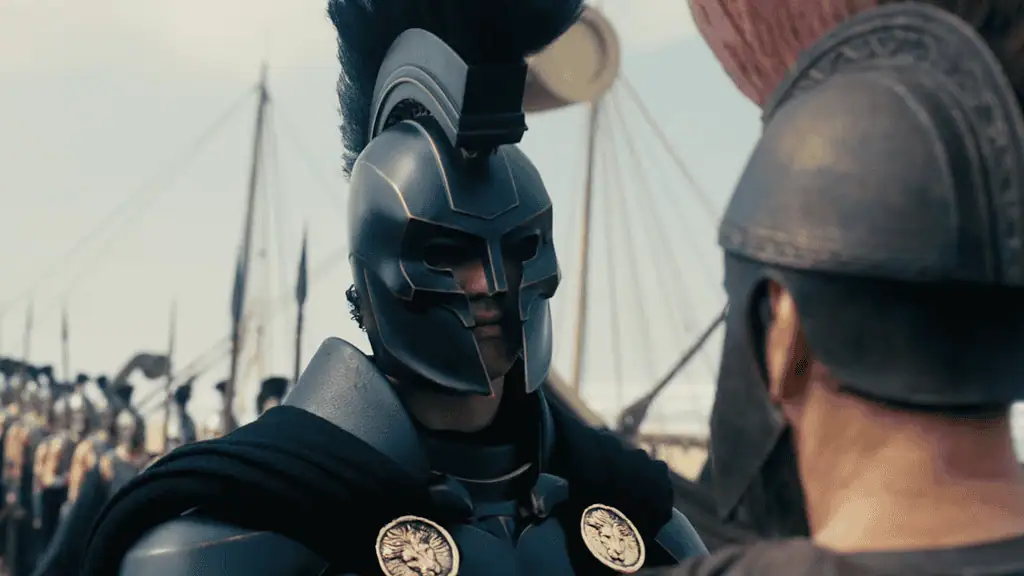
That’s because Nolan insisted on shooting every frame and moment of “The Odyssey” with 70mm IMAX cameras, a decision that results in a breathtaking and toweringly huge picture, but that restricted every shot to only around two-and-a-half minutes. And that choice dictates the film’s pace at times.
But so, too, does the classical epic form itself.
Nolan has always loved experimenting with narrative form and structure, and he teases that a bit here, especially with the overlapping storytelling and flashbacks of the first act. But mostly, the experiment this time around is just seeing if he can fit the structure of an ancient epic into the format of a modern film.
The pace can admittedly feel disjointed, rushed at times, and often like a series of vignettes, hopping from one island to another, from one monster, one threat, and one retreating escape back to sea after another.
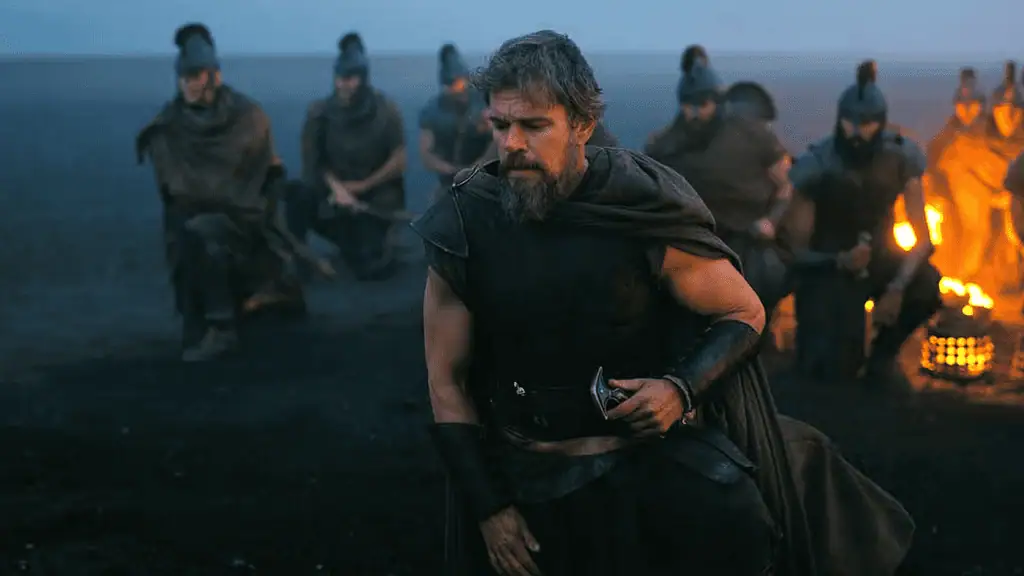
But that’s the classical epic form. It’s a story passed down, like so many stories, first in song. So Nolan’s “Odyssey” isn’t told in acts, it’s told in verses. Each new island is another verse, sometimes rhyming with the previous ones, and every retreat back to the boats is the chorus, revisiting the song’s hooks and themes again and again.
And each time, those themes get louder, bloodier, and more desperate, because this isn’t an historical reading or a triumphant retread of hope against impossible odds. It’s an emotional outburst and a plea for our very current world to learn the lessons of the past and of the same failures we’ve been making for thousands of years.
There’s a reason that everyone in this ostensibly historical epic speaks clearly in a modern American accent, and that’s because this movie is about modern America.
It’s about the idiotic folly of war and the shame it wreaks on any entire culture, especially now, after we’ve had thousands of years to learn better. It’s about the selfish hatred that spreads when you stop welcoming strangers into your lands, when you rely on tricks and lies for victory, and when you turn the promise of peace into your final weapon of war.
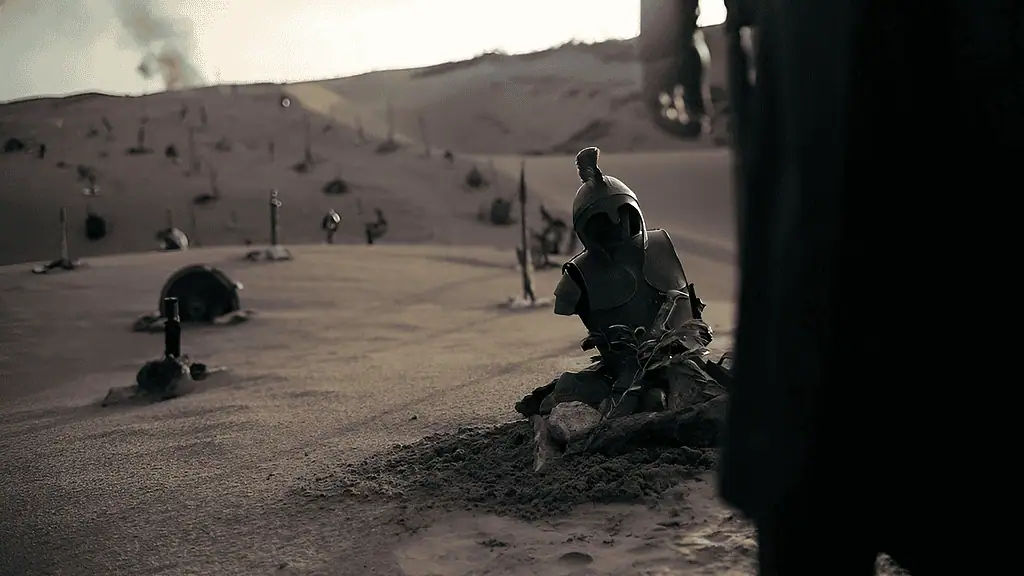
It’s the most violent, most painful, and most palpably angry film that Nolan has ever made, and for all of its technical achievement, groundbreaking scale, sprawling cast, and admittedly long, sometimes uneven runtime, it’s that anger and that exasperation that are driving it all.
Christopher Nolan is known as an unflappably calm and collected craftsman, always composed, always thoughtful. He doesn’t own a smartphone or engage with the internet and I don’t think anyone has ever seen him raise his voice or lose his cool.
But for the three hours of “The Odyssey,” Christopher Nolan is screaming.
“The Odyssey” is now playing.
Catch Brett Fieldcamp’s film column weekly for information and insights into the world of film in the Oklahoma City metro and Oklahoma. | Brought to you by the Oklahoma City Museum of Art.

Brett Fieldcamp is the owner and Editor in Chief of Oklahoma City Free Press. He has been covering arts, entertainment, news, housing, and culture in Oklahoma for nearly two decades and served as Arts & Entertainment Editor before purchasing the company from founder Brett Dickerson in 2026.
He is also a musician and songwriter and holds a certification as Specialist of Spirits from The Society of Wine Educators.