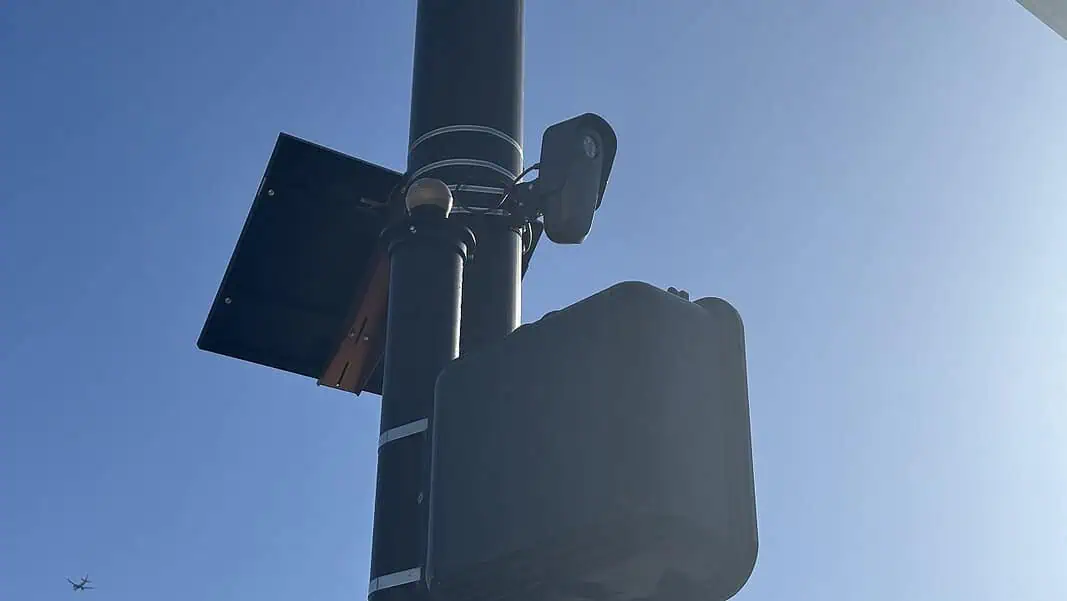

OKLAHOMA CITY – When the Oklahoma City Council votes on whether or not to renew its contract with controversial Flock Safety on August 18th, they’ll also be looking to impose some sweeping new guardrails and regulations on the system of AI-powered license plate reader cameras.
A presentation and vote about renewing the City’s already-expired contract with Flock was expected at the council’s meeting on Tuesday, but was pulled from the agenda late Monday afternoon. A City of OKC representative said at the time that the last-minute change was “so City staff can make changes to the agreement.”

Free Press has now confirmed that those changes are expected to include a wide-reaching amendment to the contract that imposes significant regulatory oversight and accountability for the ways that the system is used in OKC.
In an internal City of OKC memo obtained by Free Press, City staff lay out a number of amendment proposals that would create strict limitations for how and why Oklahoma City police can access the camera system, reduce the length for which Flock camera footage is stored, and create a logging and auditing policy for who uses the system and when.
What is expected in the amendment?
While the final wording of the amendment has not yet been released, the internal memo lays out the expectations and intentions for the new guardrails that it will demand regarding Flock usage by OKCPD, aiming to address a number of resident concerns over privacy and lack of oversight.
These include stipulations that:
- All searches of the Flock system and database will be logged and tied to a specific user. Regular reviews and audits of access will be conducted and “inappropriate access” will result in discipline for the user.
- All searches will require a clearly stated reason for access, ensuring that only valid, approved uses are granted.
- No access will be given for any use regarding “immigration “or “reproductive health.” All keywords related to these searches will be blocked and will return no search results to the user.
- OKCPD will only share Flock camera data with explicitly approved partner agencies, rather than sharing data within Flock’s full nationwide network. (The memo establishes that OKCPD currently shares data with 109 approved partner agencies, but does not list them.)
- Flock camera data will be saved for no longer than 30 days. While ACLU representatives formally suggested that a period of just 7 days of data retention, the City appears poised to set a 30-day period for retaining and data and footage collected by Flock cameras in OKC. (An earlier version of this article incorrectly stated that the City of OKC would move to impose a 7-day ta retention limit for all data and footage collected by Flock cameras in Oklahoma City. The correct proposed limit appears to be 30 days.)
- City Council will be required to approve any new Flock cameras or any further purchases of Flock equipment by OKCPD beyond the currently approved amount.
Why was the item pulled from City Council this week?
The Flock contract renewal vote was included on the City Council agenda for the Tuesday, August 4th meeting this week, but the proposed amendment was not included.
According to a City of OKC representative, the amendment was expected to be included on the agenda, but was discovered to be missing from the official meeting materials late Monday, leading to the item being pulled from Tuesday’s agenda less than 20 hours before the meeting.
That City representative spoke to Free Press on the condition of anonymity.
When Free Press requested to view the final amendment language as it’s expected to appear at the August 18th meeting, OKCPD Public Information Officer MSgt. Gary Knight said “it would be inappropriate for me to discuss that prior to the presentation to Council.”
Flock system still accessible by OKCPD
Despite the City’s previous contract with Flock officially expiring at the end of June, Oklahoma City police are still using the system in investigations.
On Wednesday, Flock Safety issued a media release championing the use of their cameras and data network in helping OKCPD to locate and arrest John Michael Chavez, who was booked for second-degree murder after Roxanne Mohler was hit and killed by a driver early Monday while riding a scooter on Northwest Expressway.
The arrest affidavit for Chavez confirms the use of the Flock network in his location and arrest.
“This shows how LPR [license plate reader] cameras help police get objective evidence and a lead in a matter of hours,” the Flock email said.
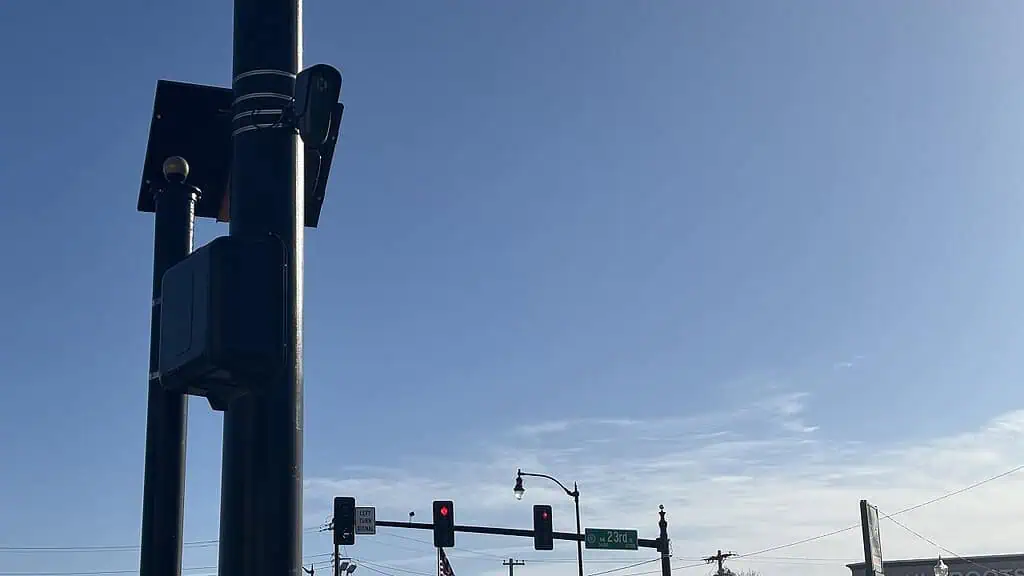
However, the department’s authorization to use the Flock system after the contract expired – and before a vote has been taken to renew it – appears murky.
Capt. Valerie Littlejohn of the OKCPD Public Information Office is confident of an upcoming City Council vote to renew the contract that would backdate its effective date to include the system’s use this week.
“It’ll be going to City Council for a vote and it will cover from July 1st,” Capt. Littlejohn said in a call Wednesday. “It’ll be retroactive.”
Did the contract already renew automatically?
Though the City Council voted to renew the City’s contract with Flock in 2024 and 2025, a small clause on the purchase order included with the contract appears to ensure that it renews automatically each year with or without an official vote.
“This Agreement will automatically renew for successive renewal terms of the greater of one year or the length set forth on the Order Form (each, a ‘Renewal Term’),” the clause reads, “unless either Party gives the other Party notice of non-renewal at least thirty (30) days prior to the end of the then-current term.”
An automatic renewal would explain how Oklahoma City police still have access to the Flock system even after the existing contract’s expiration, but none of the representatives reached by Free Press from the OKCPD or the City of OKC could speak to specifics regarding the wording of the contract.
According to that wording, a vote by City Council to not renew the contract may leave the system accessible for another full year or could require a separate vote to explicitly cancel and remove all active Flock contracts and systems, rather than simply allowing them to sunset.
City staff have confirmed that the Flock contract renewal vote is now expected to go before City Council at the August 18th meeting.

An earlier version of this article incorrectly stated that the City of OKC would move to impose a 7-day ta retention limit for all data and footage collected by Flock cameras in Oklahoma City. The correct proposed limit appears to be 30 days.

Brett Fieldcamp is the owner and Editor in Chief of Oklahoma City Free Press. He has been covering arts, entertainment, news, housing, and culture in Oklahoma for nearly two decades and served as Arts & Entertainment Editor before purchasing the company from founder Brett Dickerson in 2026.
He is also a musician and songwriter and holds a certification as Specialist of Spirits from The Society of Wine Educators.