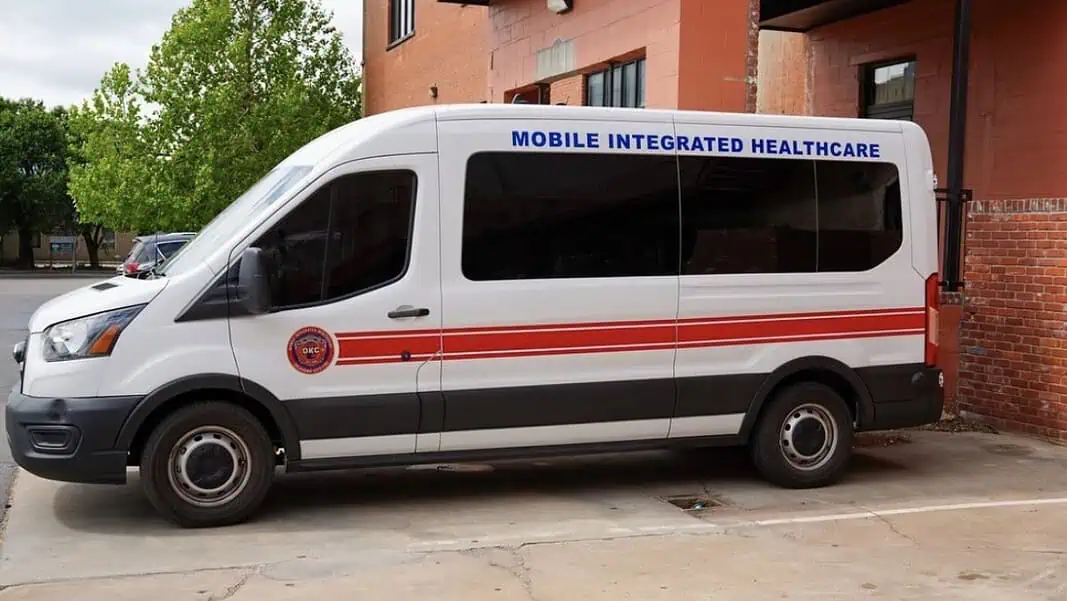

OKLAHOMA CITY – Just one year into full effect, OKC’s new mental health crisis response unit has become a beacon of hope for the Oklahoma City community, and with new grants and staffing opportunities on the horizon, the years to come could look even brighter.
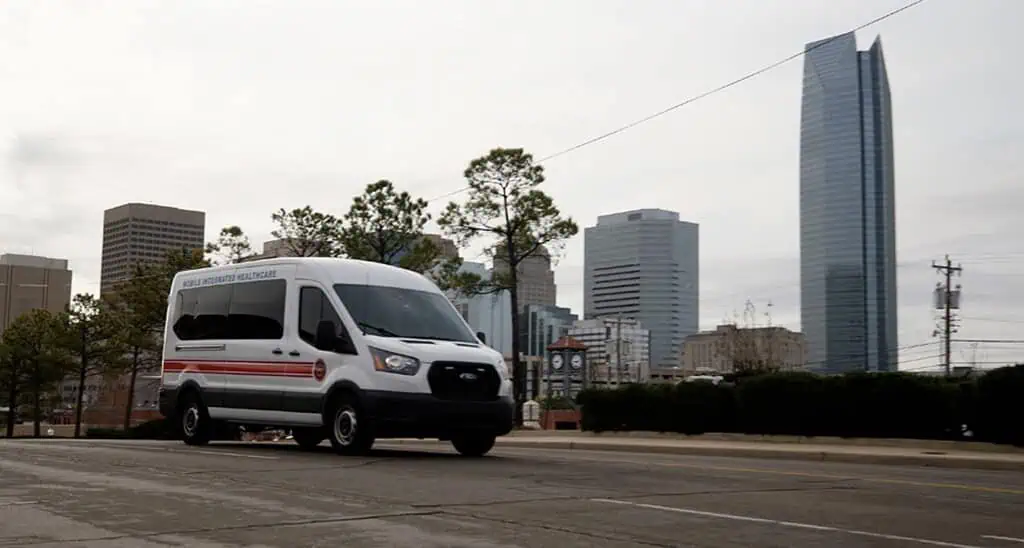
With thousands of response team dispatches, and thousands more community members assisted, the Mobile Integrated Healthcare unit within the Fire Department has spent its resources and energy this year meeting the needs of OKC residents in mental health emergencies, not to mention helping the families of those afflicted.

And with the aid of new grants, their team is soon expected to grow.
“This is something that the community has responded really positively to,” said Mobile Integrated Healthcare Program Manager Lori Brown-Loftis, LCSW. “I think what’s unique is having that unanimous support from City Council, and it’s really great to have that support.”
The year at a glance
Free Press first reported on the Mobile Integrated Healthcare unit for its official launch last year:
MIH is currently composed of four teams: two field response teams, one crisis call diversion & dispatch team, and one community advocacy program.
The crisis call diversion is where the MIH begin their work with community members.
“When people call 911, that’s where their calls go,” Brown-Loftis said. “We have mental health professionals that work there directly at the 911 communications center to field mental health related calls so they can talk with people over the phone… and then they dispatch our teams.”
This is when the field responders can be dispatched to assist someone facing a mental health emergency. The field responders will go out in a group of two, one mental health professional paired with one paramedic with mental health training. Once they arrive, they find ways to soothe and de-escalate the situation
“Our other program is called our Community Advocacy Program, and they work specifically with individuals who are frequent or high utilizers of 911 services,” Brown-Loftis said about the fourth program at MIH.
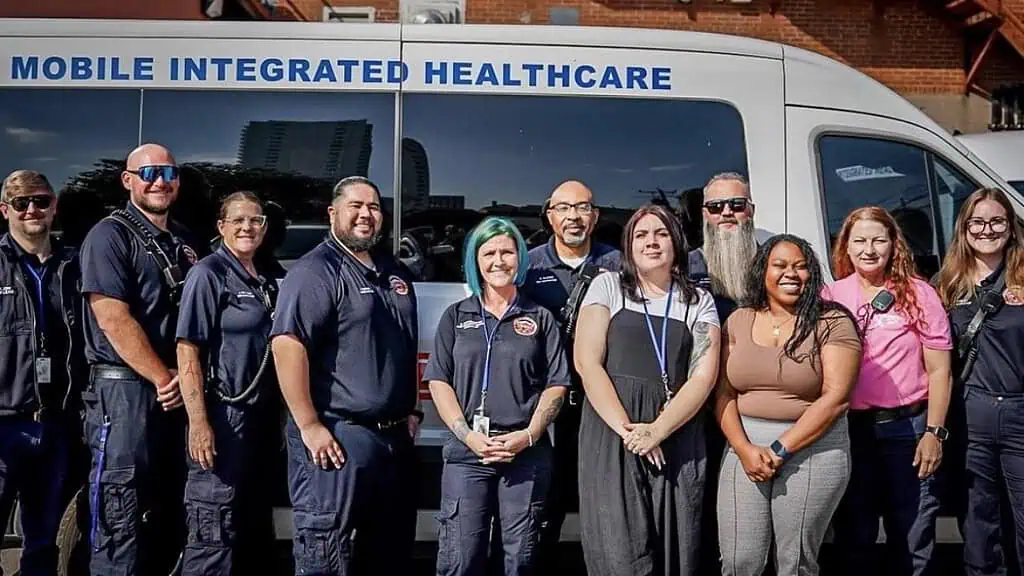
From May 2025 to February 2026, MIH saw more than 5,000 service encounters, providing resources to OKC residents in need and likely saving untold thousands of dollars as well.
The financial benefits of programs like MIH are celebrated in cities across the country, even if the benefit is difficult to quantify.
“It’s really hard to quantify the exact cost of one unit going to one call,” Brown-Loftis said. “The important thing… is being able more so to speak to how the response has changed the landscape of how people interact with the emergency response system.”
The changing landscape of first response in OKC
“Not every call needs fire, EMSA, or police,” Brown-Loftis said, and MIH understands itself as a “fourth option,” which more fully meets the needs of residents.
“By having that fourth option people feel like it’s not just fire, police, and EMSA that are available to respond to these mental health calls,” Brown-Loftis told Free Press, “ but we have individuals with mental health training and paramedics that have mental health training that could come out and provide the most appropriate response.”
She did mention those police officers who are trained to respond to mental health calls, however, noting that the OKCPD was above the national average for training its officers in this regard.
“That doesn’t mean that we never have police on calls because we absolutely value and appreciate having that co-response model,” she said, “but there are times where somebody really just needs someone to talk to.”
When someone calls 911 to report a fire or car accident, the Fire Department and EMSA are dispatched; when someone calls to report a domestic violence incident, the Police are dispatched; and now, because of community support and some new grants for MIH, when someone calls on the edge of mental health crisis, a mental health professional responds.
MIH looks ahead with some new developments
In a call Wednesday, Brown-Loftis told Free Press about an exciting development they’re seeing right now.
“We have recently gotten a few grants that will allow us to add about five more staff,” she said, “including one response team and a special program that includes two peer recovery staff that are working with the Opioid Abatement Grant.”
That will allow MIH to focus even more directly on harm reduction and opioid overdose response.
“We’re able to be responsive to the growing needs of this city that is growing and will continue to grow,” Brown-Loftis said, “and this just shows the city’s responsibility to the residents and visitors to provide the resource that’s best for their needs.”
Brown-Loftis made clear the one message she wants the community to hear from MIH: “just know that we’re here,” she said. “Sometimes at city government we have these really cool initiatives and programs and sometimes we’re not always the best at really getting that information out.”
According to Brown-Loftis, the work of MIH affects all residents of OKC one way or another, and with the new grants and staff positions on the horizon, MIH is poised to meet the needs of a growing number of Oklahoma City residents.
“Whether it’s mental health or substance use, that affects everyone,” she said. “We all know a person or a person who knows a person who struggles with mental health or substance use.”

Tyler Smothers is a local, an Okie, and a poet living in Oklahoma City with his wife, Sadye, and their animals, Toby and Oscar.
He teaches medieval history and literature to 7th graders and loves everything from "Canterbury Tales" to "Mrs. Dalloway."