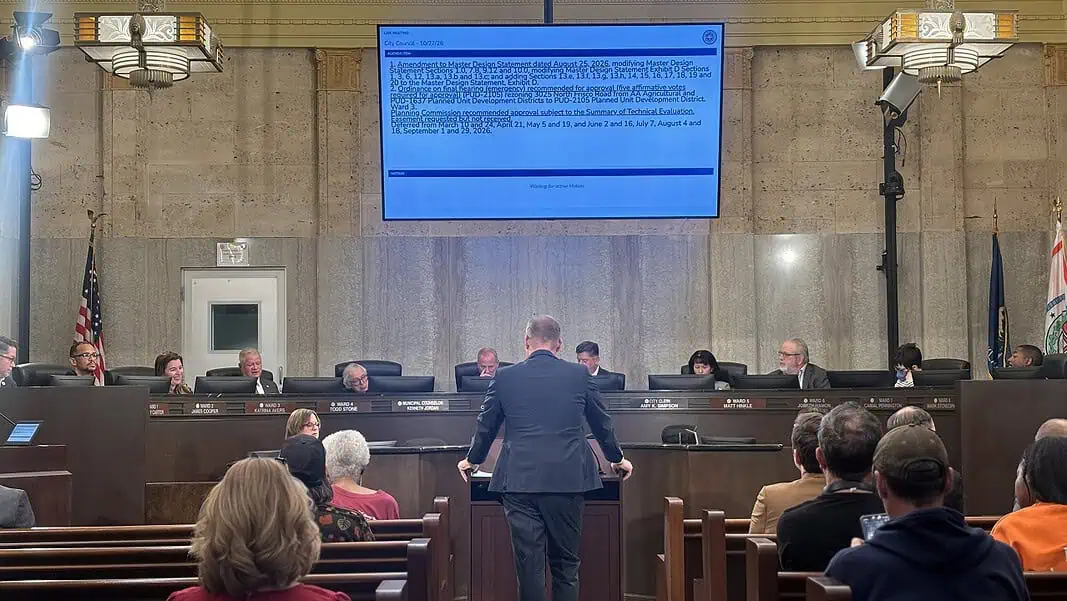

OKLAHOMA CITY – After months of postponements and deferments from the agenda, City Council members voted Tuesday to approve zoning for a major data center complex development on the far western edges of OKC, overlapping with parts of Yukon.
Planned and constructed by Atlanta-based Beltline Energy, the project will comprise OKC’s first hyperscale-level data center, covering nearly 300 acres within Oklahoma City limits alone, potentially not counting any additional acreage or square footage within Yukon.
The items finally came before the City Council on Tuesday after being deferred from the agenda twelve individual times since March 10th of this year.
Those past seven months have seen ongoing negotiations and discussions between City officials and Beltline representatives to bring the proposal in line with zoning requirements and to attempt to address resident concerns about the significant noise and utility usage that has come to be associated with mega-sized data centers.
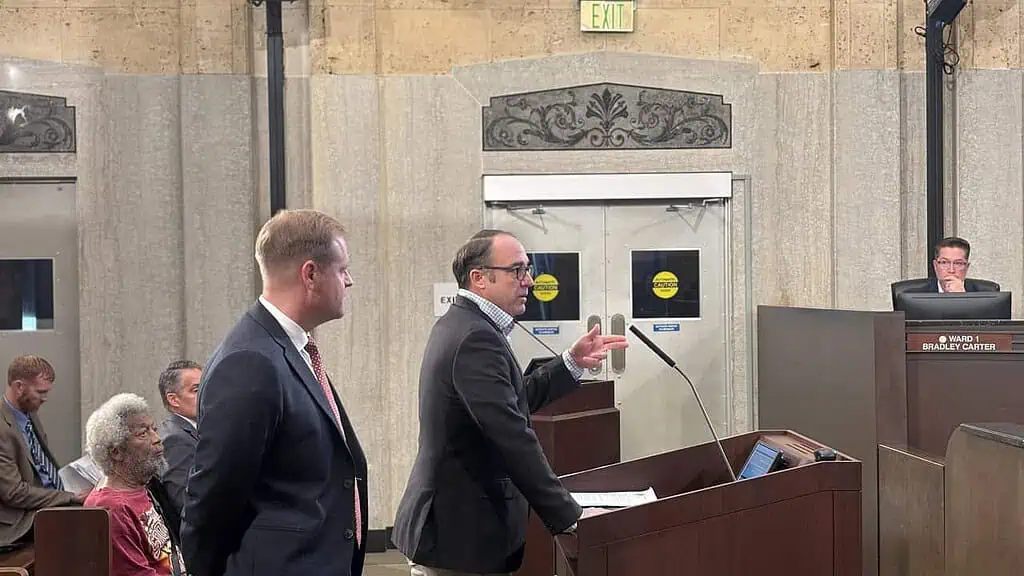
“What those deferrals allowed us to do was fine-tune this document to be the most restrictive and most regulated PUD [Planned Unit Development] that I’ve ever been a part of in Oklahoma City,” said attorney David Box, representing the project developers. “When you think of a data center, there are a few things that come to mind as concerns that people have. We think we have solved for all of those concerns in this document.”
Exempt from moratorium
This particular development was exempted from the data center moratorium passed and imposed by City Council in April, due to it already being in the development pipeline.
That moratorium is still officially in place, and Mayor David Holt said that he’ll be seeking at least a six-month extension past its current end date at the beginning of next year.
“If this is approved today, I do not think that means that Oklahoma City is open for business for data centers,” Holt told the council ahead of the vote. “I think this is kind of a standalone vote that should not send a signal that Oklahoma City is open for this type of project.”
Long list of restrictions, regulations
The newly approved projects will actually comprise two separate PUDs, one to the north of I-40 and another to the south, covering roughly 300 acres of land in OKC and bringing the full data center complex to within a few hundred yards of residences, both in Oklahoma City and in Yukon.
Hoping to avoid some of the vehement pushback and protest that significant data center developments have seen from residents across the country, Beltline worked closely with Ward 3 City Councilwoman Katrina Avers for months to create a laundry list of regulations and requirements to address some of the already vocal concerns:
- No on-site power generation will be permitted other than solar and backup generators. A nearby substation will likely see substantial upgrades, which will be paid for by Beltline as part of the project.
- Outdoor noise generated by the facility must not exceed 55db, measured as roughly the same volume of a normal conversation or consumer-sized electric fan. Studies and surveys of the noise level must be conducted before building and those studies can be peer-reviewed by the City.
- The facility cannot exceed 75,000 gallons of water use each day, cannot create any new wells on the site, and cannot use potable water for cooling processes, only for drinking, irrigation, and fire protection. Non-potable water will be allowed for cooling, but must pass City guidelines for being discharged to OKC’s wastewater system, and an on-site water treatment facility may be required.
- The maximum building height will be 80 feet and “utility infrastructure” will be permitted up to 150 feet.
- Landscaping and aesthetically varied walls and building facades will be required. Any outdoor lighting must be shielded and pointed away from roads and neighborhoods.
- The developers will be required to maintain surrounding roads.
- A decommissioning plan is required to ensure that any buildings and infrastructure on site will be demolished or repurposed if data center operations cease.
A government affairs liaison must be appointed by the data center operator as an official representative to address further resident complaints or concerns.
Community Benefits Agreement
Much like the in-development billion-dollar new Continental Coliseum, Beltline’s sprawling data center complex will be required by The City of OKC to draft and approve an official Community Benefits Agreement to ensure that the development benefits OKC’s workforce and financial stability.
The agreement has yet to be drafted, but according to a City press memo, it must, at a minimum:
- Protect the community’s fiscal foundation
- Build resilient infrastructure
- Steward natural resources
- Strengthen neighborhoods and quality of life
- Grow Oklahoma’s innovative ecosystem and workforce pathways.
Residents still not convinced
Only four residents attended Tuesday’s meeting to speak out against the development, a notably smaller opposition than what the same development has seen in public meetings in Yukon.
One of the opposed local residents was Paula Kelly, Assistant Municipal Counselor for the City of OKC.
Kelly acknowledged the unique circumstance of her addressing the council rather than presenting on their behalf, but attended the meeting to speak as a Yukon resident concerned about potential harm to the largely rural and natural land surrounding her home.
“My home is about a mile from this proposed data center,” she told the council. “I would be remiss if I did not stand here and give you my opinion and ask that you reject this PUD, and if I didn’t do it for my daughter, for my future grandchildren, and also all of the children, and all of the people that want to enjoy being outside in Yukon in Canadian County.”
Stephanie Burdine, also a Yukon resident that has been outspoken regarding her opposition to the development and that has been instrumental in the organized pushback against it, also addressed the council Tuesday.
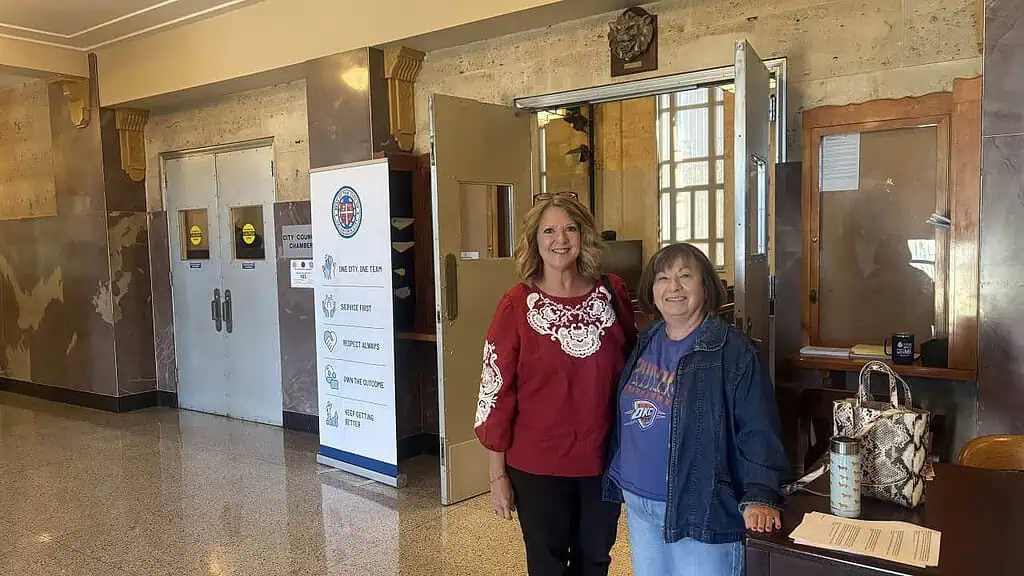
She acknowledged the amount of work that has gone into creating the list of regulations and resident considerations for the project, but still opposes it outright.
Burdine told Free Press following the vote that she doesn’t think any amount of regulation would have secured her support for the data center, given her concern for the surrounding nature and wildlife and the lingering question over which technology and data company will end up operating the facility when it’s built.
“No, for the simple fact that it’s 300 feet from homes,” she said. “They say ‘data center,’ but there’s going to be 20 buildings out there. I know there’s noise everywhere, but the locusts stop. The crickets don’t chirp. The traffic has slowed down times on I-40. But this never ends. This never ends.”
The City Council voted 6-3 on Tuesday to approve both zoning measures for the development.

Brett Fieldcamp is the owner and Editor in Chief of Oklahoma City Free Press. He has been covering arts, entertainment, news, housing, and culture in Oklahoma for nearly two decades and served as Arts & Entertainment Editor before purchasing the company from founder Brett Dickerson in 2026.
He is also a musician and songwriter and holds a certification as Specialist of Spirits from The Society of Wine Educators.