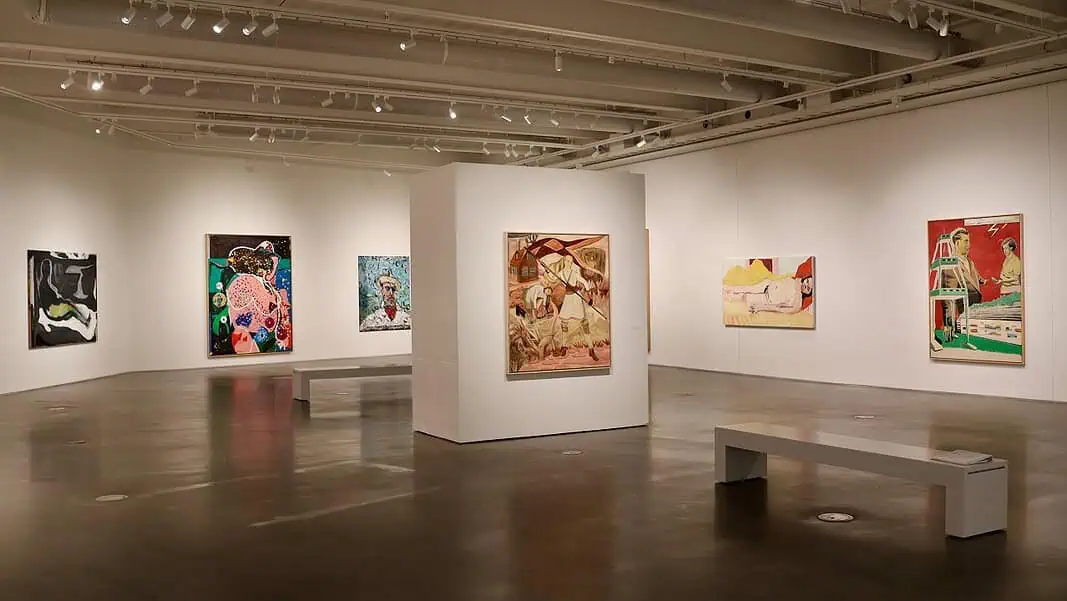
OKLAHOMA CITY – At first glance, there doesn’t seem to be much connecting all the works in the newest exhibition at Oklahoma Contemporary Arts Center. There are bright colors next to dark tones, geometric shapes and paint splatters, self-portraits, and – controversially – AI-generated images. But seeing all the works together brings out unique themes.
The exhibit, “Clever, Quick, Magnetic: The Art of Witty Banter,” opened Sept. 3, bringing together contemporary paintings from artists around the world to explore how very different works can begin to relate to one another.
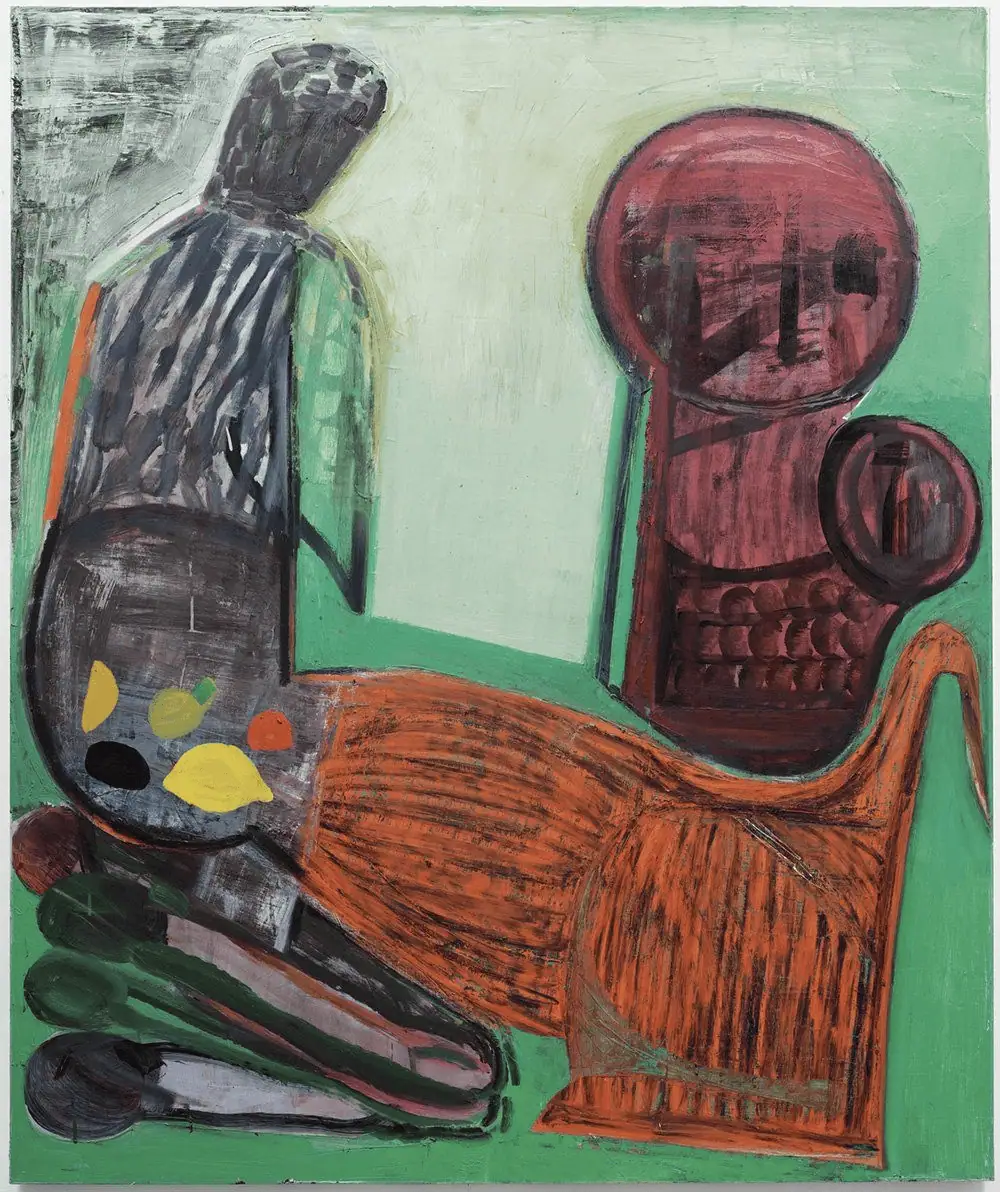
“All of these paintings are very much different and are very much their own,” Curator David Salle said during a media tour of the new exhibit. “They very much have their own aesthetic identity, and yet, seeing them together in this space, I feel they have something in common. The question for the viewer is…what do they have in common?”
The exhibition is also the title of Cecily Brown’s featured work “The Art of Witty Banter,” and is inspired by the title of a book by Patrick King. Salle said he thought of the paintings as the artists personified and in conversation with one another, almost like they’re comparing notes. Some, Salle said, might even be “outweirding” the painting next to them.
Rather than trying to make the works conform to one particular look, Salle said his selections were based on what the individual paintings are doing.
“My choices are not by a committee or by institution but it is a range of painting that I think is vitally interesting and speaks to the problems of today,” he said.
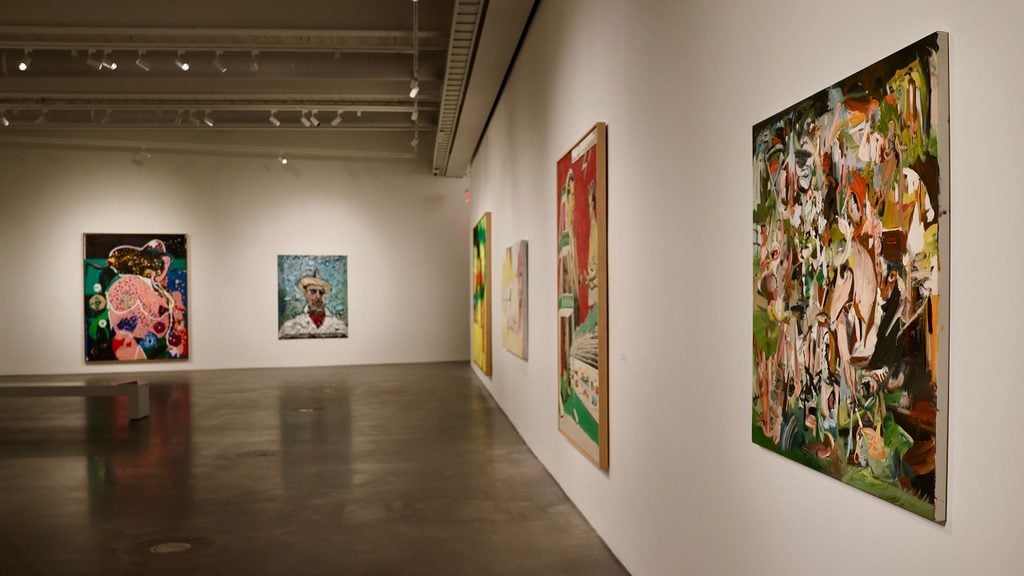
AI-generated inclusions raise questions during preview
The exhibit includes a piece from Bennett Miller, an AI generated image of a girl.
“It’s a digital image produced solely on a computer,” Salle said. “There’s no camera film image of a girl. The image is constructed out of algorithms.”
This piece raised some questions about the role of AI in an exhibit like this, to which Salle responded that AI can be a “machine with a capability.”
“I just recognize that this machine has capability,” Salle said. “It’s a tool. If you have a very specific use for it, it’s an incredible tool.”
Salle said Bennet “knows a great deal about the technology” and was one of the “first people to become familiar with it and adapt to it.”
“It’s just the reality of the algorithm, which is kind of weird and discombobulating,” Salle said about the work.
The context of the show does ultimately raise a question of what kind of conversations you might witness if some of these other artists, or even what would the other pieces in the exhibit, were to engage this piece in conversation, in a banter.
When challenged, Salle admitted that he also used AI in the creative process of his own piece in the exhibit (though the piece’s accompanying description doesn’t make that clear) saying he doesn’t think that AI is “encroaching on the visual arts, or at least not encroaching on painting.”
“I have no interest in, and have really very little knowledge of, AI in any other form of life and in any other application, or any other way in what it’s doing in society, and that’s not my job,” Salle said.
The Oklahoma Contemporary Arts Center has never shied away from complicated topics. Many of the pieces in the show deal with delicate subject matter and feature nudity, but this piece in particular and its mode make for a divisive conversation topic for exhibit viewers.
Sense out of nonsense
For Salle, one of the exhibition’s central ideas is the “inner life” of art.
“Paintings are inanimate objects, and so it may sound different to say that they have an inner life, but I think the premise of the show is that they’re made by people,” Salle said. “They have a personality. They share some elements with their maker, not that they’re identical, but you can somehow read the person painting.”
And there are certainly a lot of personalities on display like 99-year-old artist Alex Katz and Rose Wylie, whose work Salle described as “thrilling” and “daring.” The range of work goes past the limits of medium like a piece from Julian Schnabel, whose canvas is that of crushed and painted coffee mugs and plates.
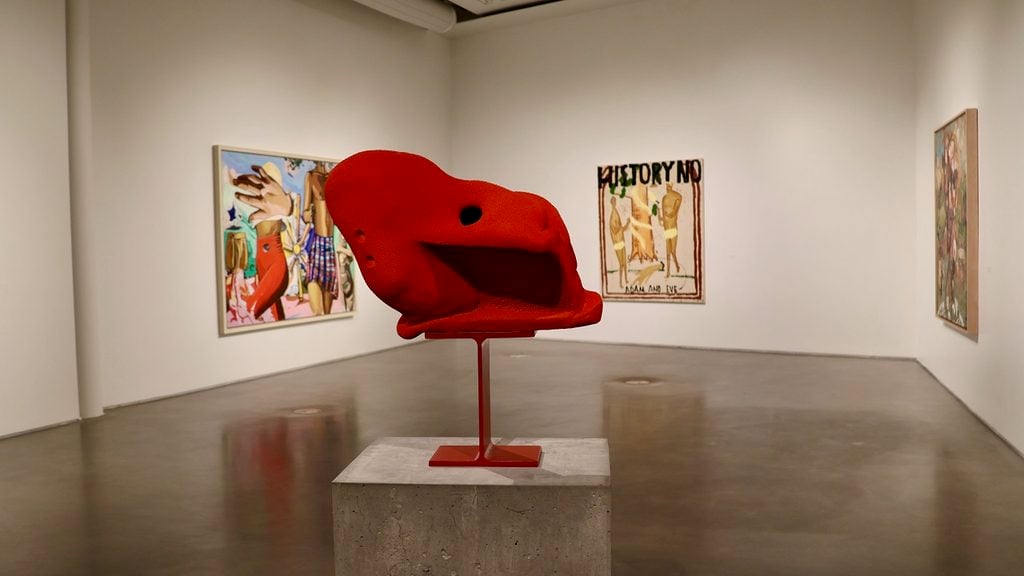
It’s works like Schnabel’s with such a life of their own that bring the question of personality. One of the other works Salle discussed during the tour is from artist Charline von Heyl featuring thick black lines, birds, and the letter “C,” with layers of vibrant paint.
“If you told someone this they would say, ‘what a mess,’” he said of the piece. “But the magic of the painting is that she takes all of those unlikely elements of awkwardness, overpainting, bad drawing, and she makes it something that holds your attention.”
This work and several other works in the show bring up another central theme of intentionality.
In their program, Oklahoma Contemporary describes “intention” as what an artist seeks to convey or investigate, while “style” is the way that intention takes shape in the work. The end result is that many of these pieces may bring up more questions than answers, questions that even Salle finds himself left with like, “Why this color? Why this shape? Why this pairing?”
“You really want to interrogate the painting,” Salle said.
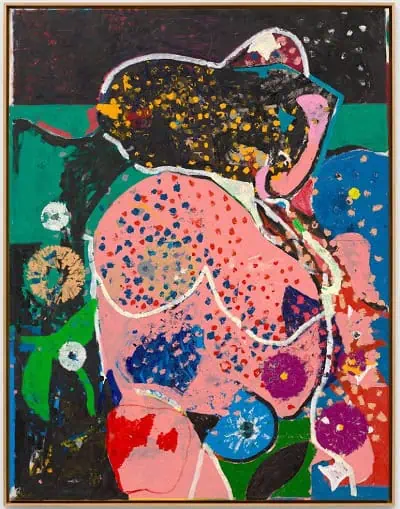
Salle summarized this experience as “sense out of nonsense.”
Some of the works may appear strange or playful, while others are more restrained, but Salle said there is an ultimate thread, an upbeat quality to the works.
“What’s interesting about the show is that all of these things are upbeat, even the ones who are kind of dour,” he said.
He described the paintings as having a kind of “companionability” with one another, despite their differences.
In this exhibition, a highly-controlled work might share a wall with a more spontaneous one, a colorful painting next to a muted one, a tactile work and an algorithmically-created one. The result is what Oklahoma Contemporary Executive Director Trent Riley called “one of the most profound exhibitions in the art world.”
“Clever, Quick Magnetic: The Art of Witty Banter” is on view at the Eleanor Kirkpatrick Main Gallery until Jan. 11, 2027 at the Oklahoma Contemporary Arts Center.

Zoe Elrod covers events and happenings around Oklahoma City for Free Press bringing her skill as a reporter and photographer. Zoe has spent her career covering local musicians, artists, politicians, and everyday folks.