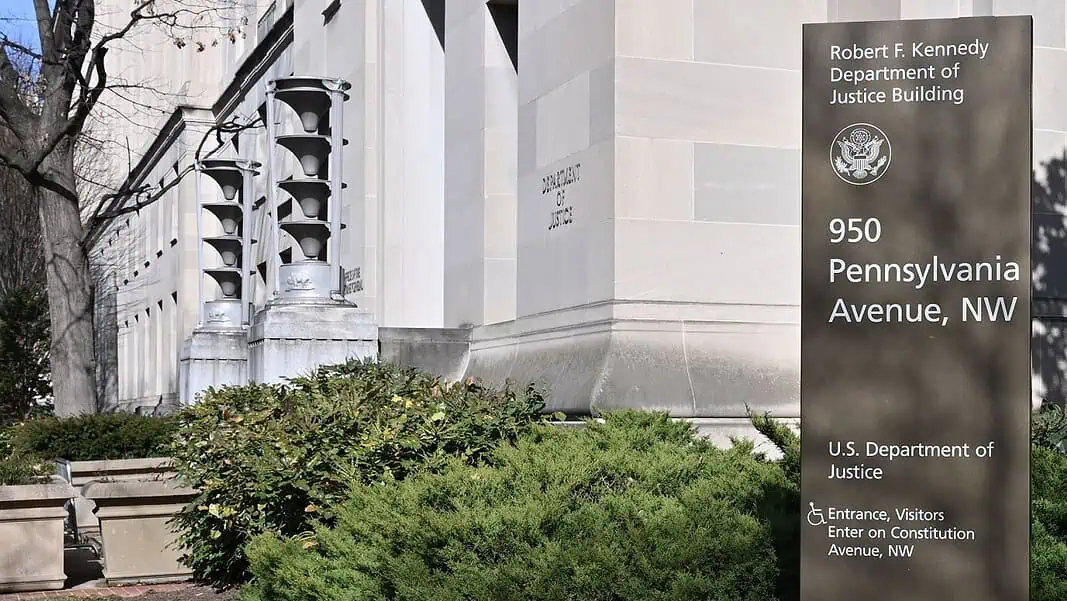

OKLAHOMA CITY – For nearly three decades, federal law has been understood to provide people with disabilities the right to receive services in their communities rather than institutions, but a new memo from the Justice Department is challenging that understanding –– and Oklahoma disability rights advocates are paying close attention.
Since the Supreme Court’s 1999 ruling in Olmstead v. L.C., states have been required to ensure that services are reasonably available within their communities, allowing people with disabilities to live, work, and receive care in public places, and even to attend public schools, ruling that “unjustified institutionalization” is unconstitutional.
But a new opinion memo published by the Department of Justice (DOJ) on June 18th seeks to reinterpret those long-held understandings of the Olmstead decision by claiming that states cannot be forced by the federal government to provide those kinds of community-integrated services.
And that opinion has some worried that it could signal a shift back to the forced institutionalization of people living with mental disabilities.
“It’s extremely important that we stay on top of the Olmstead opinion,” said Brian Wilkerson, Director of Litigation and Legal Services at Disability Rights Oklahoma. “It is another really concerning signal from the federal level that there are attempts to minimize the ability of people with disabilities to have choices: in their employment, schooling, where they live, where they receive services to manage their day-to-day lives.”
The DOJ’s new opinion
Disability Rights Oklahoma (DROK) is the state’s federally-funded Protection & Advocacy agency – working to further disability rights across Oklahoma’s 77 counties –– and they’re raising concerns that the DOJ memo seeks to reinterpret long-held understandings of Title II of the Americans with Disabilities Act (ADA) and Section 504 of the Rehabilitation Act.
According to DROK, the memo suggests these laws do not require states to support individuals with disabilities in the most integrated setting appropriate to their needs. DROK also warned that the memo calls into question longstanding federal regulations known as the “integration mandate” and suggests they may exceed agency authority or be subject to rescission.

“It’s important to be clear what the Olmstead memo is,” said Wilkerson. “It’s a legal opinion by an arm of the DOJ that is answering questions for requests from the President’s legal counsel, about the effect of Olmstead, the Americans with Disabilities Act, specifically Title II, and Section 504 of the Rehabilitation Act on what we call the ‘integration mandate.’”
But DROK also clarifies that the memo is, so far, just an opinion, not an authorization to change or roll back services.
“[The Olmstead memo] does not authorize Oklahoma, or any state, to rely on institutions when people can be appropriately served in the community,” the DROK’s statement reads.
What could this new opinion signal?
But while the memo does not have the force of law or erase existing disability rights protections, its implications are significant.
According to DROK, if adopted in policy or practice, this reinterpretation could reduce federal investigations and oversight, embolden states to resist their obligations to serve people with disabilities in integrated settings, and weaken investment in community-based supports.

It may also be used by government defendants in litigation to avoid accountability for building adequate community-based services.
“If there was a partial reduction in federal funding or an attempt at total elimination, it would have a devastating effect on people with disabilities in Oklahoma,” Wilkerson said. “They would be hard-pressed to find individuals who could advocate for their children in schools that need special education services, to advocate for people that receive Medicaid services or waiver services when there are cuts, and they need to challenge those at administrative hearings.”
Understanding Olmstead & earlier context
The Olmstead memo addresses the original Olmstead v. L.C. Supreme Court case from 27 years ago, in which two Georgia women with multiple disabilities were kept in a state-run institution, even though their treatment professionals expressed they were able to move onto care programs within the community.
The outcome of Olmstead emphasized more services to support community integration –– a critical gain for disability rights.
The ADA further explains the case’s outcomes:
“In Olmstead v. L.C., 527 U.S. 581 (1999), the Supreme Court, interpreting the ADA’s integration mandate, held that Title II prohibits the unjustified segregation of individuals with disabilities.”
While the Olmstead case happened in 1999, the 1970s marked a significant period of deinstitutionalization in the United States.
According to the Harvard Law School Project on Disability, this movement emerged in response to reports of significant institutional abuse, along with a growing emphasis on the dignity and rights of people with disabilities.
By prioritizing community-based services over institutionalization, the integration mandate has aimed to give disabled people greater autonomy over their own lives, including the right to make informed decisions about where and how they receive care.
Models of disability & ramifications
Rather than an integration-centered approach, emphasizing institutionalization typically leans toward a medical model of disability. That model often frames disability as perceived ‘deficits’ to potentially be fixed, and that philosophy may encourage shifting resources away from disability supports and accommodations needed for full participation in society.
In contrast, an integration-centered approach often aligns with the social model of disability, which sees ‘disability’ as created by cultural perceptions, lack of accessible resources, and barriers to communication and community participation. Ultimately, the social model advocates for society to accommodate people with disabilities, rather than expecting adaptation to a society often not designed to meet their needs.
“There are so many different types of disabilities, and so many people are affected,” said Wilkerson. “It’s hard to find an individual or family that doesn’t know someone, or have a family member, a close friend, a church friend who is living with a disability and often relies on some of these services.”

Reduced community supports could have devastating consequences for the disability community –– locally in OKC, throughout Oklahoma, and across the nation.
In a recent PBS interview, Maria Town, president and CEO of the American Association of People with Disabilities, explained that individuals with disabilities experience better outcomes and life expectancy when supported in their communities.
In contrast, institutionalization and the loss of community-based supports are associated with significantly worse health outcomes, and in some cases, fatal ones.
Next steps for the disability community in OK
Disability Rights Oklahoma encourages families and advocates to pay close attention to what both political parties are saying about the Olmstead opinion, along with any proposed changes, including changes in qualifications for Medicaid and/or other services.
As a publicly funded institution, DROK strongly encourages Oklahomans with disabilities to reach out if they are hearing about direct threats to their services or entitlements as they remain committed to their mission to “protect, promote, and expand the rights of people with disabilities across Oklahoma.”
The concerns surrounding the Olmstead memo are no exception.
“We will continue employing all of the legal strategies and legal rights that we believe individuals in Oklahoma with disabilities are entitled to,” said Wilkerson. “If there’s a serious move to cut back on rights for individuals with disabilities, the DROK is going to figure out how to address that situation. More than likely, this would be in some form of legal action.”
For more information on Disability Rights Oklahoma, visit drok.org or call 800-880-7755.

Erin Schalk serves as a professional writer, visual artist, voice narrator, and accessibility-centered educator. She is the recent recipient of multiple Writer’s Digest awards and the Armed Services Arts Partnership’s National Scholarship. She has also received a Best of the Net nomination. Schalk’s work has appeared in Wordgathering, Stirring Lit, Parentheses International Literary Journal, The Petigru Review, and numerous other publications. She also received her MFA from the School of the Art Institute of Chicago.