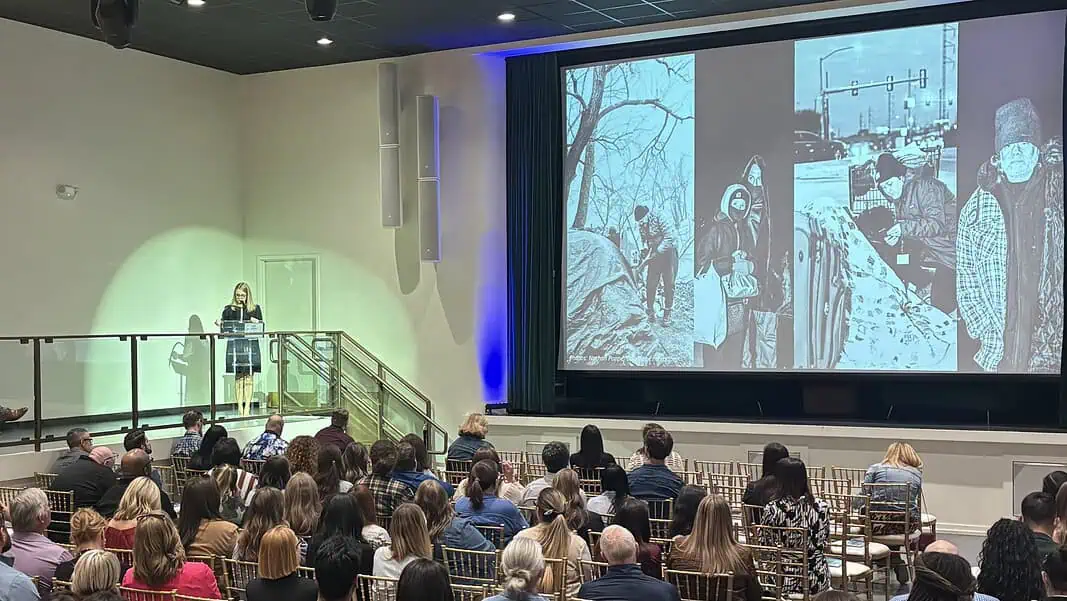

OKLAHOMA CITY – City of OKC officials and outreach leaders gathered Thursday to reveal the results of the 2026 Point-in-Time count of the city’s homeless population, showing the first recorded drop in homelessness in OKC since 2022.
After seeing the number of unhoused OKC residents rise through recent years, City data is showing a 1% drop in homelessness in 2026, the result, they say, of the Key to Home Partnership launched in 2023 to join City services and private resources into a single, holistic, citywide network.
Those numbers come according to the annual Point-in-Time count, in which outreach workers and volunteers traverse the city each January in an attempt to count the number of homeless, unhoused, and unsheltered residents. This year, the count took place just ahead of a significant winter storm:
Now months on from that morning, Key to Home’s Homeless Strategy Implementation Manager Jamie Caves presented this year’s count and its deeper findings and data – including that long-awaited 1% drop – to City officials, stakeholders, and community members Thursday for the annual State of Homelessness address at Capitol Hill’s Yale Theatre.
“For the first time since 2022, Oklahoma City is seeing overall homelessness decline,” Caves said in a statement issued to media ahead of the address. “That didn’t happen by accident. It’s the result of 50-plus organizations aligned around the same data, the same strategies, and the same goal.”
Sustained drop in unsheltered homelessness
Though a 1% decrease in the overall count may not seem like a major development, it represents the clearest sign yet that the Key to Home model is seeing positive results, attempting to streamline and quicken the process of moving homeless residents through the system by coordinating services.
Key to Home’s encampment rehousing initiative – establishing a rapid process to move homeless residents from street encampments directly into housing – has seen especially promising results, the data shows, with the number of unsheltered residents dropping again for the fifth year running.
“For the person just driving by, unsheltered homelessness is what they call ‘homelessness,’ right?” Mayor David Holt said in his early remarks during the address. “That’s visible homelessness. That’s the look and feel of the city.”
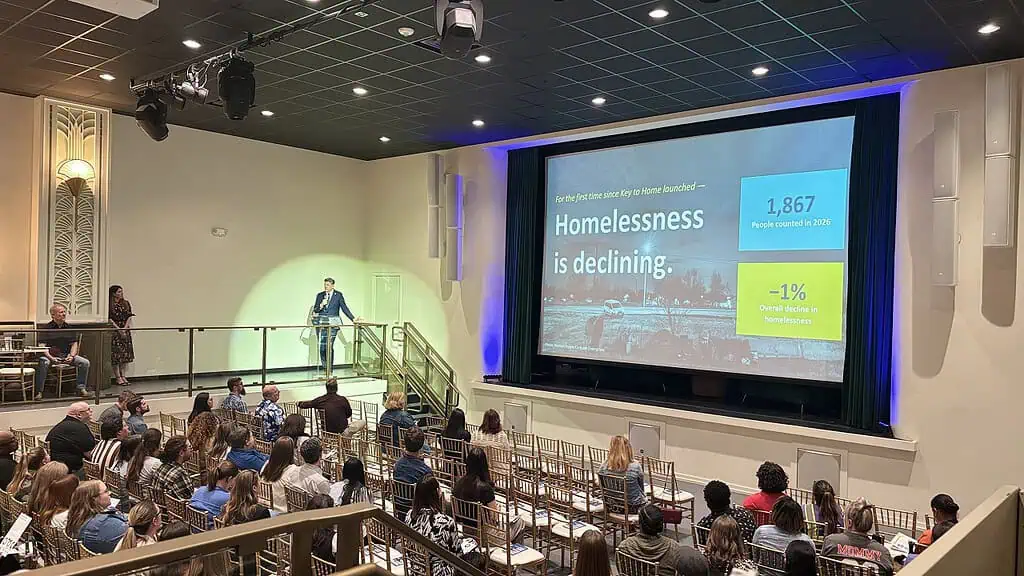
While Key to Home focuses on the full spectrum of homelessness, from shelter capacity to rental assistance resources for those at risk of losing homes, Caves explained that addressing unsheltered homelessness must be a top priority, not just for visibility, but more importantly for safety.
“People experiencing unsheltered homelessness are the most vulnerable, and that has the biggest impact on our whole community,” she said in her address Thursday. “With it comes the greatest risk of violence, of untreated illness and premature death. When we move the needle in a meaningful and sustained way on unsheltered homelessness, we’re not just affecting a trend line on a paper. We’re changing the conditions and the trajectories of people’s lives.”
Modest results, but challenges remain
This year’s overall reduction in homelessness – even with just a 1% decrease – is a hard-fought victory achieved through a complex coordination of public and private resources that became more challenging that ever after the ending of many federal assistance programs.
“While 1% is a modest number, I can’t emphasize enough how big of a win this is for our city,” Caves said. “This is the first decrease since 2022, when our community had significant Pandemic Era resources like federal funding, eviction moratoriums and emergency housing assistance that helped keep people housed. When those resources ran out, we felt it.”
The discontinuation of those federal resources has been credited with the substantial rise in homelessness across OKC after 2022, including a staggering 28% increase in homelessness citywide from 2023 to 2024.
While this year’s small decrease is seen as a step in the right direction, many of those same challenges still remain.
The numbers of families and unaccompanied youths experiencing homelessness still rose slightly in the 2026 count, owing somewhat to better visibility and a system better equipped to identify them, but also to stubbornly scarce resources and housing difficulties.
“This is so systemic, it’s wages, it’s evictions, it’s the lack of actual structures,” said Shannon Entz, the City’s Housing Strategy Implementation Manager, in a panel discussion with service and outreach leaders following the address.
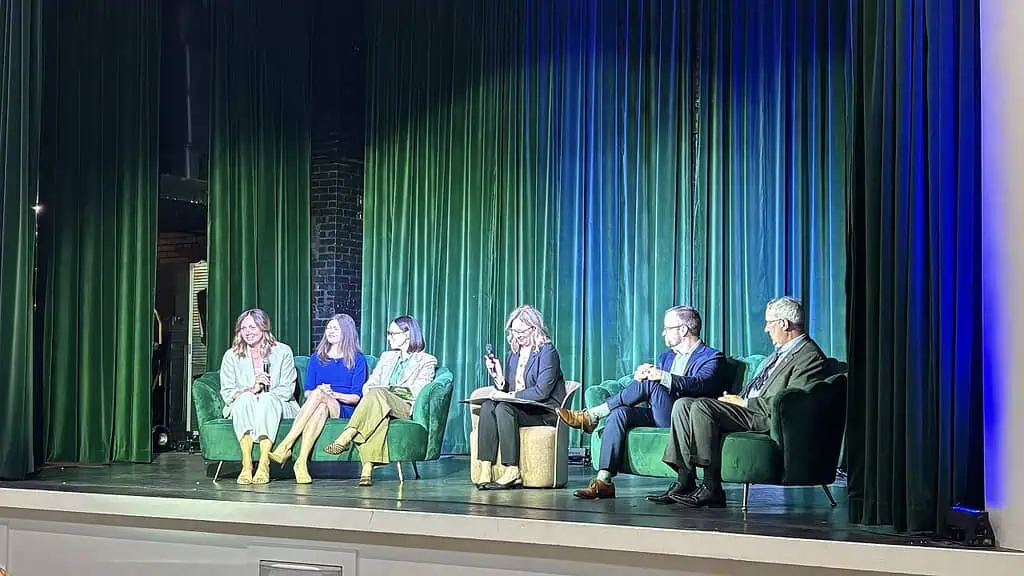
Entz functions essentially as the housing-focused counterpart to Caves’ focus on homelessness, together hoping to bridge the gap between the affordable housing crisis and its increasing effect on homelessness, especially for families and young residents.
“Our recent Housing Affordability Study told us that we are 11,000 units short of new construction,” Entz said. “We need 11,000 more units built of homes in Oklahoma City, but we need 34,000 units rehabbed and repaired. So that is where one of our biggest hurdles will be.”
‘Slow erosion’
Even while celebrating 2026’s small, measureable drop in the count, Thursday’s State of Homelessness address was far from a victory lap, with frontline service providers, led by Caves, speaking bluntly about the issues still at hand and the societal factors that continue driving homelessness nationwide.
“Behind every number in today’s data,” Caves said, “is a neighbor who was already hanging on, stretched thin by the gap between what things cost and what work pays, by a support system that has worn down over time, by the slow erosion that poverty, both financial and relational, causes.”
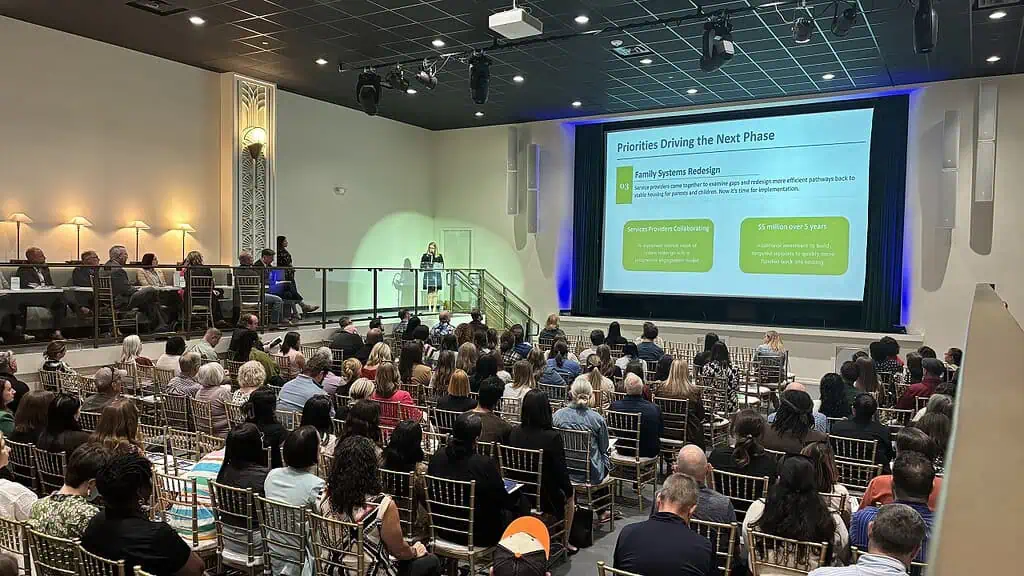
According to Caves, and to all of the leaders and officials that spoke Thursday, the needs are clear: better funding, better coordination, and better compassion and understanding for the realities of homelessness and the human lives at its core.
“One event didn’t cause their homelessness,” Caves told the audience. “They just pushed them over the edge that they’d already been standing on for a long time, and our job, this community’s job, is to be there before that push becomes permanent. Today’s data tells us that the work is taking hold. These stories tell us why. We cannot stop. We know what works. We have a plan, and now we have to move faster together.”
You can read the full results of the 2026 Point-in-Time count, as well as previous years, HERE.

Brett Fieldcamp is the owner and Editor in Chief of Oklahoma City Free Press. He has been covering arts, entertainment, news, housing, and culture in Oklahoma for nearly two decades and served as Arts & Entertainment Editor before purchasing the company from founder Brett Dickerson in 2026.
He is also a musician and songwriter and holds a certification as Specialist of Spirits from The Society of Wine Educators.