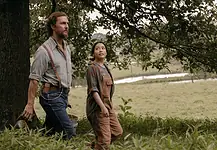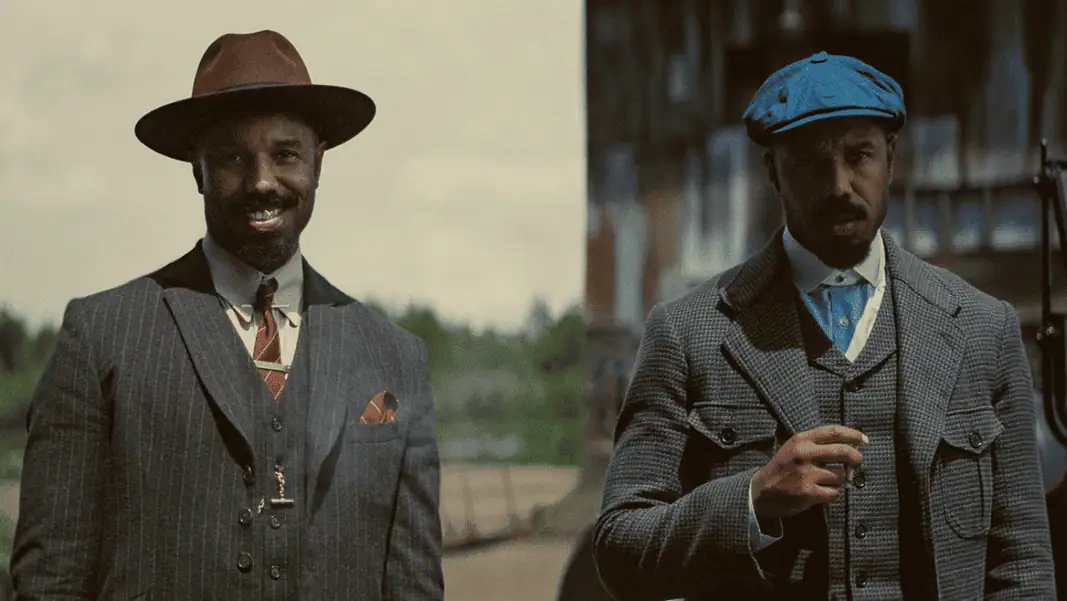

Even halfway across the country, standing in the Academy Museum of Motion Pictures in Los Angeles, with all eyes on the 98th Academy Awards, it was clear to see the imprint that Oklahoman minds and histories have had on recent film.
With Ryan Coogler’s “Sinners” and Paul Thomas Anderson’s “One Battle After Another” competing for Best Picture at the ceremony, film fans debated which would claim the night’s top honor, and while Anderson’s film ultimately took Best Picture, the cultural impact of “Sinners” – driven heavily by insights from Oklahoma – looks to be undeniable.
The vampire drama follows Sammy, a blues musician navigating the harsh realities of the Mississippi Delta under Jim Crow, as he confronts the lure of the film’s juke joint, founded by twin brothers Smoke and Stack, and the sinister vampire forces trying to infiltrate it.
“Sinners” won four Oscars out of a record-setting 16 nominations: Best Actor for Michael B. Jordan, Best Original Screenplay for Ryan Coogler, Best Original Score for Ludwig Göransson, and Best Cinematography for Autumn Durald Arkapaw.

Oklahoman insights in Hollywood
But even outside Hollywood, “Sinners” made a strong impact.
On Sunday night, film lovers filled out Oscar ballots, debated winners, and followed the ceremony, and for many even in Hollywood, the film was the story of the night, not just for its awards, but for its cultural significance and historic firsts.
University of Oklahoma historian Karlos Hill, Regents’ Associate Professor of African and African American Studies, played a key role in shaping “Sinners.” A nationally recognized scholar of racial violence and historical memory, Hill consulted with Coogler from the earliest stages in 2023, helping shape the film’s depiction of the Mississippi Delta and blues music as a cultural and narrative force.
“I was very elated to see ‘Sinners’ win Best Original Screenplay, Lead Actor, Cinematography, and Original Score,” Hill said. “Those are huge accomplishments. Although I do believe it should have won Best Picture, those four awards make a lot of sense to me, and they were certainly richly deserved.”

Hill said he felt particularly excited for Coogler’s Original Screenplay win, describing Coogler’s acceptance speech as making him feel “connected and inspired” to be part of the process, that much of what Coogler said resonated with him, and that he was happy for everyone involved.
“I really felt connected to that screenplay because of having spent time talking with him about his vision for ‘Sinners’ very early on, before he even had a script,” Hill said. “I take a lot of pride in having been part of that process. When he won and got on stage, showing gratitude not just for the final product but the process itself, it was incredibly meaningful.”
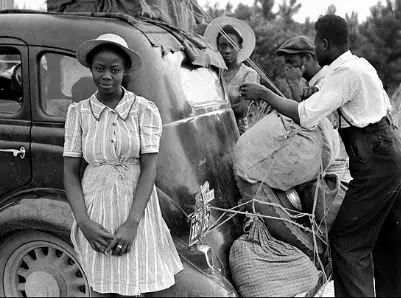
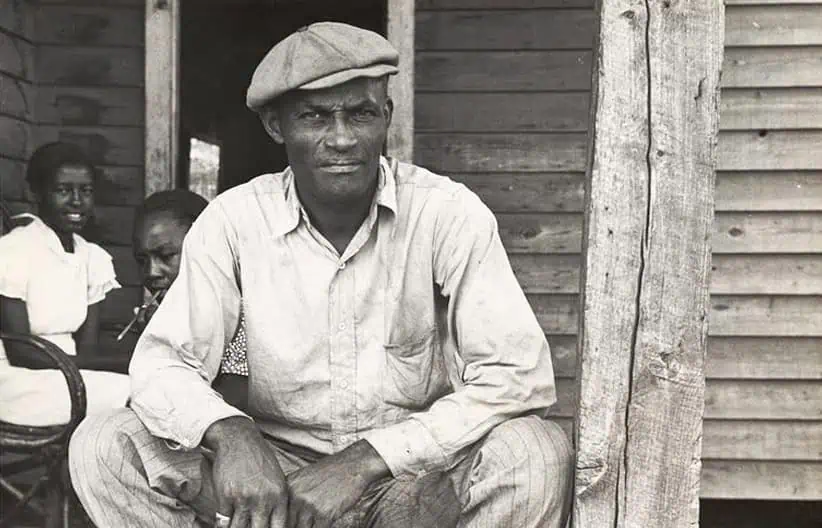
Hill provided Coogler with 1930s photographs and essays of Black life in the Delta, many from the Works Progress Administration, depicting cotton fields, chain gangs, and sharecropping communities. These materials highlighted daily life under the plantation economy. The work drew on Hill’s personal connection to the Delta, reflecting his own deep familiarity with its landscapes and history.
“That oppressive backdrop is why the juke joint becomes such an important institution culturally, socially, and spiritually,” Hill explained. “It’s a space of freedom, healing, and relationships that cannot happen outside of it, and that oppressive backdrop is what I had a role in shaping.”
In February, Hill joined Oklahoma Film Exchange (OFX) for a screening of “Sinners.” OFX’s River Lunsford described how the film highlighted often-overlooked contributors to filmmaking.
“We don’t always think about the people who helped make a movie happen who aren’t the director or writer,” Lunsford said. “There are people who aren’t involved in film that also get to have a lot of input and stake in the process.”
Lunsford observed that “Sinners” sparked a cultural moment, engaging audiences on multiple levels, particularly through its historical context, shaped by Hill’s expertise.
“I think ‘Sinners’ has had such a huge cultural moment and has so many people engaged in film and history,” Lunsford said. “People are thinking about the history of the South, specifically the Delta region, and the community of not just the Black characters, but everyone in the film. I’ve never seen a mainstream film garnering this much interest in both film and history.”
The role of blues in ‘Sinners‘
Music lies at the heart of “Sinners,” with blues, rooted in the sorrow songs of enslaved people and carrying grief, humor, resilience, and hope, anchoring the story. Hill helped shape the film’s depiction of this cultural space, bringing the juke joint to life as one of the few places where Black characters experience joy and freedom under Jim Crow.
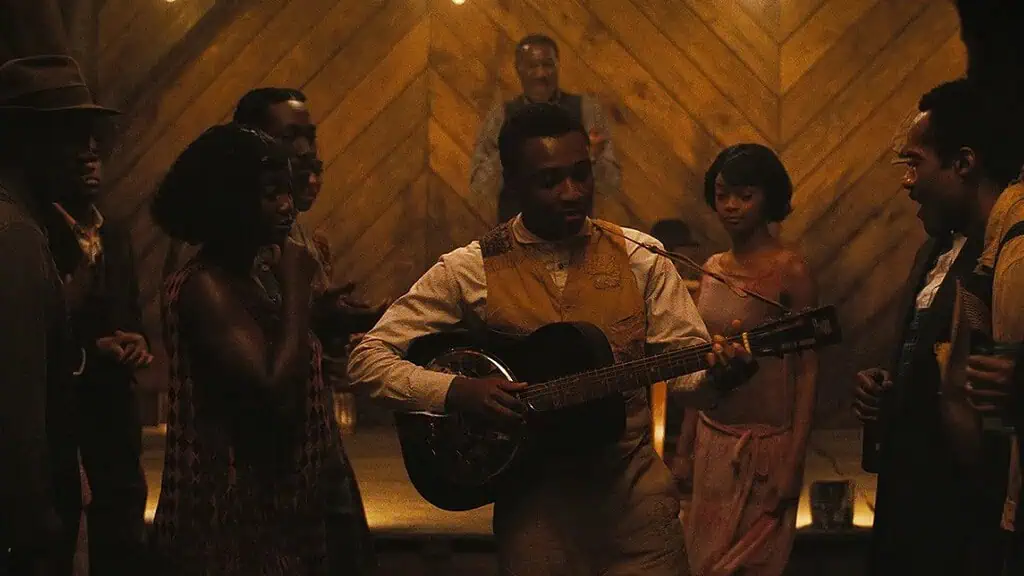
Alongside Ludwig Göransson’s Oscar-winning score, the original song “I Lied to You” was nominated and performed at the ceremony. Hill’s and Coogler’s personal connection to the blues shaped the film, and it shows strongly in this iconic scene. The story frames a moral tension between Sammy and his father, who sees the juke joint as corrupting, while Sammy embraces the path of a “sinner.” Yet the juke joint ultimately becomes a space of community, healing, and freedom. In this scene, Sammy’s performance creates a “portal” linking the continuity of Black music through generations of traditions from African dances to hip hop, showing how blues connects past and present.
“Blues in ‘Sinners’ is a powerful, transformative force,” Hill said. “It’s an art form rooted in African and American culture and in contemporary popular culture as well. In Ryan’s hands, blues is treated with such love and deep understanding.”
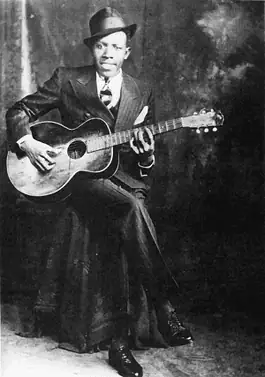
Hill also guided Coogler in incorporating the mythology of blues legend Robert Johnson. Coogler’s interest in Hill began with his work on “Devil at the Crossroads,” the Netflix documentary about Johnson that explored his life, mythology, and supposed pact with the devil. Hill shared insights on Johnson’s talent and the mystique that surrounded him.
“Sammy is a composite of Johnson’s musical brilliance, sexualized lyrics, and the hardships of traveling bluesmen. Ryan didn’t call attention to it explicitly. He lets the audience discover these layers themselves,” Hill said.
Making history
Back in Los Angeles, at the Academy Museum of Motion Pictures, visitors in red and black “Sinners” t-shirts are immersed in the vibrant world of cinema. The museum, dedicated to the art, science, and history of filmmaking, features galleries of iconic artifacts, including “Jaws” with John Williams’ Oscar-winning score on full display.
In this moment, it’s easy to imagine the film eventually earning a place in the Academy Museum’s historical narrative, perhaps even its own exhibit celebrating the history of blues and the iconic juke joint setting. Its Oscar-winning score might someday play in museum headphones, and its scripts and costumes could join exhibits alongside cinematic legends.

Even without a Best Picture win, “Sinners” has had global resonance, and at its core, an Oklahoma historian helped shape the film’s vision, bridging scholarship and cinema, history and myth, blues and narrative.
“I hope audiences take away a deeper understanding of these histories and the lives, choices, and creativity of the people who lived them,” Hill said about the work. “Film can speak to people differently than historical texts or historical photographs. I’ve come to understand just how much art can have an impact on the world through working with Ryan, and I’ve seen how the world responds to great Black art. It’s impressive.”
The Oscars themselves marked several historic firsts for the horror genre. The 98th Academy Awards set a record for horror films, which won eight Oscars in a single night: “Sinners” taking four,” Frankenstein” three, and “Weapons” claiming Best Supporting Actress. Plus, with her win for “Sinners’” cinematography, Arkapaw became the first woman ever to receive the Academy Award for cinematography, a milestone for representation behind the camera.
Hill praised Coogler’s authenticity, gratitude, and generosity and said Coogler’s sense of shared humanity has been a source of inspiration.
“He’s already had the biggest impact that he can have on me, because he knows my work, he appreciates my work, and he utilized my work in the film,” Hill said.
Hill’s receiving of special thanks in “Sinners” alongside Oscar-winners like Christopher Nolan reinforced that impact. Hill said Coogler’s work inspired him to continue creating, consulting, and supporting historically grounded narratives of Black life. He said working with Coogler reshaped his sense of purpose and breathed new life into his creative vision.
“Ryan has really changed my life and how I think about what I want to do in the future,” Hill said. “I definitely want to support Black filmmakers who are trying to create historically authentic depictions of Black life, especially connected to the areas that I research.”
Through “Sinners,” the film shows how historical insight and cultural understanding can shape cinema, and how behind every Oscar and cinematic triumph, countless unseen voices help shape the story, some of them coming from right here in Oklahoma.

Zoe Elrod covers events and happenings around Oklahoma City for Free Press bringing her skill as a reporter and photographer. Zoe has spent her career covering local musicians, artists, politicians, and everyday folks.