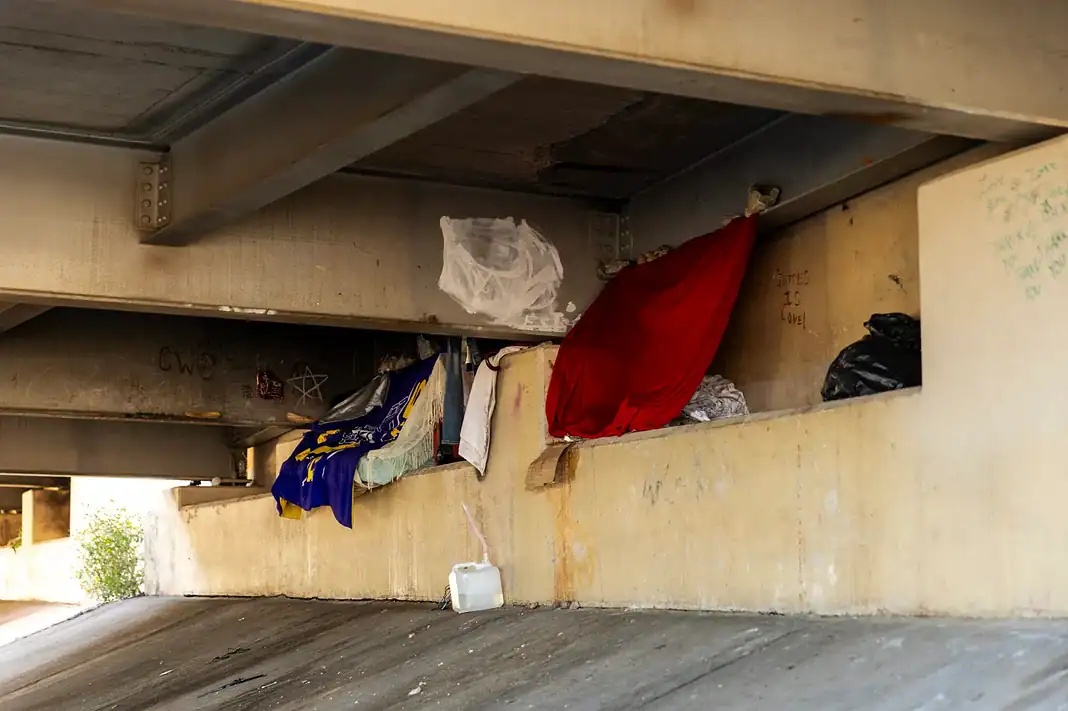

About 40 people experiencing homelessness in Oklahoma City could be placed in state-funded housing by September. It’s the only time The Homeless Alliance, an Oklahoma City shelter, can remember the state agreeing to pay for housing for people experiencing homelessness in the area.
Jamie Caves, strategy implementation manager for Key to Home, said the organization has never before received state funding for encampment rehousing.
The Frontier first reported in November a proposed agreement for the state to pay up to $800,000 for housing and services for those displaced by Gov. Kevin Stitt’s operation to clear homeless encampments from state property. The negotiations marked a hard turn from Stitt’s previous stance against using tax dollars to house people experiencing homelessness.
The state recently finalized the agreement with the city to provide funding for the project. Oklahoma City Mayor David Holt and the city clerk signed the contract on Feb. 10. The contract was later approved by the Department of Mental Health and Substance Abuse Services.
“Key to Home is a proven way to reduce homelessness and it has helped us reduce unsheltered homelessness in OKC four years in a row,” Holt said in a statement to The Frontier. “Key to Home has received support from many partners, and in this instance, we were pleased that the City and State could work together.”
The agreement spans from October 2025 to the end of September 2026. The state will pay $1,667 a month — about $20,000 a year — to house people for up to a year and cover case management services, according to the contract.
Stitt launched Operation SAFE in Tulsa in September 2025, clearing homeless encampments from state-owned property. The operation then moved to Oklahoma City a month later, removing people from under bridges and overpasses on Interstates 40 and 240. Key to Home, which runs Oklahoma City’s rehousing initiative, has so far helped place 27 people in rental housing across the city.
“We’re glad to have a contract in place with the state so we can move forward with providing a dignified response to people experiencing homelessness on state property,” said Erika Warren, a spokesperson for Key to Home. “This contract represents shared goals and a commitment to long-term solutions both for the people who are unhoused, as well as the broader community.”
There are no sobriety or employment requirements to participate in the Encampment Rehousing Initiative. Though the goal is for participants to become self-sufficient by the end of the yearlong program, Warren said..
“This gives us a year to help with skill building, improving income, connecting to community resources and other measures to support stability,” Warren said. “On occasion, people do need to be connected to a higher level of support that will last longer, (but) many others will achieve self-sufficiency within twelve months.”
More phases of the operation are expected in Oklahoma City, but the dates and locations aren’t yet known, Warren said.
If people living in encampments don’t accept housing, they are offered a ride to other shelters and services, or a bag to collect their belongings and a bus pass.
It’s a softer approach compared to Tulsa, where people who refused to leave state property and accept offers of help were told they would be arrested and taken to jail. After Oklahoma enacted its state anti-camping law in November 2024, at least two people were booked into the Tulsa County jail for violating the measure, according to the Tulsa Police Department.
All clients connected to housing through Key to Home will receive 12 months of case-management support to help them achieve stability and independent living within the next year. Key to Home can bill the state for housing costs any time someone has been in the program for 30 consecutive days. If a person leaves during the course of a month and doesn’t transition into other stable housing, the state won’t cover housing costs for that period.

The governor’s office said it is open to clearing more homeless encampments in other cities if community members request it. Stitt’s office told The Frontier in November that any city where the operation takes place would be offered the same opportunity for state-funded housing as Oklahoma City.
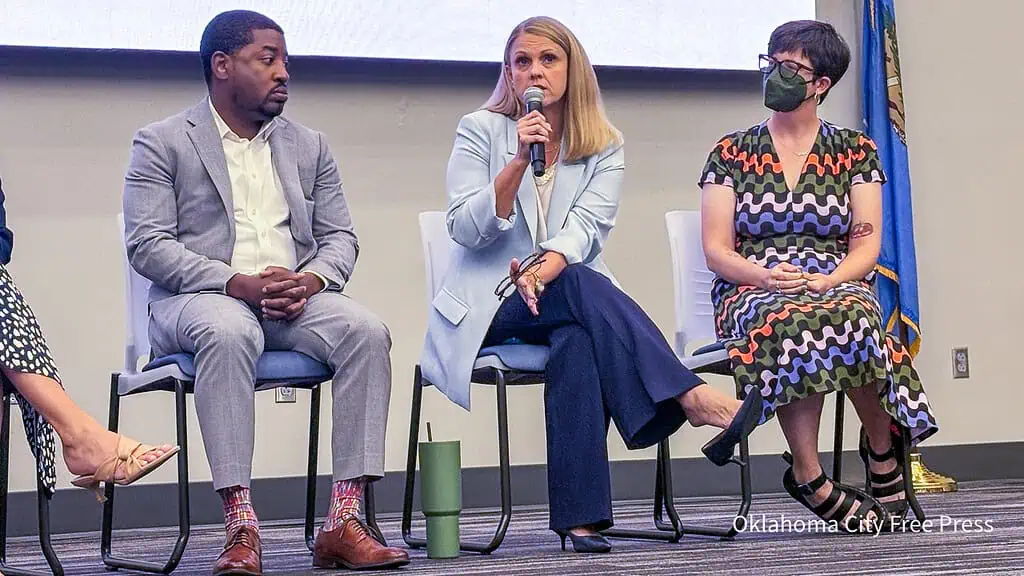
Meghan Mueller, CEO of the Homeless Alliance, said the collaboration between Oklahoma City and the state has reduced chronic homelessness in the community.
The Homeless Alliance, Catholic Charities, City Rescue Mission, Oklahoma City Housing Authority and Focus on Home could all receive payments from the state to help house and support people through the program.
“The more that we can partner together on shared goals, the more we will be able to move the needle on this issue in a productive way,” Mueller said. “Especially during this moment when federal uncertainty is at an all-time high, having robust partnerships at the city and state levels can make a huge impact on both the non-profit sector and the social issues we are working to solve.”

Republished under Creative Commons license from The Frontier, a nonprofit newsroom that produces fearless journalism with impact in Oklahoma. Read more at www.readfrontier.org.
Free Press publishes this report as a collaborative effort to provide the best coverage of state issues that affect our readers.

Maddy Keyes is a reporter for The Frontier, a Tulsa, Oklahoma nonprofit newsroom that reports news from across the state. She may be reached at: maddy@readfrontier.com
405-496-5340