
OKLAHOMA CITY – Unlike the sullen dramas, foreign fare, and inevitable genre entries that appear time and time again among Oscar nominations, there’s not always a sports movie in the mix.
In fact, in the past decade, the only two sports-focused films to crack the Best Picture category have been true-life underdog yarns “Ford v Ferrari” and “King Richard,” the latter of which is obviously remembered now more for its star’s violent tantrum at the ceremony than for the rousing tale of triumph that it should’ve been.
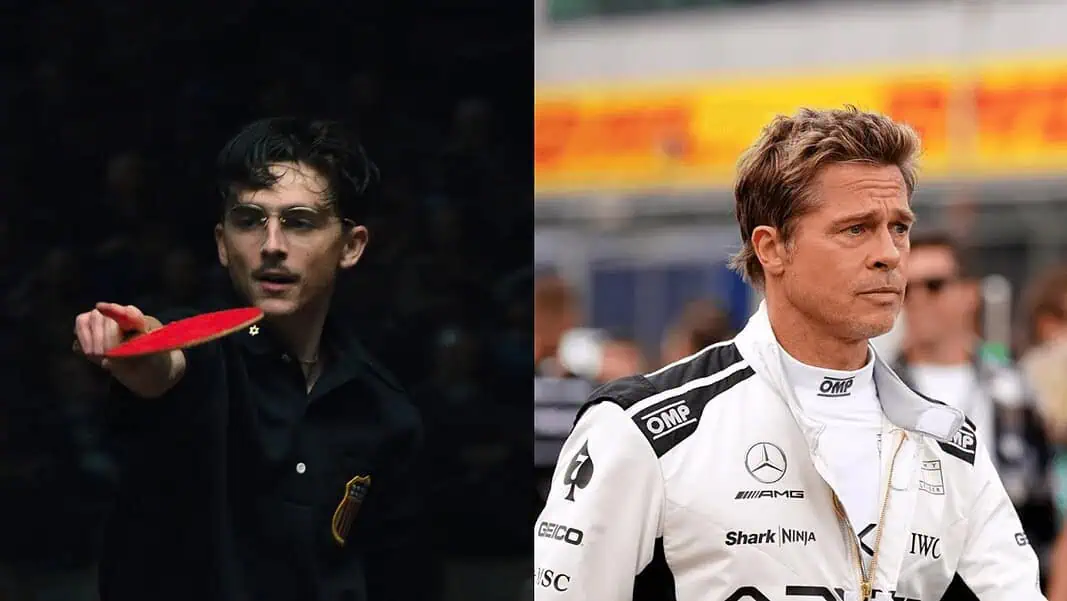
But sports fans rejoice, for this year’s slate brings us two new entries into the Oscar-nominated sports film canon with relentless, chaotic Best Actor frontrunner “Marty Supreme” breathing unexpected fire into the world of table tennis and “F1: The Movie” desperately dragging new audiences into the global phenomenon of Formula 1 auto racing.
Both films attempt to dissect the unyielding competitive spirit that compels someone to sacrifice their relationships, health, and stability in pursuit of being the very best, and both films seem to revel in a uniquely American brand of brash, uncompromising ego.
But while one of the entries is a complex, overwhelming, and gleefully challenging film centered on an acting tour de force, the other is little more than a $300 million commercial for a lifestyle brand.
See if you can guess which is which.
‘Marty Supreme’
It’s the easy frontrunner for Best Actor this year, and for good reason.
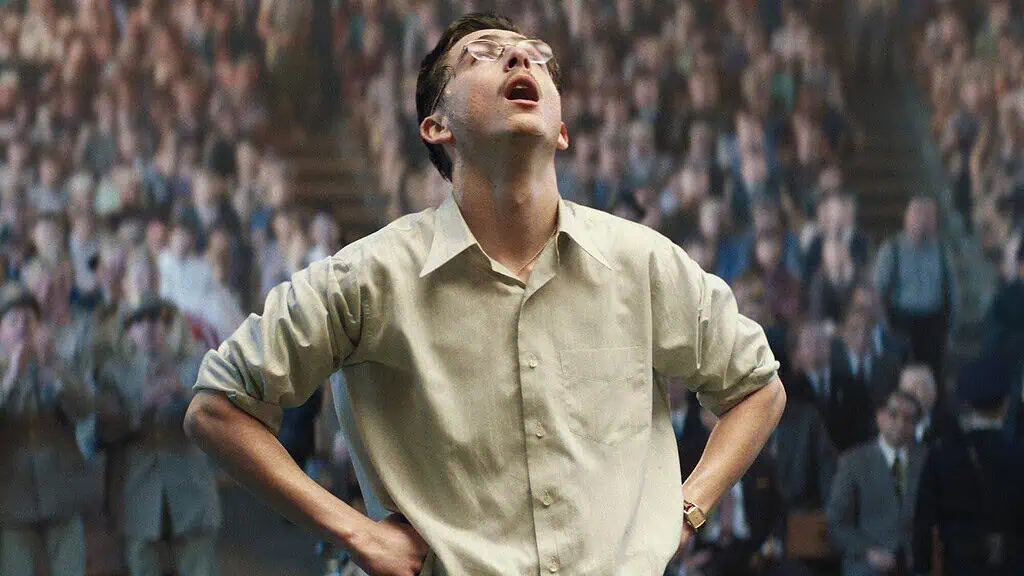
30-year-old Timothee Chalamet secured his third nomination for his role of Marty Mauser, a broke, motor-mouthed street hustler and perpetual screw-up with a single-minded obsession with proving himself the greatest table tennis player on Earth.
Written and directed by Josh Safdie in his first solo outing without his brother and usual co-director Benny, “Marty Supreme” is a tangled ball of anxious energy and chest-beating ego meant to carry its audience on a kind of absurdist, fixated vision quest through the newly American-dominated world of the 1950s.
Mauser sacrifices everything in his pursuit of greatness, including his money, his friends, his family, his own body, the trust of every single person around him, and seemingly any shot at a possible future beyond victory.
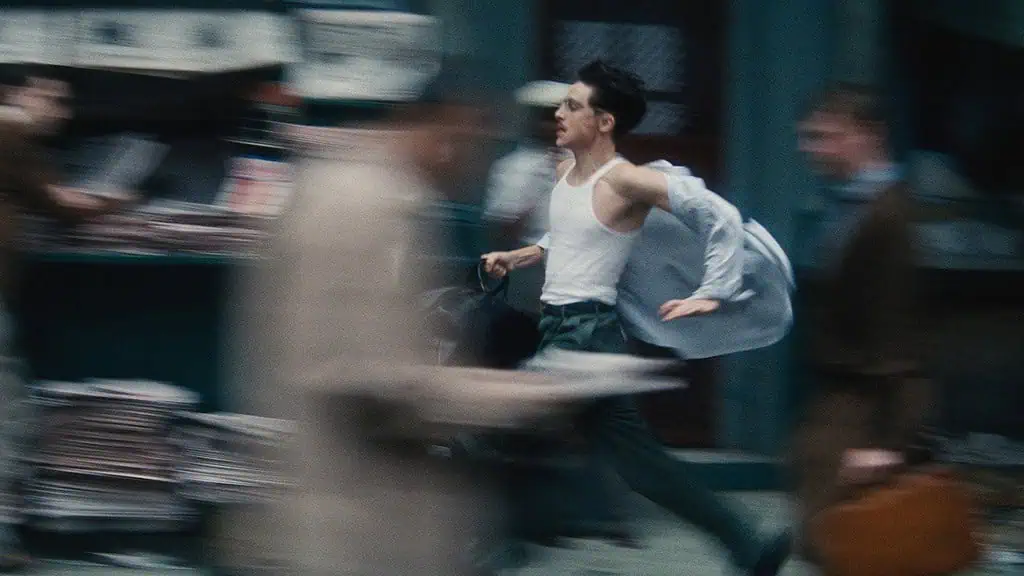
And honestly, that’s the whole movie. It’s just a relentlessly paced comedy of errors taking Mauser further and further down a path of humiliation and increasingly precarious, dangerous situations as he tries to gather funds to return to the World Championship on the other side of the globe in an attempt to prove his prowess.
What sets “Marty Supreme” apart from, say “The Smashing Machine” – Benny’s entry into the obsessively driven, self-sabotaging sports category for this year – is that greatness in table tennis is such an awkward and niche goal and that Mauser is so goofy, so wiry, and so desperately self-assured despite consistently ruining everything in his path.
The deck is stacked so heavily against anyone taking him seriously – including the filmgoing audience –so it’s that much more engaging to see him try to prove himself, and that much more comical and bewildering to see him so willfully burn cash, trust, and good will as if the whole world already bowed to him.
It’s overwhelmingly fun, cringe-inducing, and repeatedly frustrating, but as it continues spiraling, it also begins opening up a well of emotion far deeper than something like the Safdies’ “Uncut Gems.”
Mauser’s motivations come through in hints and glimmers. More than just a simple need for greatness and victory, he’s obsessed with proving that his mess of a life can be worth something, that he can be responsible for something beautiful or pure instead of just for chaos, and that he can bring something meaningful back to his family and to his world on the fringes. (An early aside about a concentration camp survivor and some smuggled honey lays the theme.)
It’s all terribly effective, a blistering portrait of a walking ego and the whole mentality of American exceptionalism personified amid the rapidly changing post-WWII era.
It’s also unexpectedly propelled by an exhilarating score from electronic experimenter Daniel Lopatin (of Oneohtrix Point Never) and a soundtrack of synthy new wave bangers, as if to take this 50s-set adventure and ground it in the language of the youth-driven, all-or-nothing sports classics of the 80s.
There’s no question that Chalamet deserves his nomination, and even his frontrunner status (though for my money, I think Ethan Hawke’s turn in “Blue Moon” should just edge him out.)
His grating intensity and consuming fire burn through every scene – nearly every shot – and he sells the whole movie, not only with momentum and energy enough to drive it, but with a willingness to repeatedly humiliate himself or push himself way further than you even expect yourself to accept as a viewer.
He never seems like he’s trying to make you like Marty, but he’s determined to make you understand him. And that alone might actually be the mark of a great performance.
‘F1: The Movie’
And then there’s probably the biggest and most obvious outlier in this year’s Best Picture field.
In a year stacked with political statements, antiheroes, and poetic dissections of complicated humanity and grief, here comes Brad Pitt riding in on a sleek, cross-promotional Hollywood blockbuster aimed squarely at action-sport-loving Baby Boomers.
“F1: The Movie” is the kind of massive, multi-hundred-million dollar property that would’ve been a summer tentpole event film in the 90s, but that now carries an air of “prestige” based almost entirely on a they-don’t-make-‘em-like-they-used-to sentiment.
It’s the same sentiment, in fact, that propelled director Joseph Kosinski’s previous outing – the lamentable “Top Gun: Maverick” – to a Best Picture nomination of its own.
But while “Maverick” felt like it maybe, possibly could have been written and produced by the US Air Force as a modern military recruitment ad, “F1” feels like it was absolutely and transparently produced entirely as a commercial for Apple’s recently acquired streaming rights for Formula 1.
And in that respect, it mostly nails it.
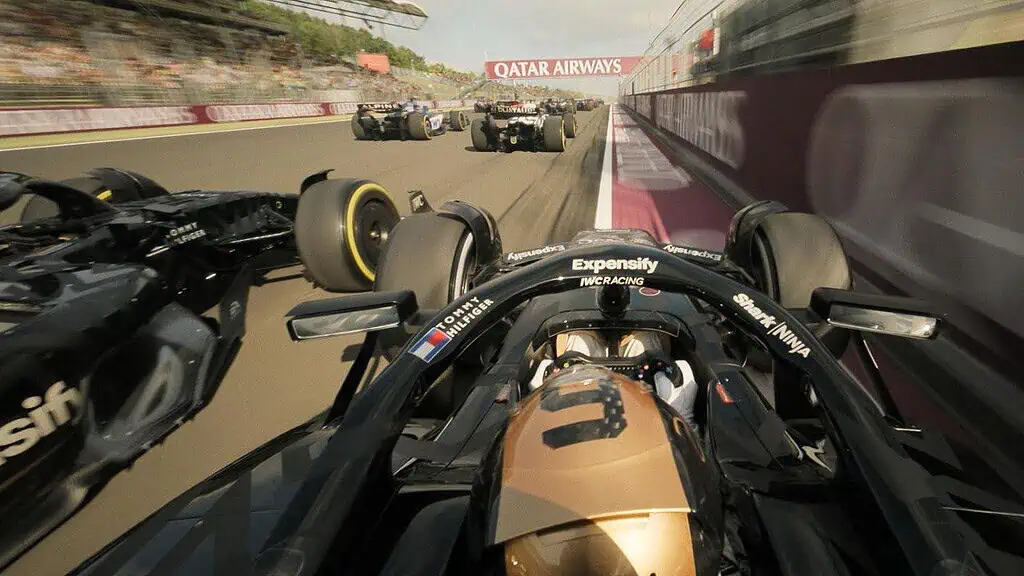
It’s pretty fun and occasionally exciting, and it showcases the global appeal of the sport and the towering celebrity that comes to its biggest stars.
It’s loaded with clunky expository dialogue and color commentary narration that explains the rules, the stakes, and the general drama of Formula 1 racing for uninitiated audiences.
And (maybe most importantly) it’s all carefully centered on a no-nonsense, straight-talkin’, southern-accented American hero precision-built to convince US newcomers to climb in and come along for the ride.
In the film’s (and Apple’s) pursuit of new American audiences for Formula 1, it’s given them the kind of down-home American hero they can root for, an aging-but-quick, divorced-but-romantic, great-at-everything Hollywood hero that’s naturally smarter than each and every European on screen. Oh, if only they’d listen to his innate American wisdom about how to win everything all the time.
It’s all fun, sure, but that also kind of kneecaps the film a bit. In a story all about F1 being “a team sport” (a line you’ll hear repeated a few times for effect,) the ultimate message is that what wins is a singularly heroic, endlessly capable, and decidedly all-American figure with the soul of a racer and the mind of a grand tactician all inside the same chiseled head.
When new American converts jump from Apple’s movie to Apple’s real-life F1 coverage and they aren’t greeted with a preternaturally masterful, all-American hero to root for on the real track, won’t most of them switch off? American sports fans do so yearn for a singular hero, after all.
Not to mention that the film can jump over the parts Americans and new initiates are bound to find boring, like the dozens upon dozens of laps and the uniquely European patience and awareness that real Formula 1 demands. Not only can the movie just skip to the exciting parts, it actually manufactures a whole scenario at its climax just to create the typical, fast-paced, winner-take-all situation for which any stateside sports fan hungers.
And unlike “Marty Supreme,” there’s really never anything built up behind the obsession with victory here. It’s just understood that victory is the goal. Why? Well, because who doesn’t want to win? Simple as that.
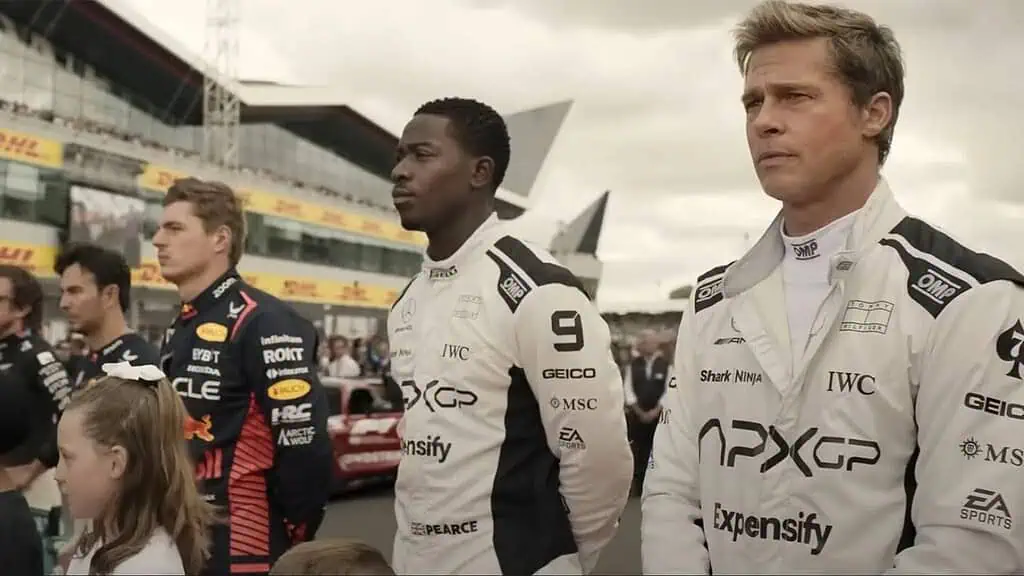
So fine, “F1: The Movie” isn’t here to win any writing awards or acting accolades (though the infinitely watchable Javier Bardem is, yet again, the best part of the entire film.)
No, it’s a movie for the masses, designed for fun, built for speed, and intended to pull new fans into Apple’s new foray into live sports streaming.
And in all of those areas, it’s fine. It’s fun and it looks good and everyone on screen looks like they’re having fun and looks good themselves. There’s not anything wrong with “F1” as a mammoth-budget Hollywood sports adventure.
But as a Best Picture contender at the Oscars? Come on.
Its starting position in this race really should’ve been given to “It Was Just an Accident.”
Catch Brett Fieldcamp’s film column weekly for information and insights into the world of film in the Oklahoma City metro and Oklahoma. | Brought to you by the Oklahoma City Museum of Art.

Brett Fieldcamp is the owner and Editor in Chief of Oklahoma City Free Press. He has been covering arts, entertainment, news, housing, and culture in Oklahoma for nearly two decades and served as Arts & Entertainment Editor before purchasing the company from founder Brett Dickerson in 2026.
He is also a musician and songwriter and holds a certification as Specialist of Spirits from The Society of Wine Educators.