
OKLAHOMA CITY – No matter how tastes and times change, and no matter how many genre mashes or radical action yarns score nods, you can be pretty sure each year that the Academy Award nominations are going to feature some remarkably quiet, deeply contemplative films in that classic vein of “prestige cinema.”
Obviously this year is no different.
In among the high-octane racing movies, paranoia thrillers, and tragicomic character studies that are defining the year’s nominees is a pair of films – one heavily acclaimed and one seemingly underseen – that aim for the deepest reaches of the heart and soul, each employing brilliantly restrained acting, striking, lush cinematography, and unspeakable tragedy.
‘Hamnet’
Oscar-winner Chloe Zhao’s soulful, heart-shredding “Hamnet” has already garnered significant acclaim, picking up the Best Picture – Drama trophy at the Golden Globes and Best British Film at the BAFTAs, but both times it shared the night with arguably higher praise for still-presumed Oscar frontrunner “One Battle After Another.”
And that’s because “Hamnet” isn’t exactly a crowd-pleaser. It’s not a rousing or adrenaline-pumping thrill ride made to remind people of what’s great about classic cinema in the way that the year’s endlessly discussed American films have been.
No, “Hamnet” is decidedly something else.
It’s a film of poetry, of earthen spirituality and earth-shaking tragedy that keeps its heart on its sleeve but its meaning close to the chest.
And while that could’ve made it an Academy favorite two or three decades ago, in the age of “Anora” and “Everything, Everywhere,” it might feel a bit quaint or even melodramatic to some.
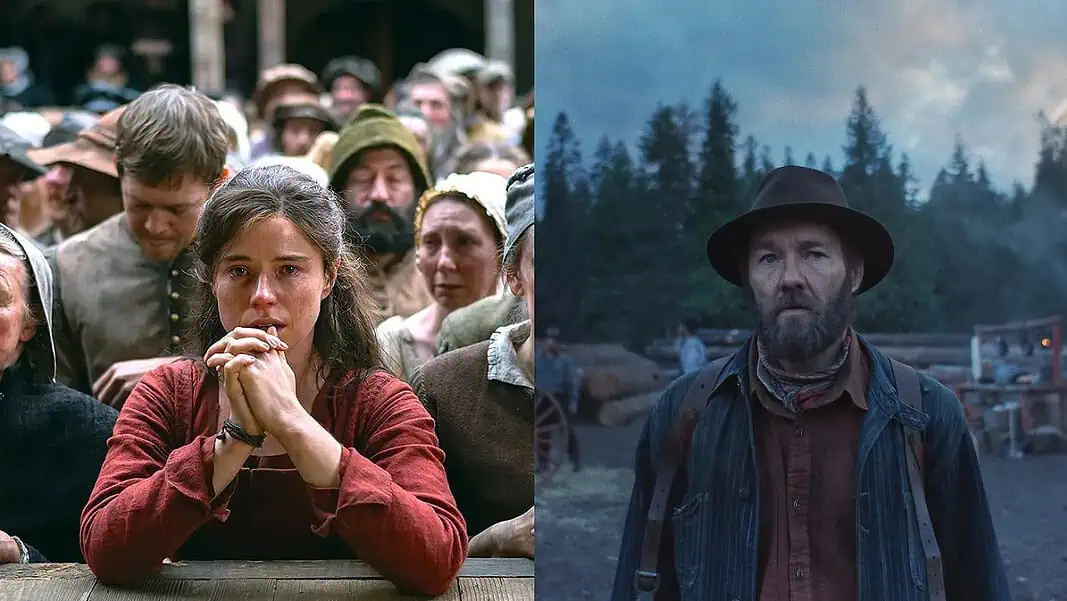
With a screenplay by Maggie O’Farrell, based on her own lauded novel, the story centers on Jessie Buckley as Agnes, a defiant, stubborn young woman in 16th century England that spends her days quietly communing with nature and enduring her critical stepmother.
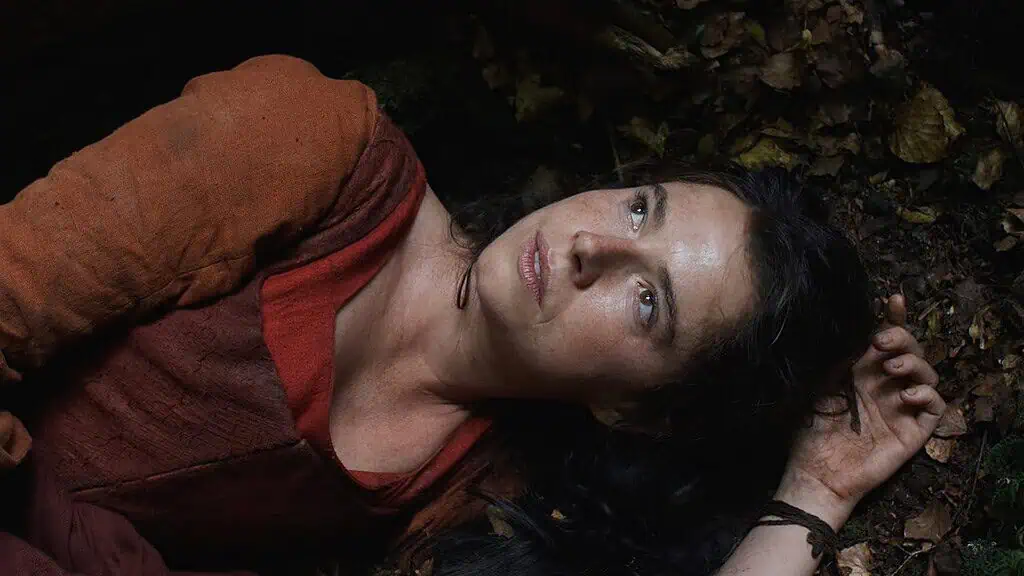
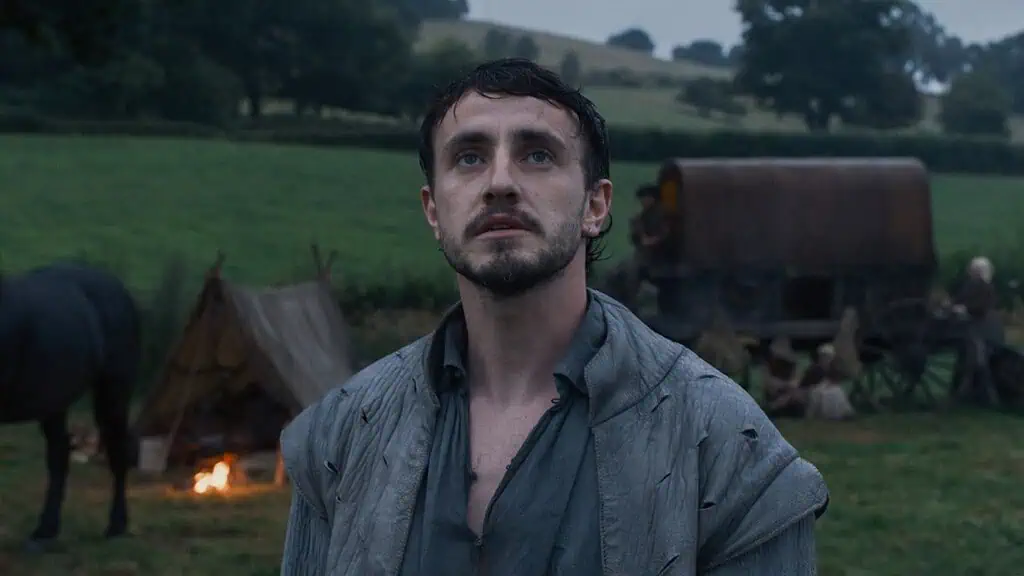
When Agnes meets an equally defiant and stubborn young man that dreams of storytelling and speaks in mythologies, their love becomes engulfing and evolves into a marriage and a family.
The young man, of course, is William Shakespeare, the inarguable greatest and most influential writer and storyteller of the English language, though the film makes no effort to explain that – or even to speak his name – until at least three-quarters in, because this story simply isn’t about that.
It’s a story (or maybe more accurately, a contemplation) of their love, their family, and the heartbreak that threatens to undo it all.
Young Hamnet is the couple’s only son, a headstrong and emotional boy with dreams of commanding the stage as an actor in his father’s plays.
But this is the era of the Black Plague, and (spoiler for a true occurrence from more than 400 years ago) Hamnet succumbs to the disease at just eleven years old, leaving his mother devastated and his father distraught.
From there, the film is a rumination on presence and loss and the ways in which grief thins out the barriers between spiritual worlds while strengthening the unfortunate walls between the living left behind, all while driving inexorably toward the premiere of Shakespeare’s towering tragedy “Hamlet,” into which he poured the emotions that he couldn’t otherwise express.
In the hands of any filmic traditionalist or a less interesting and creative mind, “Hamnet” would just be another period-set costumed biopic mining the true-life tragedy for all its worth, but Zhao’s sensibilities carry the whole story on a kind of spiritual wind, gliding through years, dreams, and mysticisms with little regard for explanation or tired realism.
“Hamnet” is a folk tale more than it is any kind of derivative biopic or historical drama. Its concerns are the greenery and the wet soil of nature, the whispers of incantations and prayers, and the ineffable, inexpressible trappings of grief that eluded even the greatest writer in history.
All of which lands squarely on Jessie Buckley.
Her turn as Agnes, the indisputable lead, is a fire-borne exhalation of a performance, as passionate and stricken and feral as any other this year or this decade, and it’s her performance that carries the entire weightless soul and palpable body of the film.
I admit that it may be impossible for me to ever fully objectively view or speak to this film, as Shakespeare’s “Hamlet” is likely my favorite story of all-time and is an enduring obsession of my life. But as someone with a love of that foundational material running so deeply, I can almost certainly say that “Hamnet” may well capture the depth of emotion and the world-altering power of grief better than any film adaptation I’ve ever seen of Shakespeare’s play.
Still, while Buckley is assured – and deservingly so – to walk away with Best Actress, and while it has picked up some major awards from the more artistic and austere outlets, “Hamnet” increasingly feels like a longshot for the Best Picture Oscar.
‘Train Dreams’
Another film of natural beauty, human tragedy, and quiet contemplation, director Clint Bentley’s “Train Dreams” (based on the award-winning novella by Denis Johnson) feels likely to become the great underseen gem hidden in this year’s nominees, the film that movie buffs may hold up for years to come as a sadly underrated favorite.
With no easily definable plot or structure, the film simply tracks 80 years in the life of a simple man in the developing American West of the early 20th century.
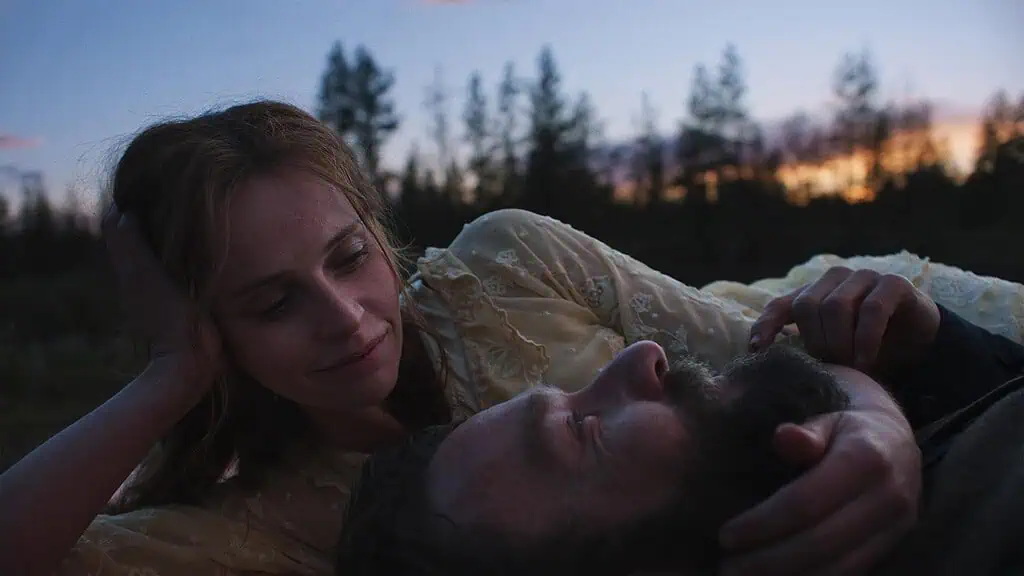
Orphaned in infancy, Robert Grainier spends his life building railroads, chopping trees, and living aimlessly until meeting Gladys, with whom he falls in love and fathers a little girl.
They build a quiet house by a river and live off of Robert’s earnings from the jobs that increasingly keep him away from the family until an all-consuming tragedy rips those comforts away and returns Robert to his aimlessness just as the world begins to leave his simpler kind behind.
There are plenty of obvious parallels, but while “Hamnet” is a folk tale, “Train Dreams” is a folk song, driven by the momentum and rhythm of the industrializing world and the trains that seem to run along the edges of every memory that make up Grainier’s life.
It’s told through long, staggering shots of the natural land and wide establishing moments of thousand year-old trees or quiet evenings lying by the water.
Practically every scene and every shot is framed around Joel Edgerton as Grainier in a subtly moving, profoundly internal performance that keeps every moment of his life behind his eyes, even as his general stoicism belies the sadness and confusion at the character’s core.
It’s a gorgeous and unexpectedly powerful film, the kind that sneaks up on you and leaves you sitting in your seat (or on your couch, I guess, because it’s a Netflix film) reflecting on your own life for long after the credits have finished rolling.
It snagged nods for Best Picture, Adapted Screenplay, and a deeply deserved nomination for Best Original Song for the title track, with music (like the full score) by The National’s Bryce Dessner and sung by the great, grizzled Nick Cave, a man sadly no stranger to the kind of tragedy with which the film deals.
Cinematographer Adolpho Veloso also nabbed a nod for his stunning, unmistakably Malick-esque shots of the earth’s natural beauty and man’s place inside of it, using saturated colorization and almost entirely natural lighting.
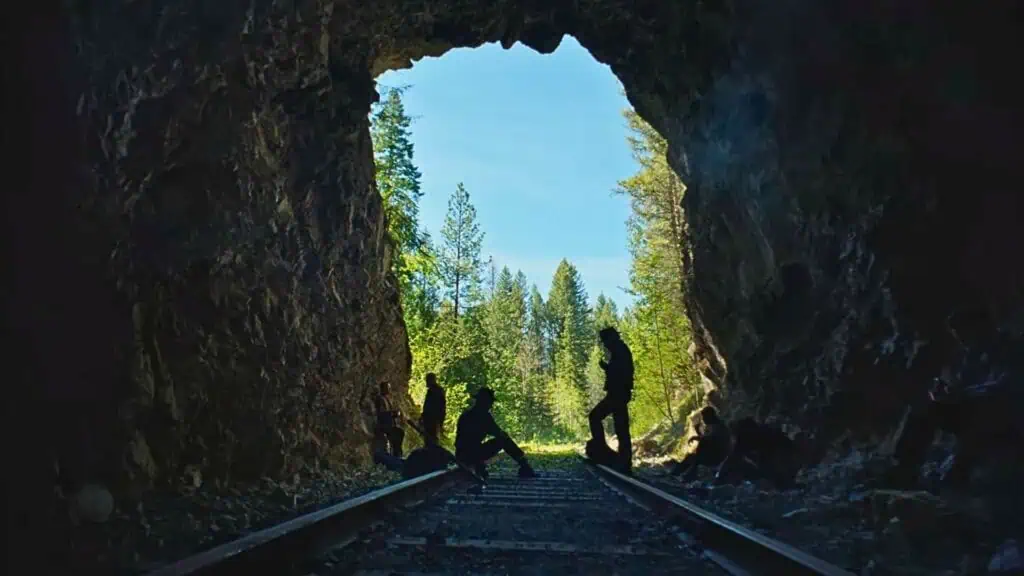
But there are so many other areas in which “Train Dreams” feels unreasonably passed over.
Edgerton’s is the kind of performance that unquestionably deserves a Best Actor nod, but that just isn’t flashy or loudly projected enough to be recognized.
Even Dessner’s remarkable score of lilting strings and pulsing, redoubling momentum missed out on a nomination.
But there’s no snub more egregious, in my opinion, than editor Parker Laramie not receiving a nomination for Best Editing. The film works so well almost entirely because of the phenomenal, delicate editing, constructing its story out of flashes, half-remembered fleeting moments, and static shots left lingering for only perfect seconds. A lesser edit would have resulted in (yet another) two-and-a-half-hour slog, but Laramie’s edit creates a pace that carries you through a life in a just 100 minutes.
It’s a snub on par this year with Jesse Plemons missing out on Best Actor for “Bugonia.”
As for its chances of actually winning anything? It feels doubtful right now.
There’s some hope for cinematography and maybe even for screenplay, but right now, it’s looking like “Train Dreams” will be this year’s “Past Lives,” a small film of staggering, deeply human emotion that walks away with no Oscars, but that remains a comfort and a favorite for anyone lucky enough to cross its path down the line.
Catch Brett Fieldcamp’s film column weekly for information and insights into the world of film in the Oklahoma City metro and Oklahoma. | Brought to you by the Oklahoma City Museum of Art.

Brett Fieldcamp is the owner and Editor in Chief of Oklahoma City Free Press. He has been covering arts, entertainment, news, housing, and culture in Oklahoma for nearly two decades and served as Arts & Entertainment Editor before purchasing the company from founder Brett Dickerson in 2026.
He is also a musician and songwriter and holds a certification as Specialist of Spirits from The Society of Wine Educators.