
OKLAHOMA CITY – Plans and concept designs were released this month for Downtown OKC’s upcoming MAPS 4 Multipurpose Stadium, with budget expectations now ballooning past $120 million following the city’s recently approved General Obligation bond.
The new stadium – which is set to be the home for the yet still-unnamed OKC soccer team and the anchor for a proposed billion dollar sports and entertainment district – has seen its budget tripled in the past six years amid team ownership changes, land complications, and escalating district plans.
Free Press reported on developments with the new team back in February.
Stadium plans released
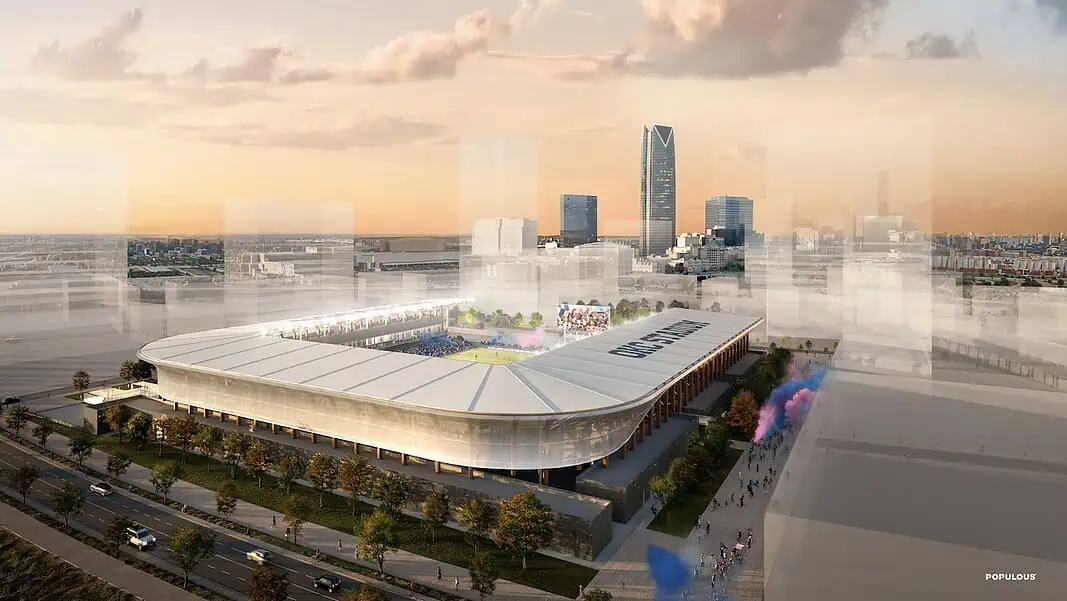
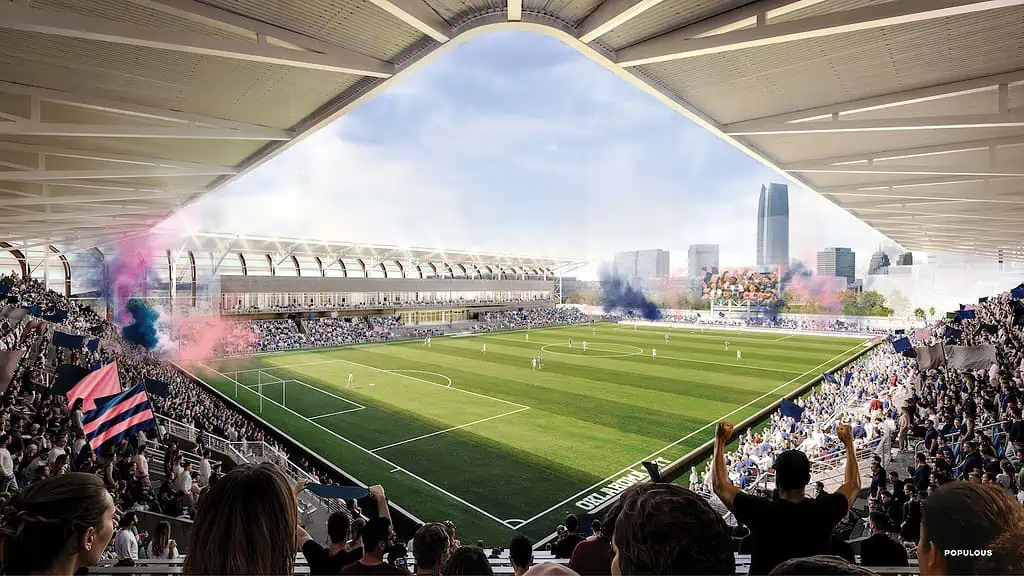
This week, Kansas City-based architectural firm Populous and the City of OKC released the official concept art and plans for the stadium on December 3rd, showing a sleek and swooping open-air venue with three sides of partially covered seating and an open north-facing side with views of the Downtown skyline.
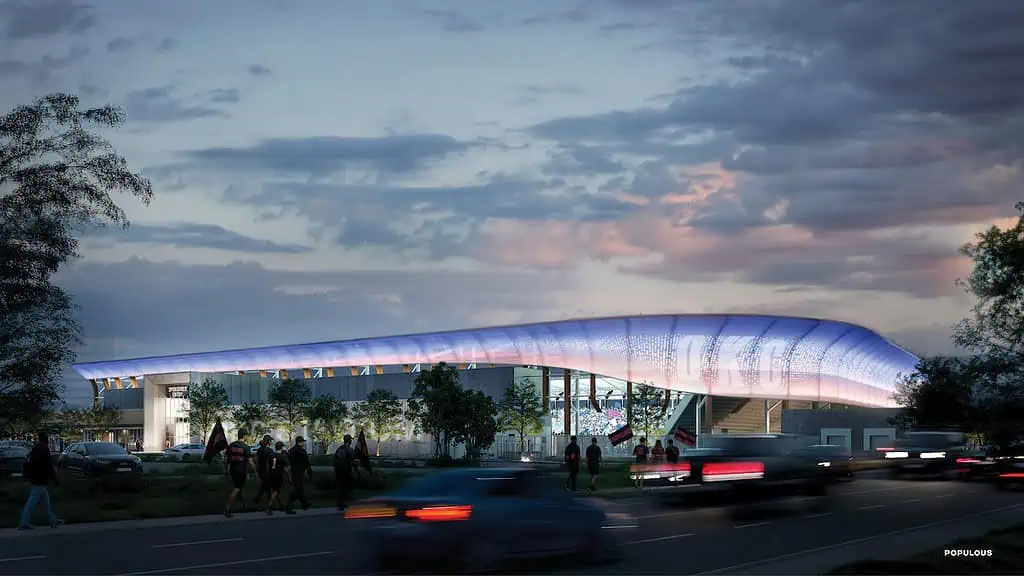
According to a City of OKC press release, construction on the project south of Bricktown is being eyed to begin in spring of 2026 with an opening tentatively scheduled for January 2028.
“Time and again, we have realized a major economic and community benefit from our investments in sports facilities,” Mayor David Holt said in that release. “Soccer is the world’s most popular sport, and we knew in 2019 when we developed MAPS 4 that we had to make a commitment to stay in the game.”
Budget history
When plans for a new multipurpose stadium were originally added to the MAPS 4 package and approved by voters in 2019, the expected budget was $41 million for a proposed 8,000 seat stadium.
At that time, the stadium was planned to be a home for the OKC Energy soccer team, with land to be purchased by the team owners, a plan that would allow the Energy to reenter United Soccer League competition after venue size concerns forced them into indefinite hiatus.
Since then, ownership of the team has been purchased by billion-dollar firm Echo Investment Capital, who secured the former Producers Co-op land south of Bricktown for the project. Echo donated nine acres to the City for the stadium and retained the remaining acreage for a proposed sports and entertainment district that could see a billion dollars or more in private investment.
Those newly expanded plans saw City and economic leaders implement a new funding model to provide another $30 million for stadium construction, redirecting leftover City funds from the Omni Hotel project and creating a new Tax Increment Financing district, utilizing increased property tax revenue spurred by economic development in the area.
The increase was championed by the City Manager’s office and the Economic Development Trust, citing the inflating cost of building materials and a need to bring the stadium’s capacity up to 10,000 seats.
$50 million increase
With this month’s release of plans and concept art for the proposed stadium also came a new price tag: $121 million, an increase of $50 million since the last approval of additional funds in November 2024.
That added funding comes as part of the $2.7 billion General Obligation bond that city voters overwhelmingly passed in October.
Within the bond outline’s “Parks & Recreation Facilities” package was a $50 million allocation for a newly proposed “phase 2” of the Multipurpose Stadium project.
That section of the bond vote passed with more than 78% approval, opening that extra $50 million for the potential “phase 2” of the stadium.
However, publicly released plans and City communication about the stadium don’t appear to make any mention of a second phase of construction.
That new $50 million apparently has now been rolled into the original plans for the stadium, with the City of OKC press release making no mention of a second phase of construction and touting the project as being funded up to $121 million outright.
‘Just a first look’
In a presentation to the MAPS 4 Advisory Board on December 4th, Populous representatives also provided a loose overview of funding with the newly approved bond funds included that similarly made mention of a second phase.
According to that presentation, in-house estimates by Populous put the City’s funding burden for construction of the current plans at roughly $94 million, hoping to come in under budget of the approved $121 million.
“This is just a first look at the stadium,” Populous representative and stadium project leader Phil Kobo told the board. “So we’re going to continue to work the project cost down.”

Brett Fieldcamp is the owner and Editor in Chief of Oklahoma City Free Press. He has been covering arts, entertainment, news, housing, and culture in Oklahoma for nearly two decades and served as Arts & Entertainment Editor before purchasing the company from founder Brett Dickerson in 2026.
He is also a musician and songwriter and holds a certification as Specialist of Spirits from The Society of Wine Educators.