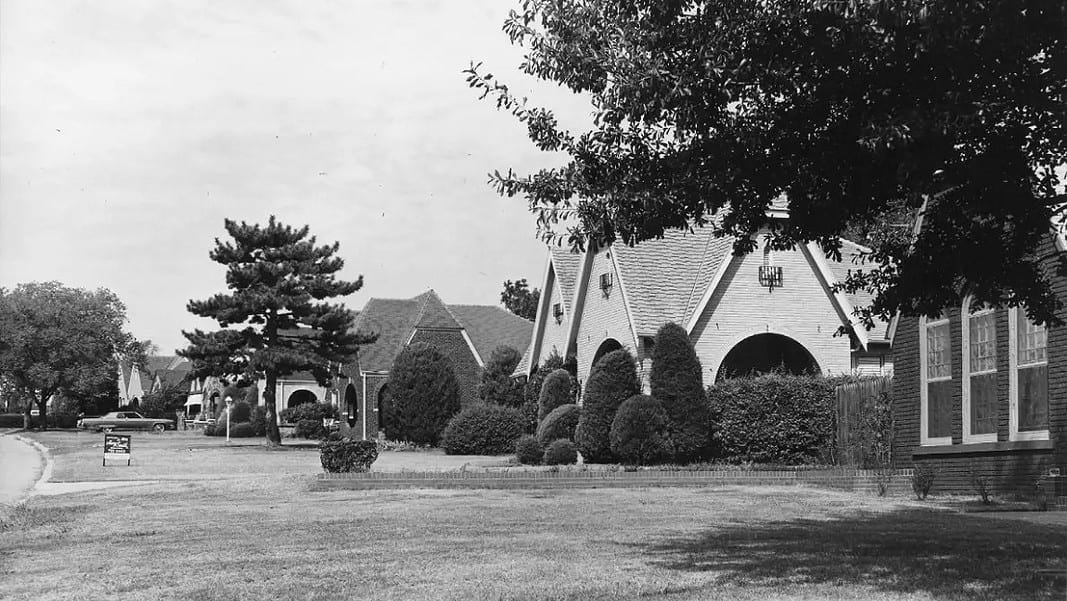

OKLAHOMA CITY – The City of OKC’s Human Rights Commission is combing through century-old land and housing documents from City archives and seeking out openly racist and exclusionary language once meant to restrict housing access for non-white residents.
And they’re asking for volunteers to help get the job done.
This Saturday, March 28th, the Human Rights Commission will be inviting community members to the Downtown Library to help review platting documents for Oklahoma City neighborhoods, many stretching back to the 1920s, to identity openly racist and discriminatory language as part of the City’s Plat Amendment Project.
“We’re really trying to find out where in the city was affected by this kind of language,” Emma Winiski, Compliance Officer for the Human Rights Commission, told Free Press. “So it’s really to acknowledge that past and to set a different vision for the inclusive and welcoming place that we want to be moving forward.”
Historic discrimination
A plat is an official document mapping out how land will be subdivided into lots, streets, and parcels, and often includes text to establish regulations or restrictions for how the land can be developed.
But decades ago, those restrictions were regularly written to flatly exclude Black, Asian, Jewish, and other marginalized ethnicities from developing or living on that land, even before any houses or apartments were built there.
Platting documents have to be approved by the City government, and for decades through the 20s and beyond, the City of OKC accepted and approved those plats with openly racist and discriminatory restrictions for the development of neighborhoods like Edgemere Park and Lincoln Terrace.
– Below is an example of discriminatory language in a platting document for the Edgemere Park development from 1927, provided by the OKC Human Rights Commission. The highlighted section contains objectionable language regarding Black and Asian residents. Be advised. –
OKC’s housing and development industry was so deeply segregated in the 1920s, in fact, that aspiring developer Walter Edwards had to secretly hire a white man to plat the land of northeast OKC in order to get it approved for building, creating the first inclusively Black communities in the city.
Those practices were commonplace nationwide until the Supreme Court’s landmark 1948 decision in Shelley v. Kraemer ruled that those housing discriminations couldn’t be enforced before the 1968 Fair Housing Act outlawed racial restrictions in platting completely.
But, as plats rarely, if ever, get updated, modified, or replaced, all of that old language still persists in the formative documents for many of OKC’s historic neighborhoods.
Oklahoma City Plat Amendment Project
In 2024, Governor Kevin Stitt signed into law SB 1617, allowing municipalities statewide to address, strike, or update discriminatory language in platting documents, leading OKC’s Human Rights Commission to launch the Oklahoma City Plat Amendment Project, following similar efforts in Edmond and Nichols Hills.

But while the project aims to flag the hateful language in these decades-old documents before adding a declaration that those restrictions are no longer enforceable nor indicative of City policy, Winiski said the language would not be deleted or removed, as that could be deemed erasure or denial of the dark realities of our city’s past.
“The purpose of this is to acknowledge that this is part of the makeup of our city,” she said, “and also to educate people that this did happen, because a lot of people might not know.”
Rather than change or strike the physical documents, the Commission will be moving to add amendments to each of the flagged plats, placing a sheet inside the file to acknowledge and rebuke the archaic and racist restrictions included.
“We then have to notify property owners, then potentially go through Historic Preservation Commission, Planning Commission, and City Council,” Winiski explained. “Then basically put a piece of paper on top of the underlying plat acknowledging that the language exists and saying that it’s no longer legally enforceable.”
Volunteer event
But before they can add those amendments to the documents, they have to find and flag the problematic plats.
And with over 6,000 individual plats in Oklahoma City, that’s quite an undertaking.
“This volunteer event is really just to help get more people power to review the plats, which is a heavy lift,” Winiski said. “We have thousands of plats in the city, and right now, the only way to review them is incredibly manual. There’s no way to quickly batch analyze all of them.”
But volunteers don’t need to be versed in complicated land regulations or legal language.
The event will have a brief training and staff will be on hand to assist anyone that wants to get involved with the Human Rights Commission’s aim of acknowledging and addressing this painful part of OKC history.
“This is really just an invitation to learn more about the project and to help out,” Winiski said. “So I hope that people don’t feel like they need to be experts in any way about plats or land documents. Just come eager to learn and eager to help.”
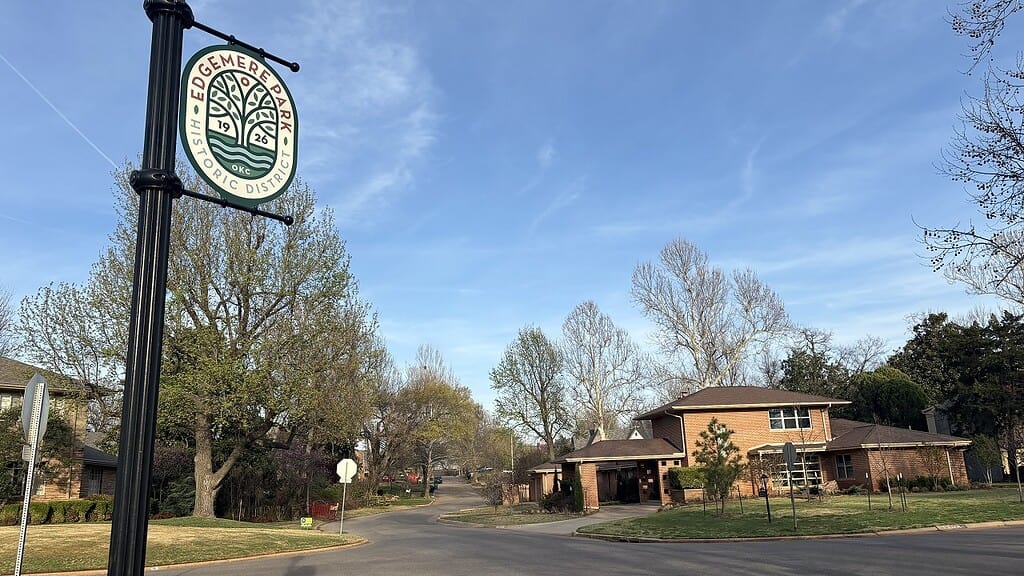
The Human Rights Commission’s volunteer event for flagging discriminatory plat language will be held Saturday, March 28th at the Ronald J. Norick Downtown Library from 10:00am to noon.
To learn more about the City of OKC Human Rights Commission, click here.

Brett Fieldcamp is the owner and Editor in Chief of Oklahoma City Free Press. He has been covering arts, entertainment, news, housing, and culture in Oklahoma for nearly two decades and served as Arts & Entertainment Editor before purchasing the company from founder Brett Dickerson in 2026.
He is also a musician and songwriter and holds a certification as Specialist of Spirits from The Society of Wine Educators.