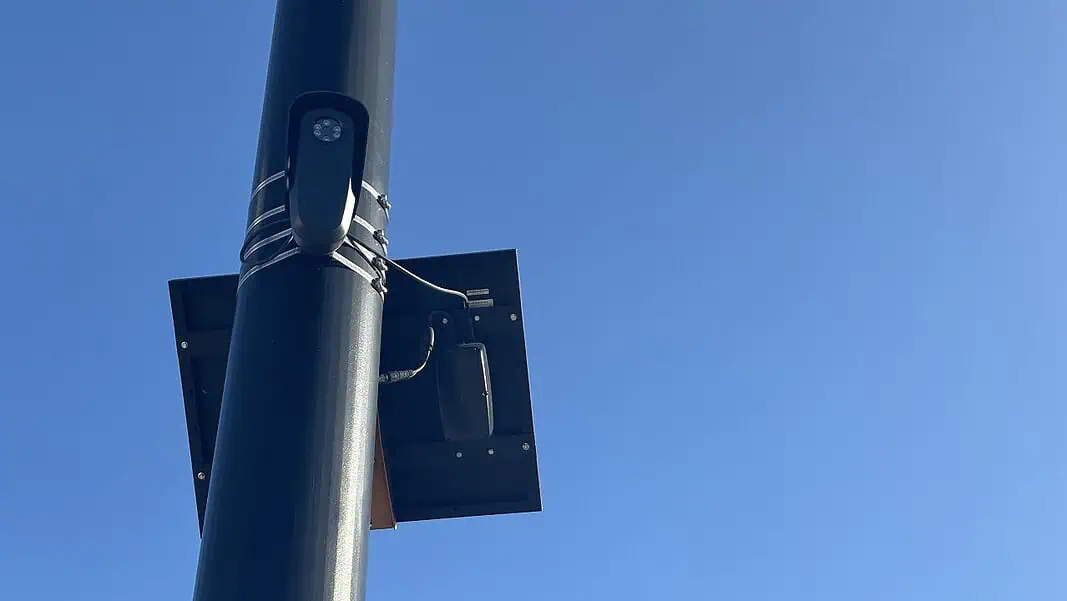

OKLAHOMA CITY – A local cybersecurity professional is raising the alarm about what he says is a concerning lack of oversight and privacy in the network of streetlight-mounted cameras used by Oklahoma City police to monitor license plates.
Jarrett Freeman, an OKC-based I.T. and cybersecurity professional, took to the online forum Reddit Monday night to post a trove of documents that he’d received through a series of Freedom of Information Act – or FOIA – requests regarding the City’s contract with security technology company Flock Safety.
Those documents illustrate what appears to be a near-complete lack of oversight or transparency from the Oklahoma City Police Department regarding who can access Flock’s systems and why.
“I started seeing those cameras around the city and so I started digging and started asking questions,” Freeman told Free Press over the phone Tuesday. “The answers that I got absolutely floored me.”
Nationwide privacy concerns
Atlanta, Georgia-based Flock Safety produces automated license plate reader (ALPR) cameras that can capture plate numbers and high-quality identifying details of vehicles even at high speeds, contracting with municipalities and law enforcement agencies across the country with a stated use for locating stolen vehicles and wanted criminals.
The company also oversees the nationwide network of photos, video, and extensive data that their cameras collect, cataloged and searchable through AI platforms that have been integrated into their systems.
All of those technologies have been officially contracted to the City of OKC and OKCPD since July of 2023, when the City Council voted to allow Flock cameras and systems to be installed and utilized by police.
Oklahoma City currently has at least 90 of the cameras in operation across the city.
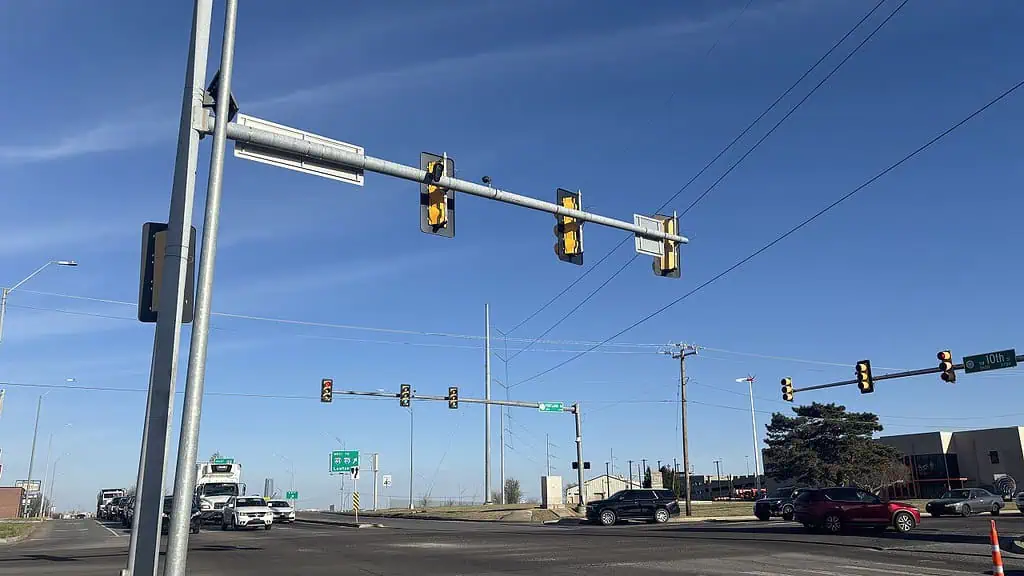
But Freeman said that when he became curious about what kind of oversight or training manages their use by the City – a curiosity spurred by nationwide controversies around Flock over privacy and vulnerability concerns – he was met first with indifference, then with a clear answer that no such oversight exists.
He said that he sent his first FOIA requests on March 2nd.
“I went straight to FOIA and I didn’t even know where to begin, because I’d never done anything like this,” he said. “I started with three initial requests to the Oklahoma City Police Department, and all three of them came back and just said ‘here’s our training manual, go ask the City for everything else.’”
Referring to that reply as “a worthless response,” Freeman said that he then sent the same three queries to the City of OKC’s Records Request office.
“After about two weeks,” he said, “they finally did give me some real information.”
Documents show little oversight
That information included the full contract between Flock and the City of OKC, authorizing $270,000 each year to the security tech company for access to hardware and software services, and letters from the City Manager’s office to City Council recommending that the contract be extended, first through July of 2025 and again through July of 2026.
Also included was an internal memo compiled by the OKC Police Department and sent to the City of OKC Municipal Counselor’s Office on March 10th in direct response to Freeman’s first FOIA request inquiring about policies and directives for OKCPD staff using Flock systems and “audit logging,” or records of who has accessed the system and when.
That memo seems to make it clear that there are currently no policies within the department directing transparency or records of use for the Flock systems.
“There is no transparency reporting or internal usage reporting in our policies, SOPs, directives, training or guidance materials,” the memo reads. “We have not published transparency/internal use reports.”
Likewise, regarding records of who has accessed the Flock camera systems, the memo reads “no audit procedures exist in policies, SOPs, directives, training or guidance for Flock.”
Though the memo makes clear that OKCPD does have internal training and guidance for how Flock systems are to be accessed – including requiring a case number or case type – those training materials are stated to be for law enforcement use only and were not released.
All of the documents released through the FOIA requests have been uploaded and cataloged by Freeman on a website that he setup Monday night.
When reached for comment, the OKCPD’s Public Information Office said that they were not aware of Freeman’s release of the documents and that they would be reviewing the materials internally.
A representative for the City of OKC told Free Press that the Municipal Counselor’s Office had no comment regarding the memo at this time.
No records available
Freeman said that the lack of clear oversight policies and the lack of audit logging or records of use mean that there’s no way for the public – or for City officials – to know how the Flock systems are being used.
“Once I got those responses and started really understanding that there is no governance over these,” he said, “[I worried about] illegal searches or searching a spouse or an ex just to stalk them. That kind of stuff.”
In fact, the only explicit use for ALPR cameras allowed by Oklahoma state statute §47-7-606.1 is to help enforce Oklahoma’s Compulsory Insurance Law, ensuring that motorists have proper vehicle insurance. According to the statute, any data collected beyond that use should be deleted or destroyed, as should any data collected by ALPR cameras once an investigation or enforcement has ended.
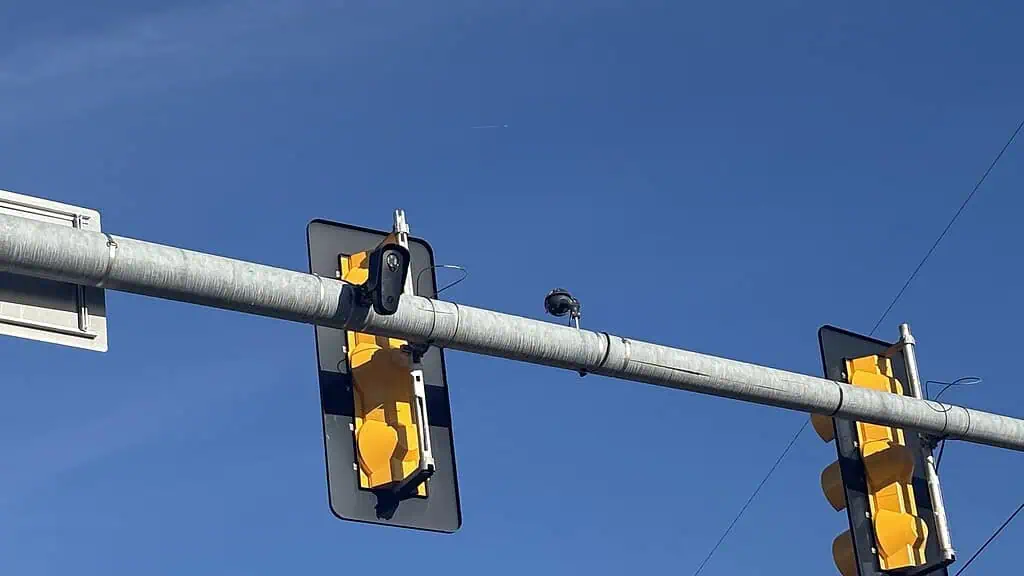
Without a clear oversight or transparency policy, there is currently no way to confirm that any data collected by OKC’s Flock cameras has been deleted.
Moreover, as part of Flock’s National Lookup programming, any images or data collected by OKC cameras could be accessed by the Flock company or by any other enrolled agency in the country. Oklahoma City is even clearly marked on the graphic accompanying Flock’s own announcement of the system in 2020.
Still, Freeman said he wants people to understand that he’s not anti-police and he’s not even anti-Flock.
“I’m fine with keeping them as long as there are strict, stringent policies put in place to protect people from illegal searches,” he said. “What I am is pro-transparency and pro-accountability. If they’re here to stay, that’s fine. Let’s be smart about how we’re using them and let’s make sure that we’re using them lawfully and correctly.”
Free Press reached out to Flock’s Media Relations line before publishing, but received no response

Brett Fieldcamp is the owner and Editor in Chief of Oklahoma City Free Press. He has been covering arts, entertainment, news, housing, and culture in Oklahoma for nearly two decades and served as Arts & Entertainment Editor before purchasing the company from founder Brett Dickerson in 2026.
He is also a musician and songwriter and holds a certification as Specialist of Spirits from The Society of Wine Educators.