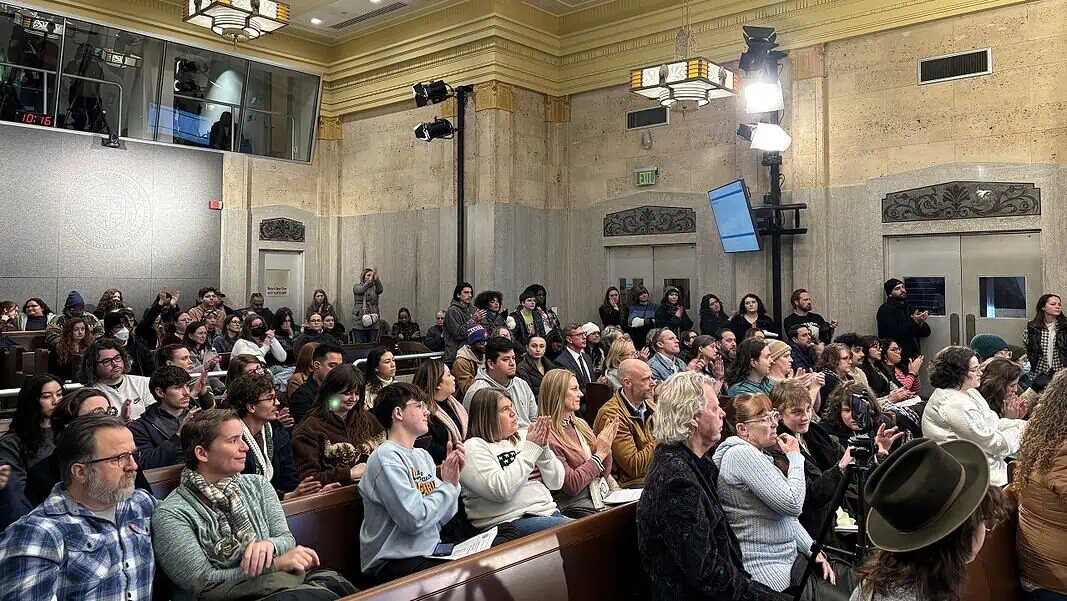

OKLAHOMA CITY – In a marathon meeting stretching to nearly five hours Tuesday morning, City Council heard from dozens of residents, all voicing fear and anger over plans for a new Immigration and Customs Enforcement (ICE) “processing center” in southwest OKC.
Following a presentation by the OKC Planning Department outlining the City’s awareness of the plans and the steps already taken to request that the Department of Homeland Security (DHS) voluntarily adhere to local zoning processes, citizens took turns at the podium in a three-hour public comment section.
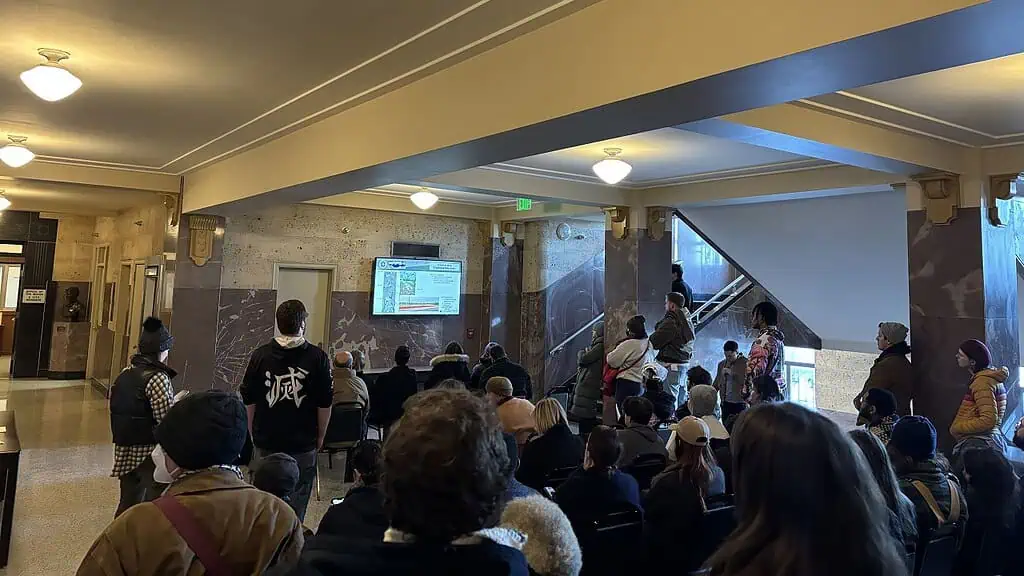
The meeting, chaired by Ward 6 Councilwoman JoBeth Hamon acting as Vice Mayor, saw significant attendance, with the walls inside the chamber lined with citizens, a full overflow section of seating in the lobby, repeated applause, and multiple outbursts and calls for order during discussions of other City business.
Mayor David Holt, City Manager Craig Freeman, and Ward 3 Councilwoman Katrina Avers (in whose ward the planned ICE facility will be) were all unavailable to attend.
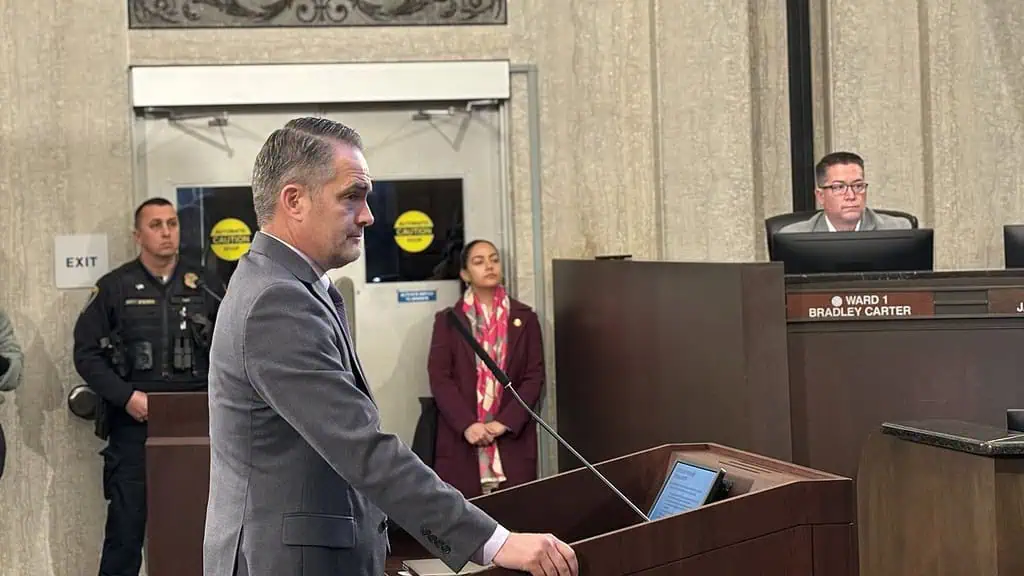
Planning Director presentation
A late addition to Tuesday’s agenda saw an item intended to provide context and transparency regarding the City’s awareness of the facility plans and to reiterate the statements sent to DHS and to Oklahoma’s federal Congressional delegation requesting support in pushing for a local decision.
That presentation was given by Planning Director Geoff Butler.
On December 23rd, the OKC Planning Department received an email from DHS notifying the City of plans to convert an unoccupied 400,000+ square foot warehouse at 2800 S. Council Rd. into a “processing facility” for ICE detainees by adding holding cells, cameras, fencing, guard shacks, and more.
That email was sent to fulfill a requirement of assuring that no historical property will be harmed, as the Supremacy Clause empowers the federal government to bypass local procedures or zoning for any detention center development.
Members of the City Council say that they were not made aware of the DHS plans until just days before an Oklahoman report published on January 18th.
Following his presentation, Free Press asked Butler about the nearly one-month gap between the City receiving the DHS email and the City Council being made aware.
“No comment,” was Butler’s response.
Community concerns
Following the Planning Department presentation and the remaining City business before the Council – including an update on plans for the MAPS 4 Multipurpose Stadium that saw heckling and outbursts from within the gathered crowd – citizens were allowed three minutes each to voice opinions regarding the planned facility.
The first speaker was Laura Tapia, representing OKC’s Calle Dos Cinco and Historic Capitol Hill District, a majority Latino district, expressing grave concern over increasingly violent immigration enforcement actions under the Tump administration.
“Our community is afraid,” Tapia told the Council, detailing an upcoming Calle Dos Cinco event aimed at fostering trust between local law enforcement and the district’s Hispanic community. “The two officers that I’ve been working with have relayed stories to me of people not reporting violent crimes, assaults, burglaries, and other emergencies out of fear.”
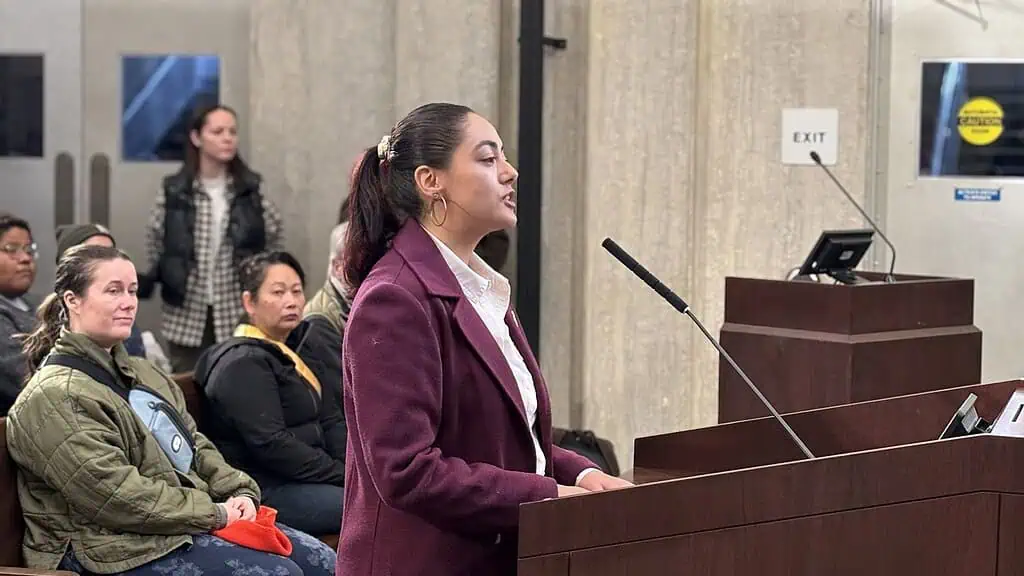
While it’s the policy of OKCPD to not inquire about immigration status, Tapia continued, “that policy alone is not enough to ease the concerns of our communities when every day on our screens, we’re seeing families ripped apart, inhumane detention centers, and even the execution of U.S. citizens.”
Tapia wasn’t the only speaker to discuss the combined concerns of an OKC business community.
Aubrey Thomas, owner of two businesses in the Farmers Market District, spoke about a potentially significant hit to city commerce if the planned ICE facility becomes operational.
“Since ICE has been in Oklahoma City, I have had several of my clients that have been too scared to come up from Norman, and money out of my pocket means money out of your pocket,” she said. “If something like the detention facility is put in Oklahoma City, it’s going to make a lot of businesses, especially Farmers Market businesses, leave.”
Personal appeals
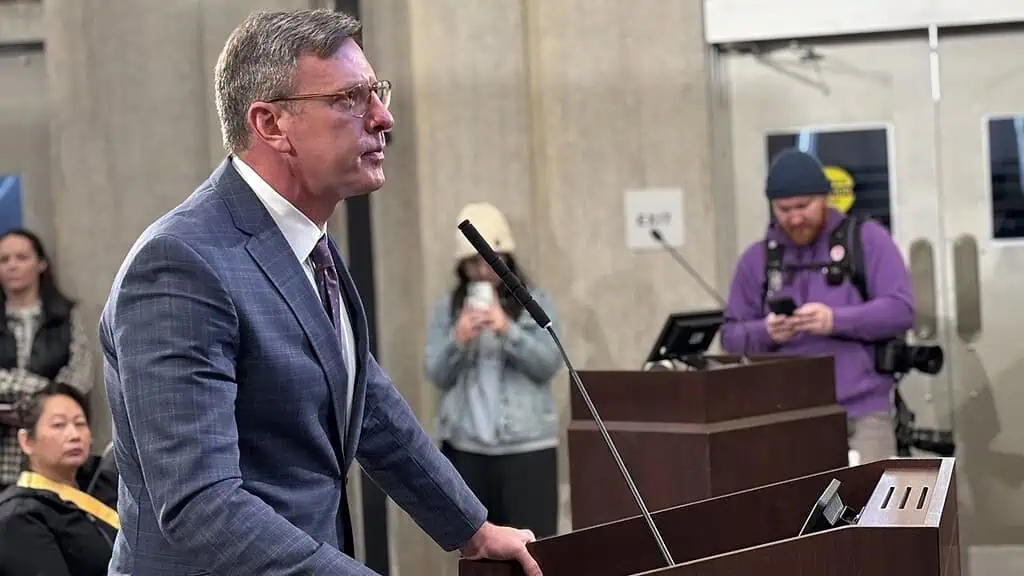
Like many of the speakers, Ward 2 resident Jack Zedlitz discussed his own personal history and personal appeals to the fear and concern that many OKC residents say they’ve felt since the reveal of the ICE facility plans.
“I spent a couple of years living in South Africa studying what happened to people under a totalitarian regime, and I was the victim of police violence there myself,” Zedlitz said. “I cannot believe that I am in Oklahoma City feeling the same feelings that I felt in post-Apartheid South Africa with a police force that was resisting democracy.”
Those same fears of violence and racial profiling were articulated in numerous comments from members of OKC’s wide-reaching Hispanic community, including Kandace Valderrama, who spoke about her father, a Latino immigrant with longtime legal status that has lived and worked in Oklahoma for more than two decades.
“It breaks my heart to fear that with this detention center and bringing ICE that he might be safer going back to his home country,” she said, “even despite his status.”
‘Constitutional realities’
With no item on which to vote and no official motion to make regarding the plans for the facility, Vice Mayor Hamon – who has made her opposition to the planned facility clear – closed the session with a personal appeal of her own.
“I also am determined to utilize whatever platform or power at my disposal to fight against this,” she said from the dais. “None of us want to be in a position to say we could have done something and we didn’t do anything.”
The councilors in attendance assured citizens that an official legal memo would be drafted and distributed among City Council and online detailing any legal options available to coerce DHS to follow the existing OKC ordinance on local approval for non-municipal facilities, including the possibility of the City of OKC suing the federal government.
Following the meeting, Mayor Holt issued a statement to press.
“Though we have to confront Constitutional realities, the City government certainly can and should continue to explore any and all legal options,” that statement reads. “Our residents deserve the opportunity to express these concerns at a forum where a vote would actually be taken.”

Brett Fieldcamp is the owner and Editor in Chief of Oklahoma City Free Press. He has been covering arts, entertainment, news, housing, and culture in Oklahoma for nearly two decades and served as Arts & Entertainment Editor before purchasing the company from founder Brett Dickerson in 2026.
He is also a musician and songwriter and holds a certification as Specialist of Spirits from The Society of Wine Educators.