
OKLAHOMA CITY — Yolanda Worth had a career in real estate investment. She enjoyed the work, but she wanted to do more for the community around her.
She began working part-time at Catholic Charities in Oklahoma City. That allowed her to fulfill her calling to help her community, and, after what she described as some arm-twisting, she transitioned to working full-time.
“The beauty of building a relationship with God is that God allows you to know him deeper through service,” Worth said. “And knowing more about Him drives you to do more service.”
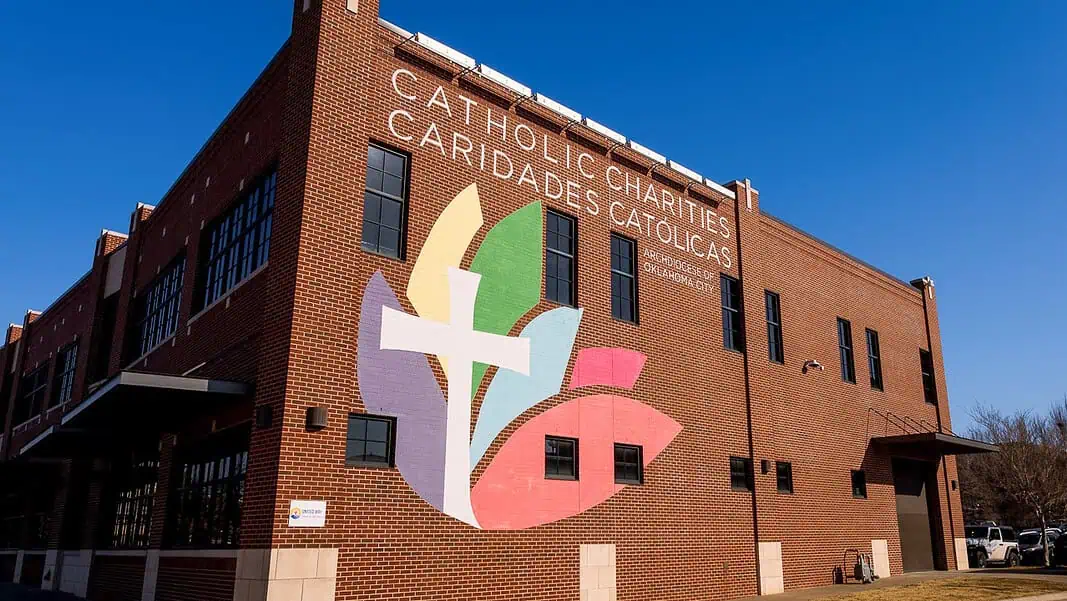
Worth is the director of housing at Catholic Charities, a faith-based organization that offers multiple social services to communities in Oklahoma, including affordable housing.
Catholic Charities’ mission is symbolized in its logo, a lotus, which Worth said represents beauty growing in murky waters, comparing the flower to the work Catholic Charities does to assist people in need of housing.
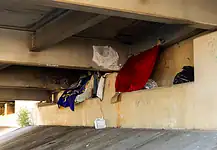
In Oklahoma, affordable housing is scarce, which contributes to the state having the sixth-highest eviction rate in the nation, according to the most recent available data. Catholic Charities seeks to change that with its affordable housing options.
David Hernandez also works in the housing department of Catholic Charities. He has a background in business administration, specifically in construction, and a degree in theology. While managing construction companies, Hernandez led the Hispanic ministry, where he discovered his community’s needs, including housing.
“I feel so glad that every single effort that we do every day is to serve another,” Hernandez said.
Affordable housing
There are just 38 affordable housing options available per 100 extremely low-income renters in Oklahoma, a demographic that makes up a quarter of all renters, according to the National Low Income Housing Coalition.
Oklahoma has an estimated shortage of 84,718 affordable and available rental homes for extremely low-income renters, who earn at or below 30% of the area’s median income, or about $30,000 for a four-person household.
Affordability in housing is no more than 30% of a family’s monthly salary going into housing, Worth said.
“There’s a lot of families spending around 50%, which is an overburden,” she said.
Senate Bill 1545, authored by Sen. Julia Kirt, D-Oklahoma City, would make it easier for faith-based organizations to build affordable housing on their property.
Senate Bill 1545
“This act aims to leverage underutilized properties owned by faith-based organizations for community benefit by increasing housing access, reducing regulatory barriers, and promoting mixed-use community-focused development,” the bill states.
The bill requires that a faith-based organization apply and receive approval for the development of the affordable housing units. It must be operated by the faith-based organization, be on property allowing development, comply with safety codes and the Federal Fair Housing Act and have been designated for residential affordable housing use.
The bill would also preempt any municipal zoning restrictions or ordinances that are not consistent with local zoning requirements and regulations. That would help the faith-based organizations develop the affordable housing options in the same capacity any developer may build a housing unit. The municipality also cannot impose any conditions, fees or discretionary requirements on the affordable housing projects.
“We have a serious housing shortage,” Kirt said. “It’s a critical issue that needs to be addressed.
Who this serves
The majority of extremely low-income renters in Oklahoma are working, disabled or elderly, with those three categories making up 83% of extremely low-income renters.
Catholic Charities has a 168-unit affordable housing community, Trinity Garden, that serves seniors aged 55 and older who meet the income criteria. The community was established in 1997 to provide safe and affordable housing for seniors, who make up 25% of all of Oklahoma’s extremely low-income renters. They are the largest group next to those in the labor force.
“That project is working and is part of the solution,” Hernandez said.
Still, the resource gap for affordable housing projects is present.
“Opening the door will just allow for faith-based organizations to have more resources available to bring into this section of the population that so desperately needs it,” Worth said.
Church’s involvement
For Hernandez and Worth, the work at Catholic Charities is rewarding and vital to the community. However, Worth said there are still more ways they can help.
“We could help more people if we had more housing units,” Worth said. “In Oklahoma City, there’s about 20,000 units too few of affordable housing.”
Kirt’s bill would bring churches into the solution and provide them with the resources they need to increase the state’s affordable housing stock, something she said should be popular with the executive branch.
“The governor keeps saying churches should be a part of the solution; this [bill] would give them the tools to do so,” Kirt said.
As the 2026 legislative session begins, and Senate Bill 1545 goes before the legislature for approval, Worth, Hernandez and others at Catholic Charities still work toward getting more people off the streets and into housing.
“You start seeing the hope that you can bring to an individual,” Worth said. “It’s tough work, it’s definitely not for the faint of heart. The management, the development, it’s not for the faint of heart, but the reward is that you’re having this impact on multiple individuals throughout multiple years where you are providing a hand-up.”
Republished in partnership with Oklahoma Watch under a Creative Commons license. Free Press publishes this report as a collaborative effort to provide the best coverage of state issues that affect our readers.

Jake Ramsey covers evictions, housing and homelessness. Contact him at (405) 370-3798 or jramsey@oklahomawatch.org.