
OKLAHOMA CITY – A decision by City officials Thursday has some Eastside residents celebrating a win against a controversial industrial yard in their neighborhood.
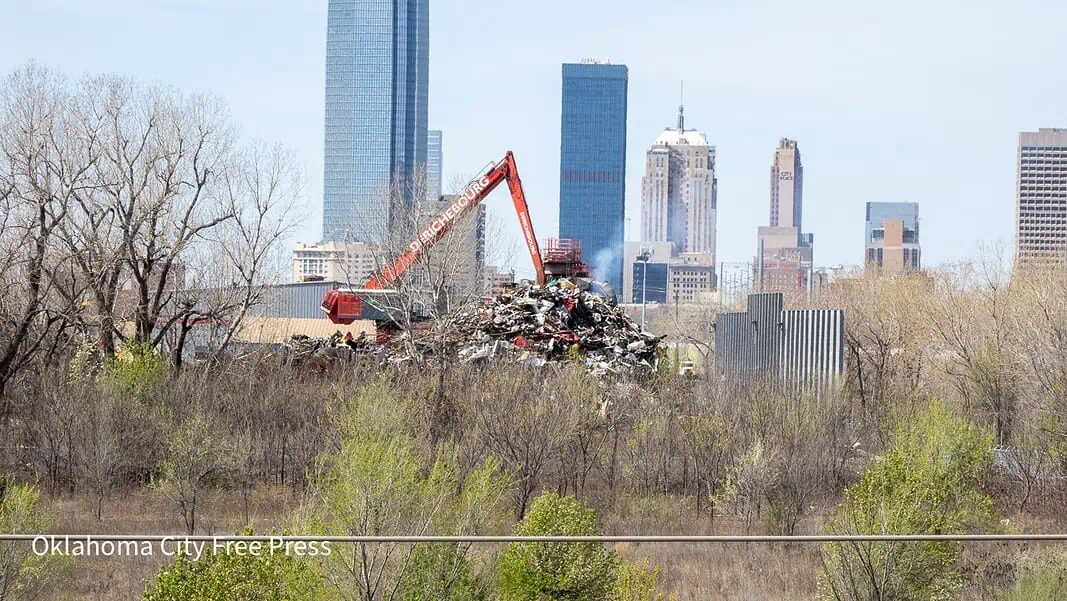
Lawyers representing the Derichebourg Recycling facility just south of Eastside’s John F. Kennedy neighborhood went before the OKC Board of Adjustment Thursday to appeal a City decision prohibiting the facility from upgrading its shear machine, a piece of equipment that local residents have blamed for significant noise and even regular explosions.
The JFK neighborhood sits between NE 4th and NE 8th streets on the southern end of OKC’s Eastside. The Derichebourg Recycling yard sits just blocks away to the south at 100 N. Bath Ave.
This appeal was the latest in a series of fights between JFK residents and scrap yard operators stretching back for decades, with residential occupants saying that the industrial operations have caused shock, anxiety, and even property damage, and the recycling facility owners claiming they’ve done everything they can to reduce noise and ensure safety.
The Board voted 3-1 to deny Derichebourg’s appeal.
Noise and explosions
City lawyers, along with OKC Planning Director Geoff Butler, have argued that the machine – an industrial shear, capable of crushing cars and other pieces of heavy equipment – was first allowed by the City decades ago only through a special permit for “non-conforming use.”
That designation makes no allowance for the expansion or movement of the machine. As the newer models of industrial shear are larger and more powerful, City attorneys have declared that replacing the existing model with a newer unit would constitute an expansion, and therefore can’t be allowed by the City.
Residents say that their nerves can’t allow a more powerful machine either, as the current one already creates noise that they’ve said rattles their houses and regularly frightens them with sporadic explosions they’ve come to call “the booms.”
If a car being crushed in the shear has any flammable gas or pressurized elements such as airbags or hydraulics intact, they can cause “the booms” when they explode inside the machine.
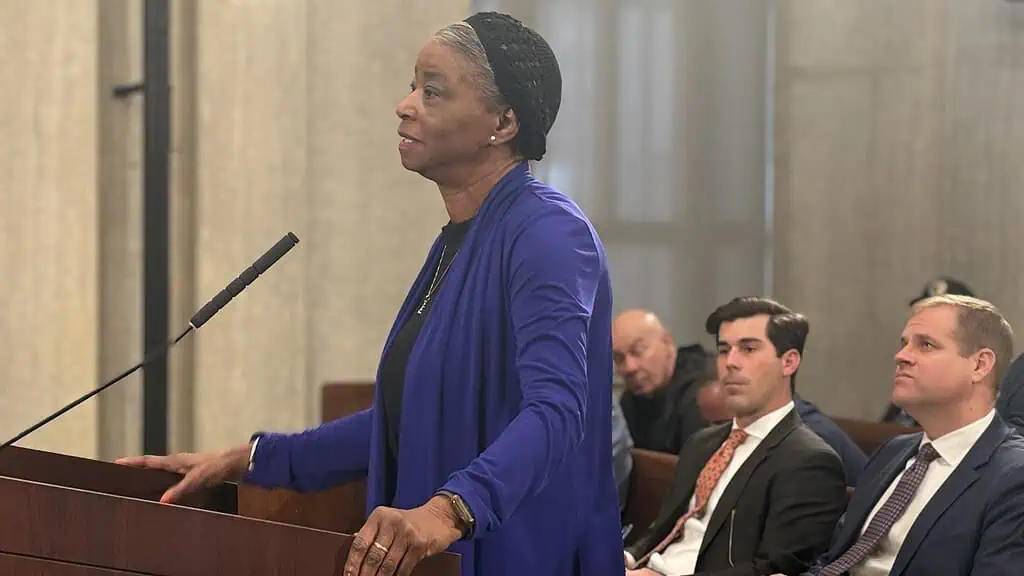
“The explosions do have everything to do with this permit and whether the City is right,” said local lawyer Jeffery Trevillion, addressing the Board as a resident and imploring them to uphold the City’s prior denial to upgrade the machinery.
“The comprehensive plan here is that industrial use is incompatible with residential property,” Trevillion said. “Even though they’ve been here for over forty years, the city has grown. To allow them a new piece of property is going to basically increase their presence here. They need to move on.”
JFK resident Diane McDaniel has lived in the area almost exactly as long the scrap yard has been crushing cars, and she told the Board that she’s become exhausted by the company’s insistence on fighting residents to continue their operations.
“We are really tired of the company not considering the residents,” McDaniel said. “We have grad students from OU Nursing, doctors, dentists, and they have to be exposed to all of that. We’re a neighborhood, and for 41 years, that that company has invaded our privacy and our peace of mind.”
Appeal attempt
Lawyers representing Derichebourg and scrap yard operators were on hand to argue that no new special permit or allowance should be necessary for owners to upgrade the equipment, claiming that the “non-conforming use” exemption originally granted was for the entire yard, not just the shear machinery.
If that reading of the law were to stand, it would mean that any upgrades or movements of equipment inside the yard’s perimeter should be allowed, so long as that perimeter doesn’t get any larger.
The increase in power and output of the new machinery, the lawyers said, should not be considered as an “expansion,” citing a 2002 Oklahoma Supreme Court case.
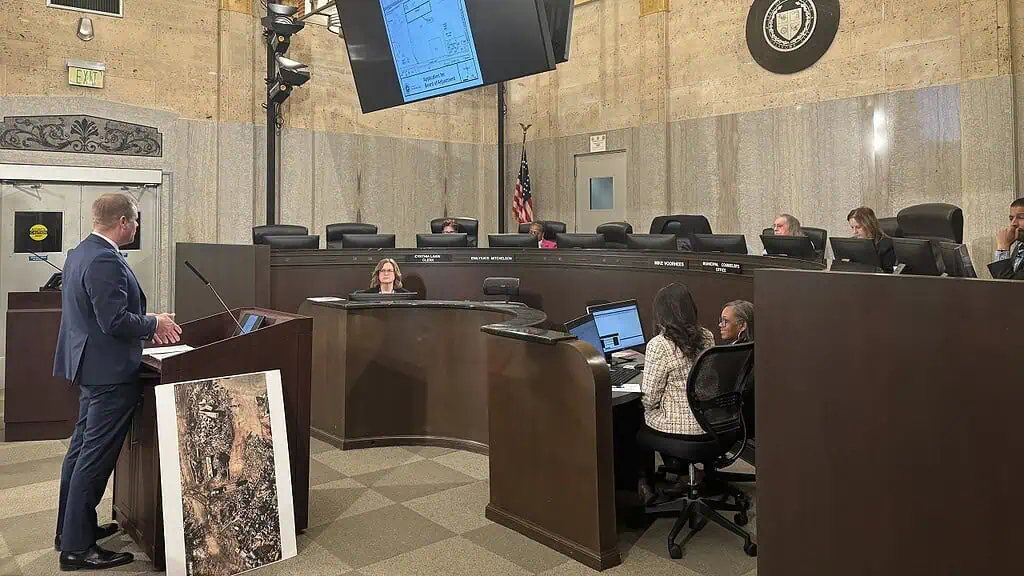
Planning Director Butler disagreed, saying that the “non-conforming use” exemption was granted only to the original machine, and as the new models are measurably larger, the installation of a new machine would be considered an expansion.
Moreover, Butler argued that any “non-conforming use” is generally granted with the understanding that the machinery or operation being given the exemption will eventually be brought into compliance, with the “non-conforming” elements eventually removed.
As the shear has been operating under that non-conforming use exemption for decades now, Butler and City lawyers agreed that it shouldn’t be extended to new machinery or upgrades.
The appeal by Derichebourg’s lawyers to overturn the City decision was denied by the Board of Adjustment in a 3-1 vote. Board Chairman Mike Voorhees was the only dissenting vote.
‘They’re gonna fight’
With Derichebourg believing that their shear needs an upgrade, and the City of OKC refusing to allow it, JFK residents are hopeful that the company might soon begin to wind down their operations in the area and move to a different location, away from residential neighbors.
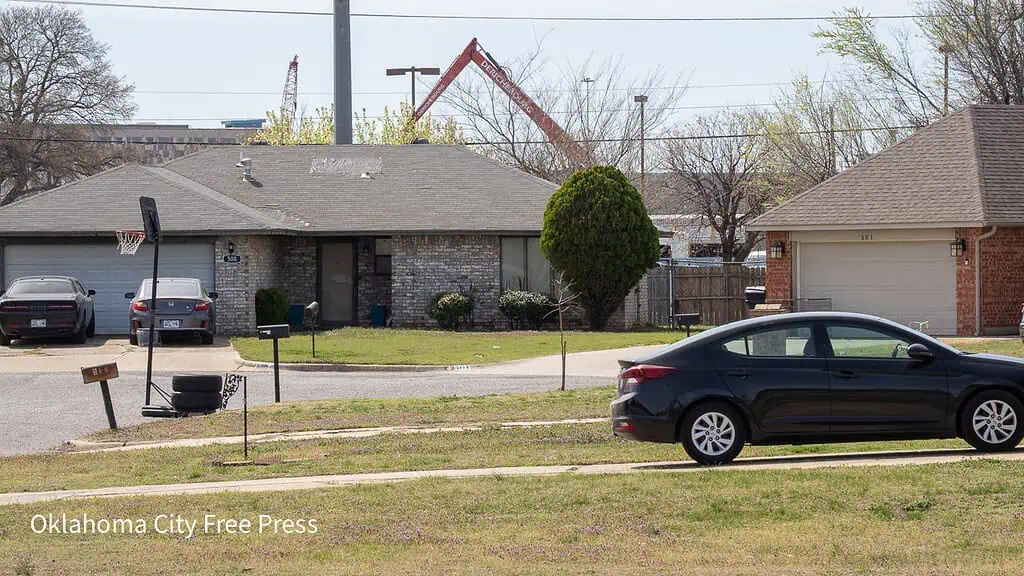
But while they’re hopeful, and while they’re celebrating this victory this time, they’ve come to expect that the battle will continue.
“They’re gonna fight,” McDaniel told Free Press at City Hall following the vote. “They’re gonna come back to us again, I’m sure.”

Brett Fieldcamp is the owner and Editor in Chief of Oklahoma City Free Press. He has been covering arts, entertainment, news, housing, and culture in Oklahoma for nearly two decades and served as Arts & Entertainment Editor before purchasing the company from founder Brett Dickerson in 2026.
He is also a musician and songwriter and holds a certification as Specialist of Spirits from The Society of Wine Educators.