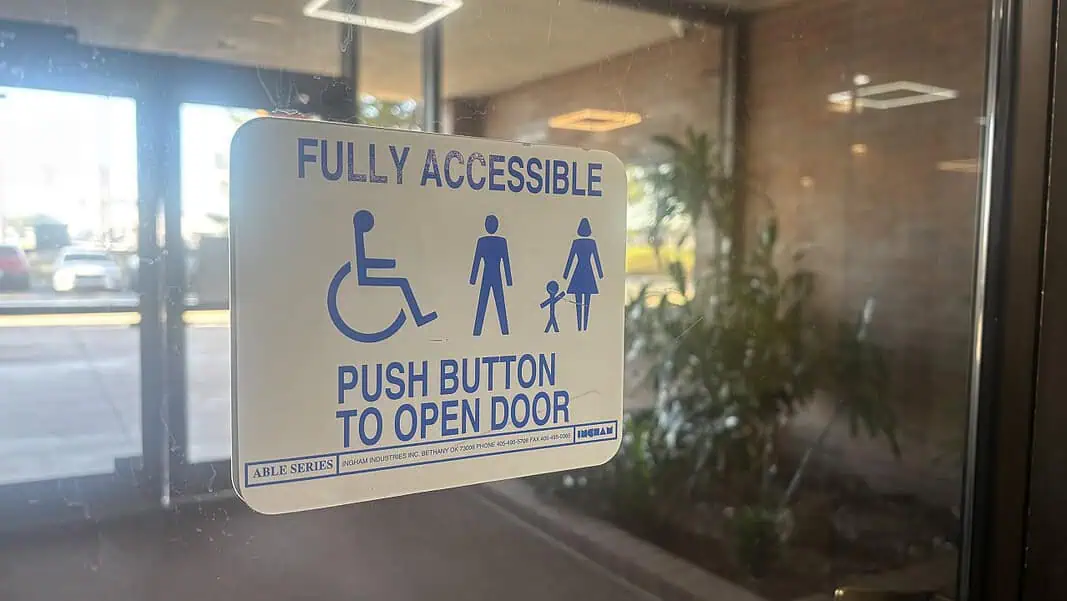

OKLAHOMA CITY – October marks National Disability Employment Awareness Month (NDEAM), which celebrates the contributions of workers with disabilities and advocates for more inclusive hiring.
Yet in OKC and beyond, both employers and members of the general public might not always recognize the value and talents that people with disabilities can bring to the workplace.

“During October…we want to educate potential employers about the benefits of hiring an individual who has a disability,” said Mark Beutler, Director of Communications at Oklahoma Department of Rehabilitation Services (DRS). “They can be one of the greatest assets a company can have. They are career-driven and they want to work. Bottom line, we want employers to see the person, not their disability.”
From sudden blindness to re-employment
David Joy’s story personifies “seeing the person.” An 11-year Boeing employee, Joy’s life changed forever one night in 2022 after work.
He felt severe pain in his chest––a major heart attack. Soon he was on an operating table undergoing a quintuple bypass. But, Joy had gone too long without oxygen, which had taken the blood flow from his eyes. When he woke up, he was blind.
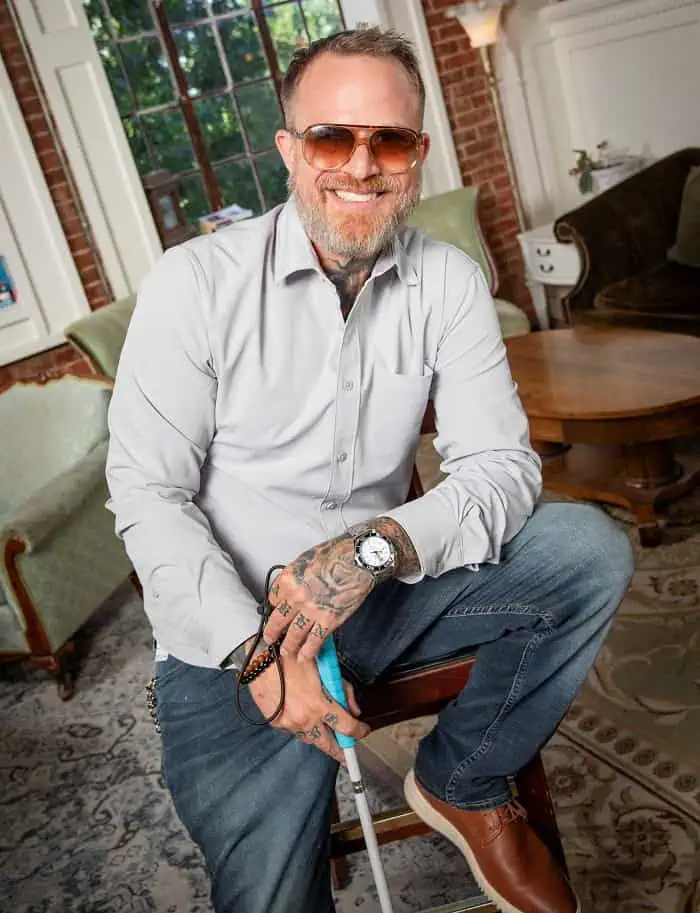
“I had lost everything,” Joy said. “I was making over six figures. I had the world in my hands. Overnight, my world was different. We knew we were going to lose the vehicles. We knew we were going to lose the house. I had no job coming out of this.”
Joy’s brother and sister-in-law encouraged him to seek support through DRS. He began DRS’ Business Enterprise Program (BEP), which provides employment training for individuals who are blind or visually impaired.
He completed BEP, learned how to use a computer, and began a new job.
“This whole journey has been challenging, but also so rewarding,” said Joy. “Everyone at DRS has been outstanding along the way, always believing in me even when I didn’t yet believe in myself. They have given me access to a world outside my home, and once again, I am a productive member of society.”
Educating employers, shifting perspectives
For The Autism Foundation of Oklahoma (AFO), disability inclusion in the workplace requires educating and equipping employers, schools, and community partners with resources and new perspectives.
AFO provides L.E.A.D.––Leading Employers in Autism and Disability Inclusion––a training program for employers. Topics include neurodiversity, legal protections for individuals with autism, and best practices for communication and workplace culture. Organizations can earn the program’s Autism-Friendly Business Certification.
AFO also offers recurring on-site and virtual Partners in Success workshops that teach employers practical strategies for inclusive hiring, on-the-job accommodations, supporting employee retention, and more.
A key goal of L.E.A.D. is to break down existing barriers to gainful employment for people with disabilities. These barriers can occur through all stages of the employment search process, from applications that aren’t accessible, to a lack of reasonable accommodations after hiring.
For individuals with disabilities, traditional interviews can be a barrier to employment. Many organizations rely on back-and-forth questions and answers. Interviewers may not only be evaluating how well a candidate can verbally explain their professional experience, but also how the candidate responds to subtle social cues. Ultimately, these approaches may screen out qualified candidates early.
For individuals with autism, some may require extended time to process the meaning of an interview question and provide a response. They may also spend significant energy decoding unspoken social expectations. Likewise, sensory overload such as bright or buzzing office lights may impact an individual with autism’s ability to perform at their best.
“Employers can help by focusing on skills and potential, making application and interview processes more accessible, offering clear expectations and communication, and creating a culture where employees feel safe requesting support or reasonable accommodation,” said Taylor Knooihuizen, AFO’s Director of Programs. “Inclusive employment is not just beneficial for job seekers. It helps employers build stronger, more dependable, and more diverse teams.”
Benefits of diverse teams & workplace accommodations
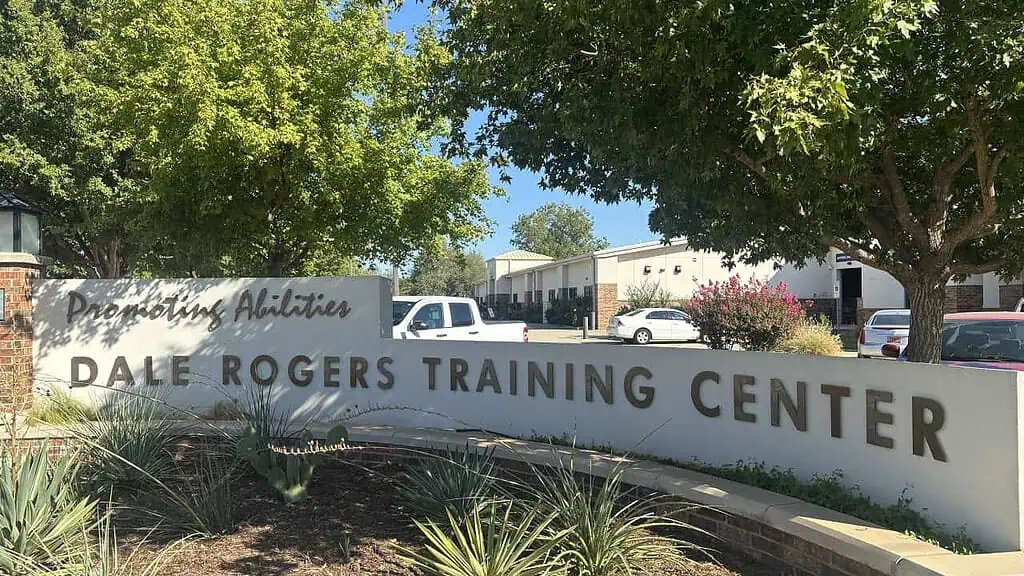
The Dale Rogers Training Center (DRTC) recognizes that growing diverse teams are crucial for today’s workforce, and the value and talent that people with disabilities bring plays an important role.
Deborah Copeland, DRTC’s Executive Director and CEO, explained gaps exist within the workforce that need to be filled, and many individuals with disabilities are well-positioned to step into those gaps.
In workplaces, critical shifts can begin with perception: instead of framing disability through deficits, focus on an individual’s innate skills and strengths.
“Neurodiversity is a really good example,” said Copeland. “[Employers can become] more aware of how having more neurodiverse groups really increases your skills. It strengthens your workforce. It creates better problem solving and innovation.”
Employers may hesitate to hire individuals with disabilities, based on assumptions that providing workplace accommodations, such as assistive technology, adjusting communication, or allowing sensory breaks, would become complex and costly.
However, Copeland explained that most accommodations cost a few hundred dollars or less, and many supports people need are already available in the working environment.
Copeland also cited the curb cut effect, which means by creating accessibility pathways for disabled individuals, accessibility increases across the board.
“A really good example of this is that our training, meetings, and community events include the advantage of captioning,” Copeland said. “When you include captioning as part of what you do, it makes it accessible to a lot of people that you’re not even aware need that type of accessibility. When your buildings and meetings are more accessible, you really create a broader workforce and diversity that strengthens the workforce.”
Local & national challenges
But many job-seekers with disabilities continue to face employment challenges.
Access to accommodations, workplace safety, and equitable opportunities and treatment are not universal.
Not Your Average Joe (NYAJ), a popular, disability-inclusive coffee shop with locations across the greater OKC area, is now facing a lawsuit from the Department of Labor. And at the federal level, a new rule from the U.S. Department of Labor’s Office of Federal Contract Compliance Programs (OFCCP) also impacts the disability community.
The NYAJ website advertises: “Our mission is to inspire our community by including students and adults with intellectual, developmental, and physical disabilities in the creation of exceptional coffee in an encouraging atmosphere.”
However, the lawsuit, originally filed on September 11, includes alleged wage violations and allowing minors to operate potentially unsafe industrial equipment.
The OFCCP’s rule, which went into effect on September 21, removes the requirement for contractors to have applicants and employees self-identify their disabilities. Contractors also no longer need to aim for employing 7% of staff members with disabilities across their workforce.
Within disability and advocacy communities, these trends raise broader concerns about continued rollbacks to hard-won disability rights, such as Olmstead and Medicaid.
Rebecca Ingram, CEO of AbilityWorks of Oklahoma, Inc., which provides residential and vocational programs to people with intellectual and developmental disabilities, explained that stigmas related to disabilities persist, and she encourages employers to keep an open mind and allow an employee with disabilities the opportunity to demonstrate what they can do.
“People naturally want to be included and feel that they are contributing to society,” Ingram said. “Having an intellectual or developmental disability does not exclude that desire.”
She also shared what she wishes Oklahoman employers understood better about disability employment.
“Our programs are designed for success––for the business and the individual with disabilities,” she said. “Please consider this alternative, as you will gain much more than an employee; you will gain a positive, meaningful experience.”

Erin Schalk serves as a professional writer, visual artist, voice narrator, and accessibility-centered educator. She is the recent recipient of multiple Writer’s Digest awards and the Armed Services Arts Partnership’s National Scholarship. She has also received a Best of the Net nomination. Schalk’s work has appeared in Wordgathering, Stirring Lit, Parentheses International Literary Journal, The Petigru Review, and numerous other publications. She also received her MFA from the School of the Art Institute of Chicago.