
OKLAHOMA CITY – Any filmmaking scholar or armchair expert of storytelling knows Hitchcock’s “bomb theory,” right?
Put simply, if you have an unseen bomb explode unexpectedly in the middle a scene, then you get a few seconds of surprise and shock from your audience. But if you show your viewers the bomb without your characters knowing about it, then you can get minutes and minutes of suspense, keeping your audience on the edge of their seats and at the end of their nerves.
But what if there’s a third option? What if a film sees so many unexpected bombs going off and so much entirely unforeseen shock and horror that a viewer just resigns themselves to a suspense that never ends and an unease that grows out of their soul and into the pit of their stomach?
What if the tragedy and unpredictability of life itself are the bomb, and once the audience is shown them in all their weight and awe and terror, every moment after is spent on the seat’s edge?
Well, if that film were ever to exist, it would be “Sirāt,” the road movie descent into the middle of the Moroccan desert – and into the outer reaches of your nerves and your understanding – from French-Galician auteur Óliver Laxe.
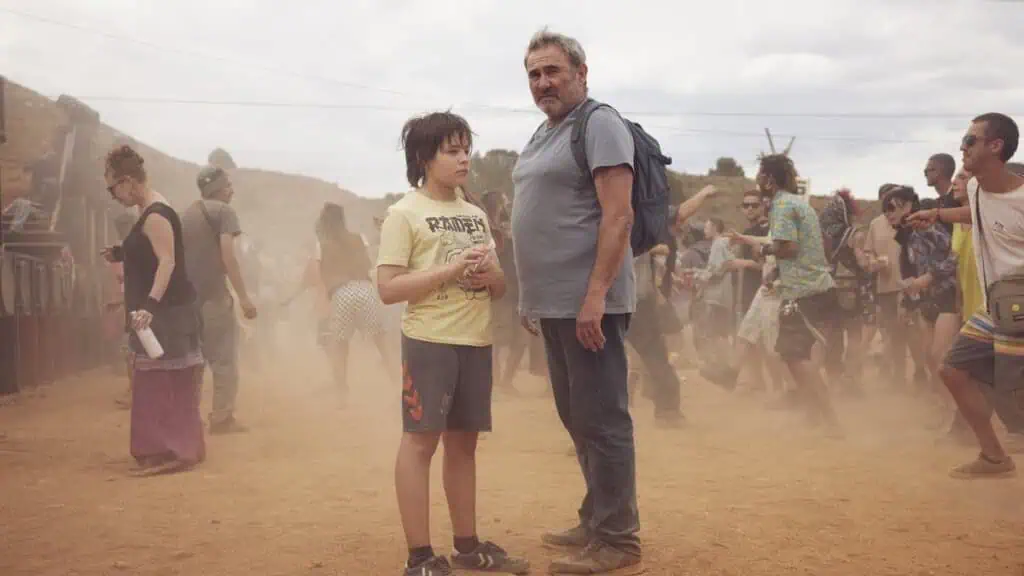
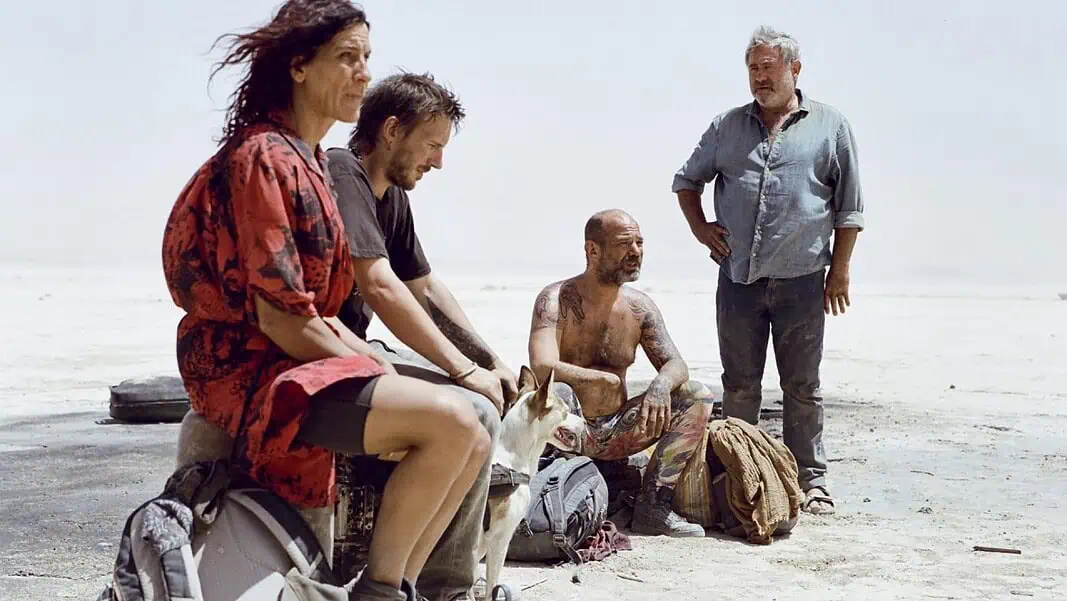
The opening premise feels straightforward enough: a beleaguered father’s search for his missing adult daughter takes him and his son into the pounding, rhythmic community of North African desert rave culture, pulling them deeper and deeper into a world more dangerous and further on the fringes than they ever expected.
And while that’s all true and applicable to the opening scenes and inciting incidents, and while that general premise is the way the film has been sold to American audiences, the actual story being told by “Sirāt” is infinitely deeper, one of spiritual challenge, societal collapse, and existential suffering the likes of which film hasn’t endured in a long while.
The story’s true implications and intentions are found in its title and its inexorable links to the philosophies and tenets of Islam, defined in text at the film’s outset:
“There is a bridge called Sirāt that links hell and paradise. Whoever crosses it is warned that it is narrower than a strand of hair and sharper than a sword.”
In truth, “Sirāt” is telling a story so deeply rooted in the Islamic faith and the beliefs and principles within that’s it arguably bears little to no resemblance to the arcs, structures, or expectations of Western storytelling. Which of course means that it’s entirely unencumbered by expectations and free to lay waste to whatever comfort you might presume from cinema.
Where you’d expect that its themes are of a father’s love, a family’s determination, or the bonds of friendship in the face of rapidly spiraling odds, you’re met instead with ego death, celestial trial, and the gradual grinding away of earthly connections and adherences to life or to any meaning beyond the cleansing of the soul.
Where you expect a story of reward for facing the difficulties of the desert and forging a path of one’s own, you’re instead given a parable of punishment for diverging from the path laid out and for seeking worldly desires, whether desiring an ultimate rave, an escape from society, or even one’s own lost daughter.
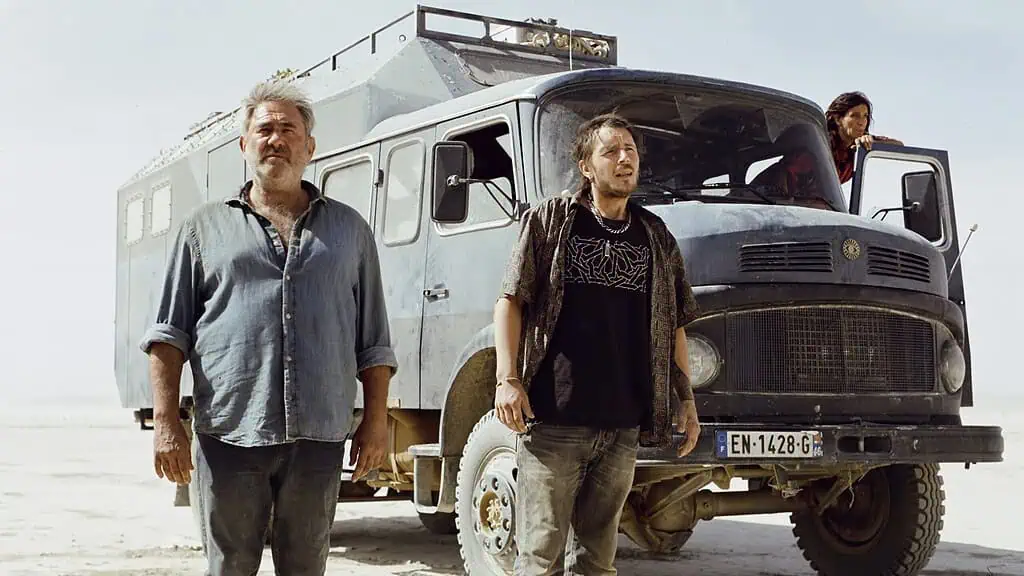
Along the way, the characters’ emotional and psychological limits are tested right along with the audience, with Spanish star Sergi López shouldering much of the weight surrounded entirely by non-professional actors comprising the roving band of van-dwelling rave-hoppers that bring the weathered father and son along onto their path.
Laxe’s history of casting non-actors has led him to a remarkable talent for finding faces and figures for his roles, and the non-professionals here feel real and well-lived, even as they speak mostly in memories and philosophies.
But the standout, of course, is the sound. The way that the music and the sound design are intertwined, propelling the story on a soundtrack of sub-bass frequencies and pulsing, bubbling electronic stings is unlike anything else in film in recent memory, creating a sonic world that echoes the engulfing spiritual hell of the journey.
“Sirāt” was included in the crowded and historically stacked Best International Feature field at this month’s Oscars, but it also notably and deservedly secured a nomination for Best Sound, an award that it frustratingly lost to the radioed dialogue and endless “vroom” of “F1.”
The harrowed performances, the expansive, sand-blasted cinematography, and the groundbreaking, all-encompassing sound design all combine into something powerful and transportative, but it’s the story, the decisions that it makes, and the punishing commitment to those decisions that form the film’s soul and shred the nerves of its audience.
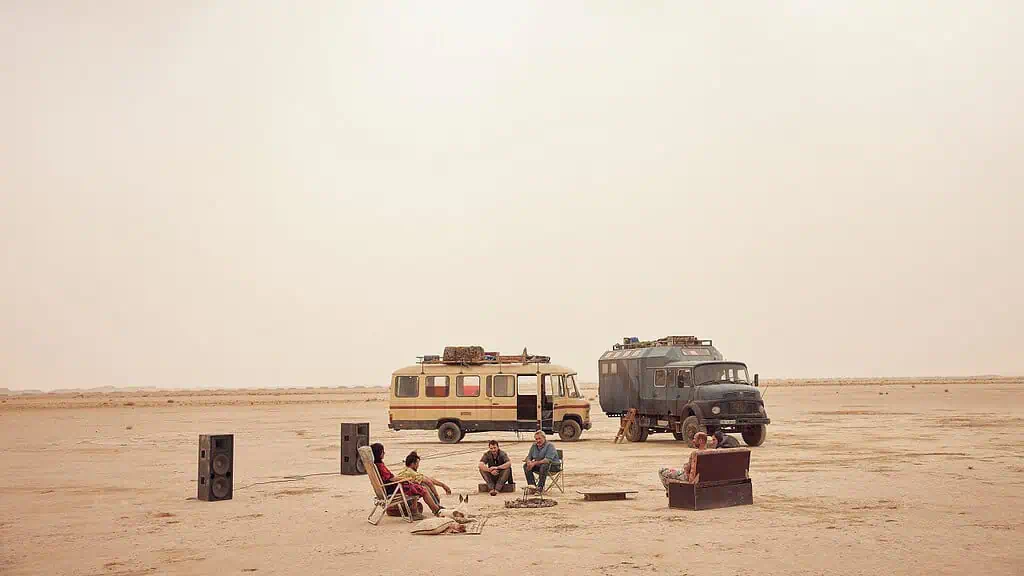
It’s an endlessly challenging film, one that repeatedly detonates bomb after unseen bomb in pure defiance of Hitchcock’s sentiments and one that will likely never find its way into the good graces of general audiences. But it’s a film that deserves – and even screams – to be seen by the discerning minds and steeled hearts that can handle it.
The Sirāt is narrower than a strand of hair and sharper than a sword, and those that go over the edge fall into hell.
And be warned, some of the desert-bound travelers here do go over the edge.
But whether this wind-borne band of lost and searching souls is being punished for straying from the Sirāt’s path or is being cleansed of their soul’s attachments as they shed their fear and doubt on the bridge will be the topic of debate for everyone that experiences this film for some time.
“Sirāt” is now playing at the Oklahoma City Musem of Art through Saturday, March 28th.
For times, tickets, and more, visit okcmoa.com.
Catch Brett Fieldcamp’s film column weekly for information and insights into the world of film in the Oklahoma City metro and Oklahoma. | Brought to you by the Oklahoma City Museum of Art.
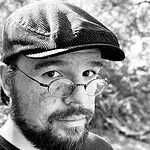
Brett Fieldcamp is the owner and Editor in Chief of Oklahoma City Free Press. He has been covering arts, entertainment, news, housing, and culture in Oklahoma for nearly two decades and served as Arts & Entertainment Editor before purchasing the company from founder Brett Dickerson in 2026.
He is also a musician and songwriter and holds a certification as Specialist of Spirits from The Society of Wine Educators.