
OKLAHOMA CITY – Horror may well be the most divisive and subjective genre of storytelling that there is.
Not everyone is afraid of fictional monsters or slithery nightmares, not everyone was raised to fear demons and devils, and some moviegoers fancy themselves smart enough to outrun the too-often nonsensical and reckless knife-wielding killers of slasher fare.
So it can feel nigh-on impossible to find a subject so scary, so unsettling and disturbing, and yet so universal that it’s bound to get a cringe, a wince, or a scream out of practically anyone in the audience.
But if there’s one thing that’ll scare anyone, it’s puberty.
The adolescent “tween”age years are marked by feelings of awkward terror and grotesque, confused physicality that almost anyone can relate to, and that almost anyone would surely rather not.
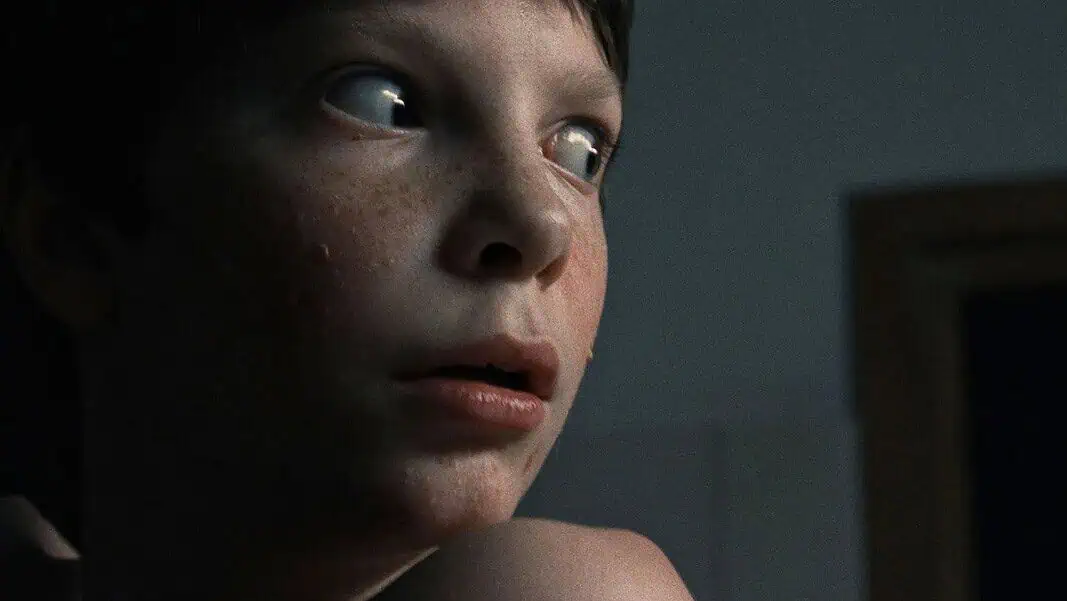
Now that deep, natural unease and universal horror of adolescence is on display in a detail more stark and unsettling than possibly ever before in writer/director Charlie Polinger’s daring, willfully uncomfortable debut feature “The Plague,” which adds OKC to its limited theatrical run beginning January 1st.
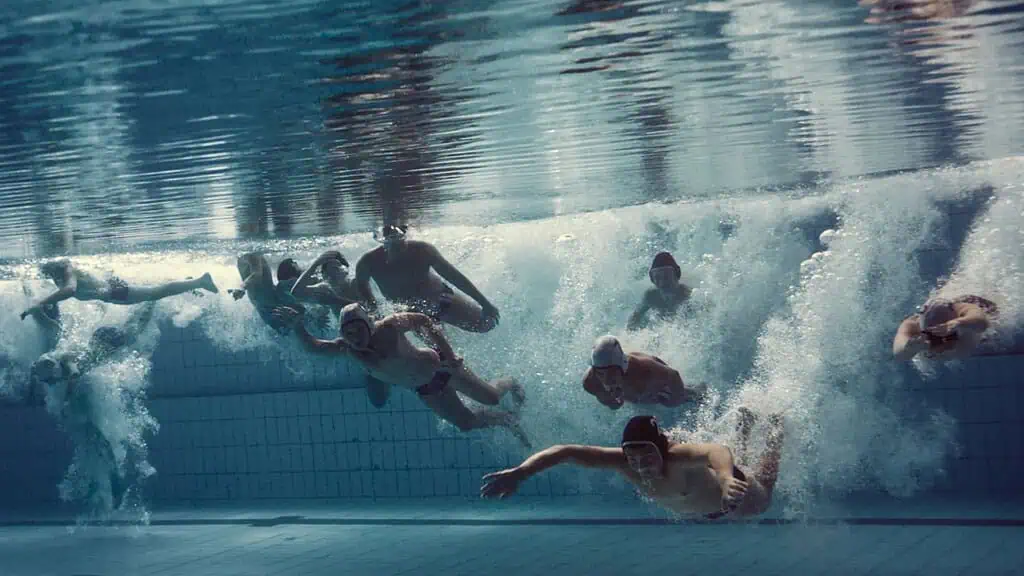
Ostensibly a skewed, disquieting coming-of-age study of twelve year-old Ben and his summer attempting to fit in at water polo camp, Polinger’s film moves with the unnerving tone and unmistakable language of pure cinematic horror, recasting the unfortunate cornerstones of puberty and boyhood as the disgusting scares they are.
Acne is a bleeding, seething social death sentence, the ominous whispers in the darkness of nighttime are the teenage urges and rumor mills, and the redness, dryness, and debilitating itch of swimmer’s rash and gross boyhood hygiene are – you guessed it – the plague.
In addition to the casual bullying, the meaningless violence and destructiveness, and the unbearable discomfort of developing sexuality, the boys at this clearly high-dollar, competitive water polo camp are also contending with their belief that a skin-wrecking, brain-shredding plague has beset Eli, the incorrigibly awkward “weird kid.”
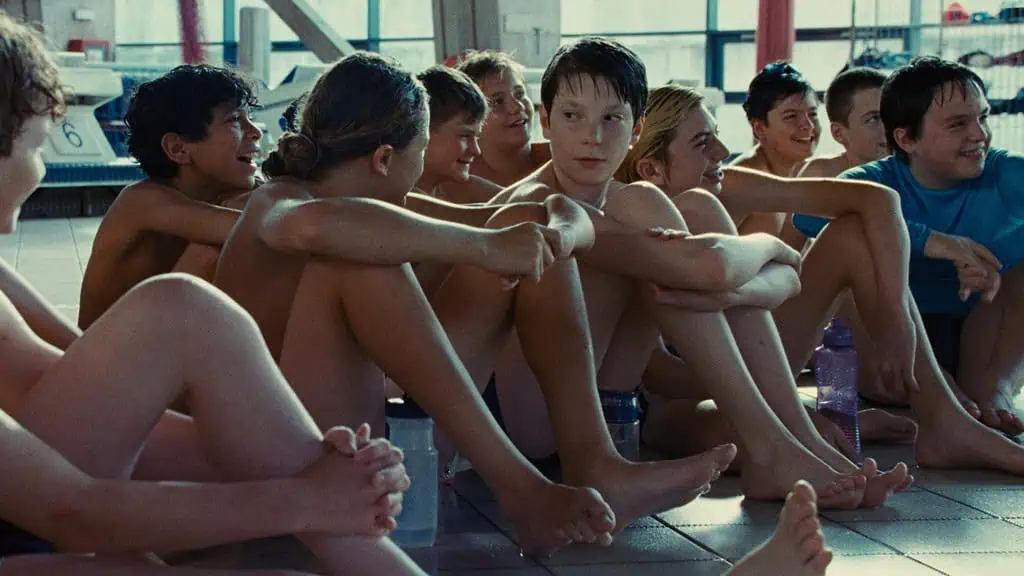
As Ben navigates his social standing among the obnoxious and unruly group of boys and attempts to hide his potentially burgeoning friendship with Eli, he begins to worry that the plague is actually very real and may already be wreaking havoc on his body and mind.
Polinger presents it all like some kind of Lovecraftian nightmare, trapping these boys together in close proximity with a disease of madness spreading throughout the group and opening rifts of behavioral collapse and body horror.
But the scales never tilt into anything actually fantastical or unrealistically horrific. The horrors remain very real, very familiar, and scarily relatable for anyone that remembers being twelve years old.
It’s the tone, the framing, the striking-but-ominous cinematography (including some seriously breathtaking underwater shots,) and maybe above all, the chilling, vocalization-heavy soundtrack by first-time score composer Johan Lenox that elevates the whole affair from “that awkward phase” all the way to “psychological terror.”
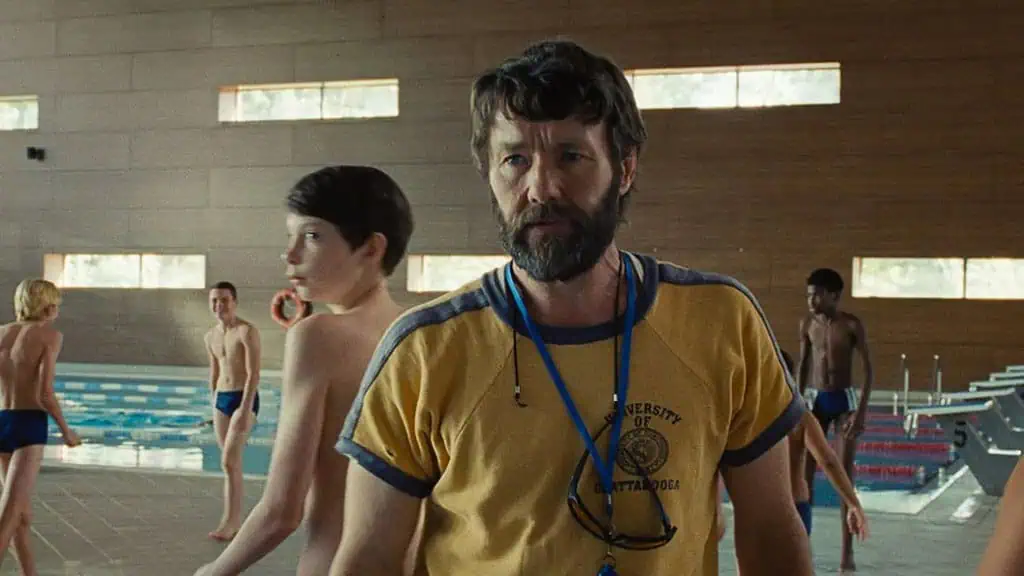
But it’s also thanks to some genuinely remarkable performances from the young cast.
The ubiquitous Joel Edgerton (who also serves as producer) is the one and only adult character in the film, and even his role is comparatively small and simple, meaning that the full weight of the story rests squarely on an ensemble of twelve to fourteen year-olds.
It feels almost miraculous that Polinger and casting director Rebecca Dealy were able to find an entire cast of such pitch-perfect, believable young actors (which is to say that they all actually come across as unfiltered, posturing, and admittedly insufferable as real twelve and thirteen year old boys.)
But as Ben, young Everett Blunck carries every scene and nearly every frame, bringing the audience into the fear and awkwardness of that age in a way that forces you to feel it all more deeply than the usual “Lord of the Flies” adaptations and knock-offs that allow you to remain an arm’s-length observer.
You’ll get no such emotional distance here, and no such protective sheen of adult superiority to convince yourself that this was just a passing phase of childhood. Polinger forces you to relive these experiences and to re-feel the embarrassment and ostracizing humiliation.
You’ll find yourself sinking lower and lower in your seat as you struggle to convince yourself that you did, in fact, eventually get over all of those tween insecurities and embarrassments (you did, didn’t you?)

You’ll squirm, you’ll cringe, you’ll gasp and wince and maybe scream, especially during a memorably awful scene involving some bugs and almost definitely during an immediately classic scene employing a pair of everyday scissors in the most terrifying way since “The Dead Zone.”
“The Plague” is bound to be a divisive and even controversial film, and I suspect that it’s one that people will fully argue over. Some will say that it’s an accurate and necessary dissection of casual boyhood cruelty and others will argue that it’s a pointlessly bleak and obtuse collection of scenarios with little to say.
By the euphoric, disorienting final moments, I think Polinger and his film actually end up making a pretty clear and even surprisingly heartfelt statement about individuality and fleeting youth. But by that time, plenty of filmgoers will be so put off by everything that came before that they’ll already be covering their eyes or ears, convincing themselves that it’s all just a movie and that these monsters can’t hurt them anymore.
And isn’t that the stuff that great horror is made of?
“The Plague” opens at AMC Quail Springs Mall in OKC Thursday, January 1st from IFC Films.
Catch Brett Fieldcamp’s film column weekly for information and insights into the world of film in the Oklahoma City metro and Oklahoma. | Brought to you by the Oklahoma City Museum of Art.

Brett Fieldcamp is the owner and Editor in Chief of Oklahoma City Free Press. He has been covering arts, entertainment, news, housing, and culture in Oklahoma for nearly two decades and served as Arts & Entertainment Editor before purchasing the company from founder Brett Dickerson in 2026.
He is also a musician and songwriter and holds a certification as Specialist of Spirits from The Society of Wine Educators.